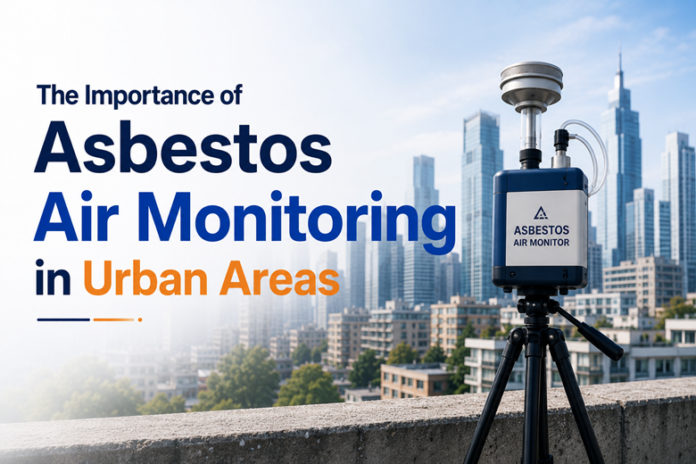

A long time material used to help protect against fire attack and give buildings strength, asbestos is now a major health risk in developing countries, particularly in urban environments such as Sydney. Asbestos removal and handling is a process which must be carried out with certain measures taken to keep the public safe. One critical aspect is asbestos air monitoring in Sydney. This procedure prevents the asbestos fibres from being inhaled into the person they’re being removed by, and helps to avoid health risks.
Understanding Asbestos and Its Risks
The substance asbestos is made up of 6 types of fibrous minerals that occur naturally. Although asbestos is very durable and resistant to heat, its fibres are capable of causing various health problems, such as lung cancer, asbestosis, and mesothelioma. The risk is especially high in cities.
The Role of Air Monitoring
Regardless of the asbestos abatement project, air monitoring plays a crucial role. It includes sampling and analysis of the ambient air to see that air levels of asbestos fibres are kept lower than acceptable. This is very important in protecting workers and adjoining inhabitants of areas such as Sydney. It uses proper air monitoring to prevent asbestos fibres spreading out and abide by health and safety.
Methods of Air Monitoring
Air monitoring has various methods as background air monitoring, control air monitoring and clearance monitoring. Pre-removal asbestos fibre exposures are conducted to establish a baseline air monitoring of asbestos fibre levels. Control monitoring will be done while the removal is being accomplished, assuring that the containment measures being implemented are effective. Lastly clearance monitoring ensures that after removal the area is safe to be re-occupied.
Regulations in Place
There are very definite regulations in Australia both for asbestos handling and air monitoring. They are important in ensuring that a code of safety is adhered to and governments regulate their application. There are laws in place for local councils and the New South Wales government to follow when carrying out asbestos-related work to ensure it is carried out safely and minimises the risks.
The Benefits of Professional Services
Employing an air monitoring expert for asbestos analysis has a number of advantages. Experts are equipped with right know-how and equipment for precise testing and analysis. Their detailed reports are crucial for compliance purposes and may be beneficial for legal and insurance needs.
Technological Advances in Air Monitoring
New advances in technology have greatly enhanced air monitoring practices. Improved sampling and on-line monitors give more accurate and timely data; actions can be taken immediately if asbestos levels are observed to increase.
Choosing the Right Service Provider
An important criterion for choosing an air monitoring contractors for asbestos is maturity, experience and accreditation/qualification of service providers. The company offering a good service will not just comply to regulation requirements, however they will be reliable and efficient as well.
Case Studies and Examples
The successful asbestos air monitoring programs are well documented with various case studies. In Sydney, holistic air quality assessment has been successfully used on a number of commercial and residential buildings, resulting in a safer environment for residents and employees.
Challenges and Considerations
Although progress has been made, there are problems with the air-monitoring of asbestos, including changing environmental factors and uniformity of the methods used at various sites. There are some obstacles or difficulties that the adaptive strategies must address to achieve effectiveness and reliability in the continuous effort.
The Future of Asbestos Management in Urban Areas
Air monitoring will continue to be in demand as urban areas continue to develop and evolve in the need for thorough and careful management of asbestos. It reflects that best practices and technologies are constantly evolving to help prepare for the future challenges with asbestos safety.