From Film Stardom to Political Power: Vijay’s Strategic Rise – News Today | First with the news

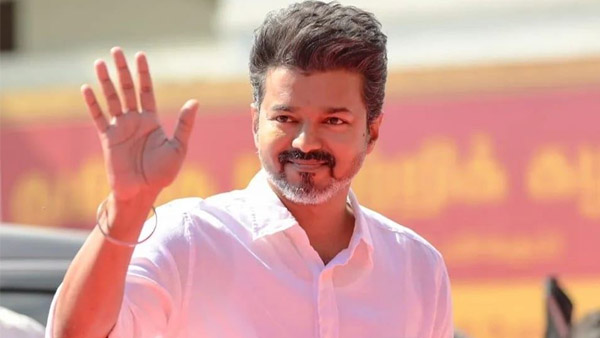
Feb 4: The rise of C. Joseph Vijay is not accidental it is the result of timing, calculation, and a clear reading of Tamil Nadu’s political vacuum.
Leading the Tamilaga Vettri Kazhagam to over 100 seats in early counting trends, Vijay has pulled off something most newcomers fail to do convert popularity into actual electoral dominance. That distinction matters. Tamil Nadu has seen actors enter politics before, but very few have translated fan following into a statewide political mandate on this scale.
This victory is not just about numbers. It represents a shift in how politics is being consumed and decided. The traditional Dravidian framework — dominated by ideology, legacy, and party structure — is now facing a direct challenge from personality-driven, narrative-heavy politics.
Let’s cut the illusion first: celebrity alone doesn’t win elections anymore. If that were true, the state would have seen multiple film stars in power over the years. What Vijay did differently was build a system around his image instead of relying on the image itself.
His first strategic move was identifying voter dissatisfaction. The Dravida Munnetra Kazhagam government was facing clear anti-incumbency, while the All India Anna Dravida Munnetra Kazhagam struggled with leadership clarity and internal coherence. Vijay didn’t try to fight both ideologically — he positioned himself as a clean alternative. That’s a smarter move than picking sides in an already fatigued binary.
A senior political analyst summed it up bluntly:
“Vijay didn’t defeat DMK or AIADMK individually — he defeated the idea that only those two can rule Tamil Nadu.”
The second move was disciplined visibility. Unlike traditional campaigns that scatter resources, TVK focused on winnable constituencies. The messaging was consistent, the presence was sustained, and the campaign never lost momentum. This is basic strategy, but most parties mess it up because they try to be everywhere instead of being effective somewhere.
A campaign strategist involved in southern districts reportedly said:
“We didn’t chase every seat. We chased the right seats and made sure we didn’t lose them.”
The third factor and probably the most underestimated is emotional connection. Vijay’s campaign was not policy-heavy. That’s not a flaw; it’s a deliberate choice. Voters rarely respond to policy documents. They respond to identity, anger, hope, and relatability.
His messaging tapped directly into frustration especially among younger voters who feel disconnected from legacy politics. He didn’t overcomplicate things. He simplified the narrative: change vs continuity.
A first-time voter in Chennai captured this sentiment:
“We know what DMK and AIADMK are. We wanted to see something else. Even if it fails, at least it’s different.”
That mindset is dangerous for established parties and powerful for newcomers. It lowers the barrier for entry and raises the tolerance for risk.
But here’s where reality kicks in and this is where most hype collapses.
Winning an election is marketing. Governing is execution.
Right now, Vijay has proven he can mobilize voters. He has not yet proven he can run a government. These are completely different skill sets. Campaigning is about messaging and perception. Governance is about decisions, trade-offs, and consequences.
An experienced bureaucrat put it sharply:
“Running a state is not a film set. There are no retakes, and every mistake has a cost.”
This is the phase where many outsider leaders struggle. They underestimate administrative complexity. Tamil Nadu is not a small system it involves massive welfare schemes, industrial policy, infrastructure, education, healthcare, and constant political negotiation.
If Vijay surrounds himself with weak advisors or relies too heavily on loyalists instead of experts, this momentum will collapse quickly. Voters who are willing to experiment are also quick to punish failure.
History is clear on this. Tamil Nadu voters are not sentimental when it comes to governance. They will celebrate you today and remove you tomorrow without hesitation.
A senior political observer noted:
“The same wave that brings a leader to power can turn into a wave that pushes them out. It depends on performance, not popularity.”
Another critical challenge is expectation management. Right now, expectations are unrealistically high. When a leader rises this fast, people assume rapid transformation. That’s a trap. No government can deliver structural change overnight.
If expectations are not managed, even decent performance can be perceived as failure.
There is also the issue of party structure. TVK has achieved electoral success, but long-term stability requires institutional strength local leadership, administrative coordination, and internal discipline. Without that, the party risks becoming personality-dependent, which is fragile.
However, dismissing Vijay’s rise as just a “wave” would be a mistake. This is a calculated entry backed by timing, messaging, and strategic positioning. He didn’t stumble into power — he engineered his way into relevance.
The real question is not whether he deserved this win. The real question is whether he can sustain it.
Right now, Vijay looks unstoppable. But that’s exactly when leaders make their biggest mistakes — when they start believing their own narrative.
If he builds a competent administrative team, listens to domain experts, and transitions from emotional politics to policy-driven governance, he has a shot at long-term relevance.
If he doesn’t, this will go down as a spectacular but short-lived political peak.
A final word from a political strategist captures the situation perfectly:
“Getting elected is proof of connection. Staying in power is proof of competence.”
Vijay has cleared the first test decisively. Now comes the one that actually matters.