
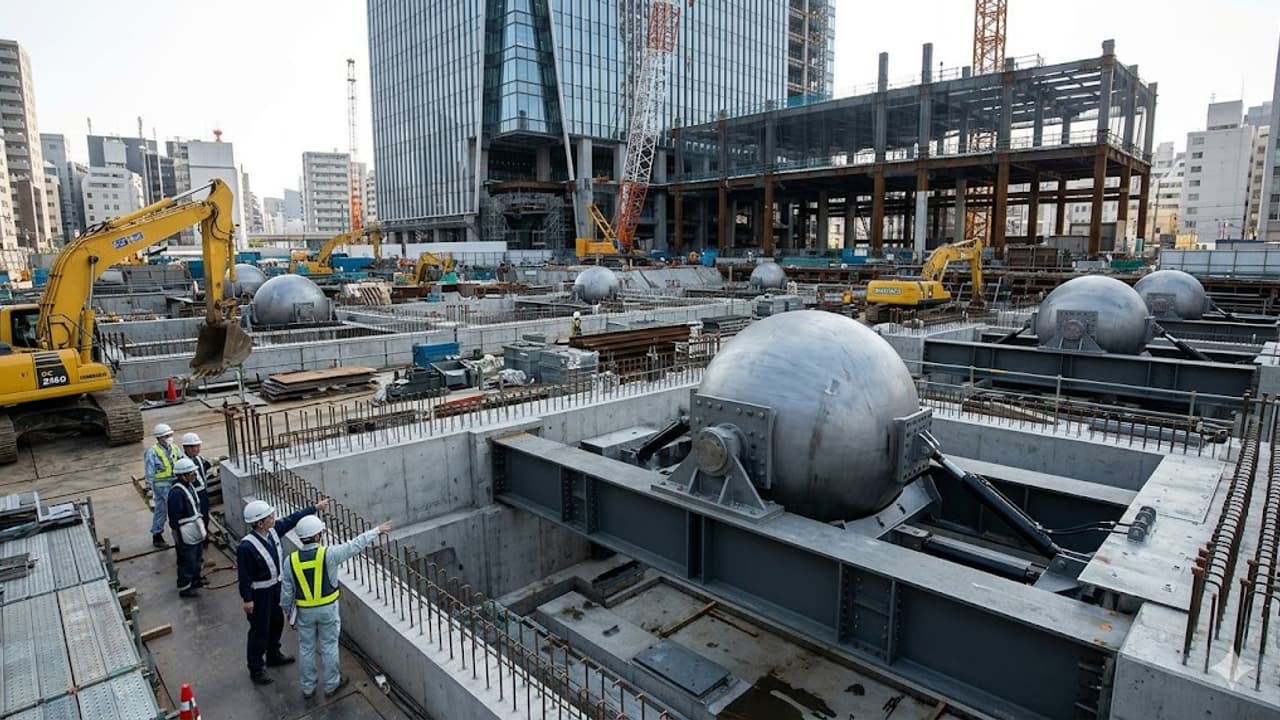
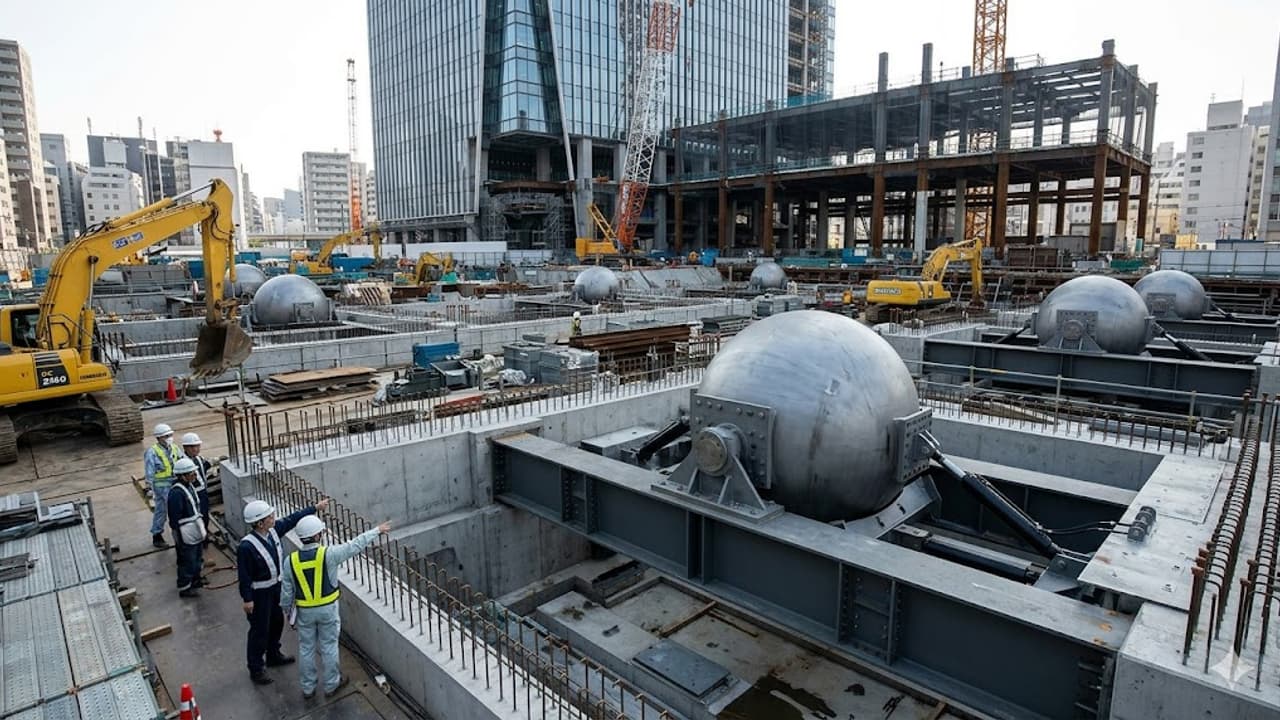
Although earthquakes are the main focus, the device could also help control many other forms of vibration.
Strong winds, railway movement, industrial machinery and repeated shocks can all damage structures over time. Sensitive equipment such as communication systems and laboratory instruments also suffer from continuous vibration.
Because the system absorbs energy through friction, it may help reduce movement in all these situations as well.
Researchers say a technology that works across many industries usually becomes more affordable and practical because development costs can be shared across different sectors.
Part of a larger research effort
The steel-ball cylinder did not appear suddenly.
Professor Leblouba’s research team has already spent years studying particle-filled dampers.
In an earlier published study, the same group tested a box-shaped damper filled mainly with sand. That system also used particle movement to absorb energy.
The newly patented design changes the shape and materials by using steel balls and a moving rod system, but the basic idea remains the same: simple particles can absorb dangerous vibration energy.
Researchers say this shows the project is part of a long-term scientific effort rather than a one-time experiment.
Why simple designs matter
One reason experts are interested in the device is its simplicity.
The system mainly uses a cylinder, steel balls, rods and a moving shaft. These are common industrial materials that can potentially be assembled and repaired locally.
That matters especially in countries with high earthquake risk and limited financial resources.
After major earthquakes, repairing damaged safety systems often becomes extremely expensive. A device with replaceable parts may reduce both installation and repair costs.
Simple systems also usually require less specialised maintenance.
For developing countries facing regular earthquakes, affordability can become just as important as performance.
Bigger tests are still needed
Despite the positive early results, researchers say the device still needs much larger testing.
The next step will involve shake-table experiments. These tests recreate earthquake conditions using moving platforms that simulate real ground motion.
Scientists plan to attach the damper to scaled structures and expose them to stronger and more complex shaking.
Researchers also want to study how changing the rod shape, spacing, steel ball size and ball material affects performance.
Only after these larger experiments will engineers fully understand how well the system performs during severe earthquakes.