For decades, India’s education narrative has been shaped by a persistent gender gap — fewer girls in classrooms, higher dropout rates, and limited access to higher education. But a powerful shift is underway.
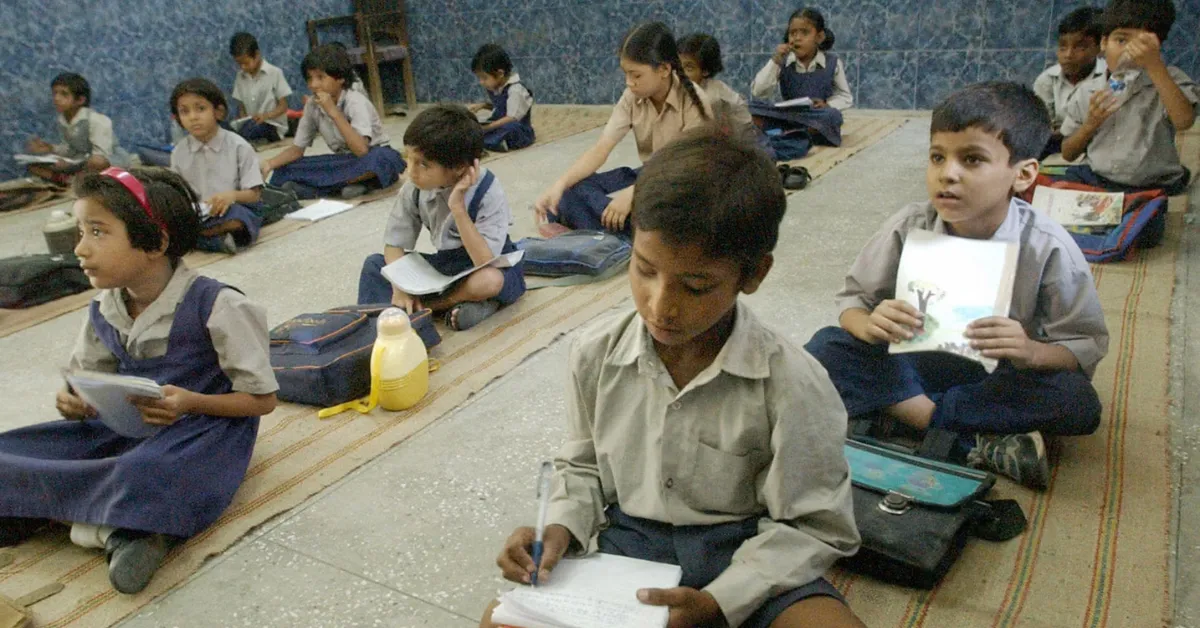
From school corridors to postgraduate lecture halls, girls are not just catching up — they are beginning to outnumber boys.
Recent data from the National Statistical Office (NSO) signals a turning point. India is steadily closing long-standing gender disparities in education, with girls now surpassing boys in enrolment across several stages.
This is not a sudden spike, but the result of years of layered progress — policy interventions, social change, and growing awareness about the value of educating girls.
Gender parity begins at the school level
At the school level, gender parity has largely been achieved. Enrolment data shows that girls are now slightly ahead of boys across primary, upper primary, and secondary levels.
This marks a significant departure from earlier decades, when keeping girls in school itself was a challenge, especially in rural and economically vulnerable communities.
Under the National Education Policy (NEP) framework, female enrolment has improved across foundational, preparatory, middle, and secondary stages.
/filters:format(webp)/english-betterindia/media/media_files/2026/05/13/4-2026-05-13-15-45-35.png)
In recent years, girls have not only matched but exceeded boys in adjusted net enrolment rates at the secondary level — a strong indicator that retention is improving alongside access.
Higher education sees a decisive shift
The shift becomes even more pronounced in higher education. Between 2021–22 and 2022–23, the female Gross Enrolment Ratio (GER) rose from 28.5% to 30.2%, overtaking the male GER, which increased from 28.3% to 28.9%. Women now account for over half of total higher education enrolments in India.
At the postgraduate level, the trend strengthens further. Women constitute a dominant share in MPhil programmes, making up over 76% of enrolments.
This reflects not just increased access, but persistence — more women are staying within the academic pipeline and pursuing advanced degrees.
Subject choices still reveal gaps
However, this progress is not evenly distributed across disciplines. Women continue to cluster in arts, sciences, and medical fields, while men dominate engineering, technology, and management streams.
This uneven representation points to deeper structural and social influences — from gendered expectations to limited exposure and mentorship in STEM fields. Bridging this gap will be critical to ensuring that educational gains translate into equitable career opportunities.
Dropout rates are steadily declining
One of the most encouraging developments is the decline in dropout rates for both boys and girls. Between 2022–23 and 2024–25, dropout rates have reduced across educational stages, with sharper improvements seen at preparatory and middle levels.
/filters:format(webp)/english-betterindia/media/media_files/2026/05/13/2-2026-05-13-15-43-37.png)
These gains reflect the impact of sustained interventions — mid-day meal schemes, better school infrastructure, scholarships, and targeted programmes aimed at keeping children, especially girls, in school.
A generational shift in literacy
While the overall literacy gap between men and women remains at around 14 percentage points, the picture looks far more optimistic among younger populations. Among those aged 15–24, the gap has narrowed sharply to just 3.8 percentage points.
This signals a generational shift. Female literacy in India has risen from just over 30% in the early 1980s to more than 70% today.
As these younger, better-educated cohorts grow older, the broader gender gap is likely to shrink further.
Beyond policy, a shift in mindset
Policy interventions have played a crucial role in driving this transformation. From infrastructure improvements like building toilets in schools to financial incentives for continued education, targeted efforts have addressed key barriers that once kept girls out of classrooms.
/filters:format(webp)/english-betterindia/media/media_files/2026/05/13/3-2026-05-13-15-41-38.png)
But equally important is the shift in societal attitudes. Families are increasingly viewing girls’ education as an investment rather than an obligation. Across regions, daughters are becoming first-generation learners, breaking long-standing cycles of limited access.
From access to empowerment
Despite the progress, challenges remain. Access does not automatically ensure equity. Digital divides, early marriages, safety concerns, and limited career guidance continue to shape girls’ educational journeys — particularly in rural and marginalised communities.
What India is witnessing today is more than a statistical milestone — it is a social transformation in motion. As girls move from classrooms to campuses in greater numbers, the focus must now shift from enrollment to empowerment.
Because when girls not only enter but thrive in education — across disciplines and career paths — they do more than change their own futures. They reshape the possibilities for an entire generation.
Sources:
‘All India Survey on Higher Education (AISHE) 2021–22’: by Ministry of Education, Government of India, Published on 25 January 2024
‘AISHE 2021–22 Report Highlights Female GER Surpasses Male GER’: by Press Information Bureau (PIB), Published on 25 January 2024
‘Unified District Information System for Education Plus (UDISE+) Reports’: by Ministry of Education, Government of India
‘Statistics & UDISE+ Reports’: by Ministry of Education, Government of India
‘National Education Policy 2020’: by Ministry of Education, Government of India, Published on 29 July 2020
‘Education in India’: by National Statistical Office (NSO), Ministry of Statistics and Programme Implementation (MoSPI)