FIRST KNOWN VICTIMS
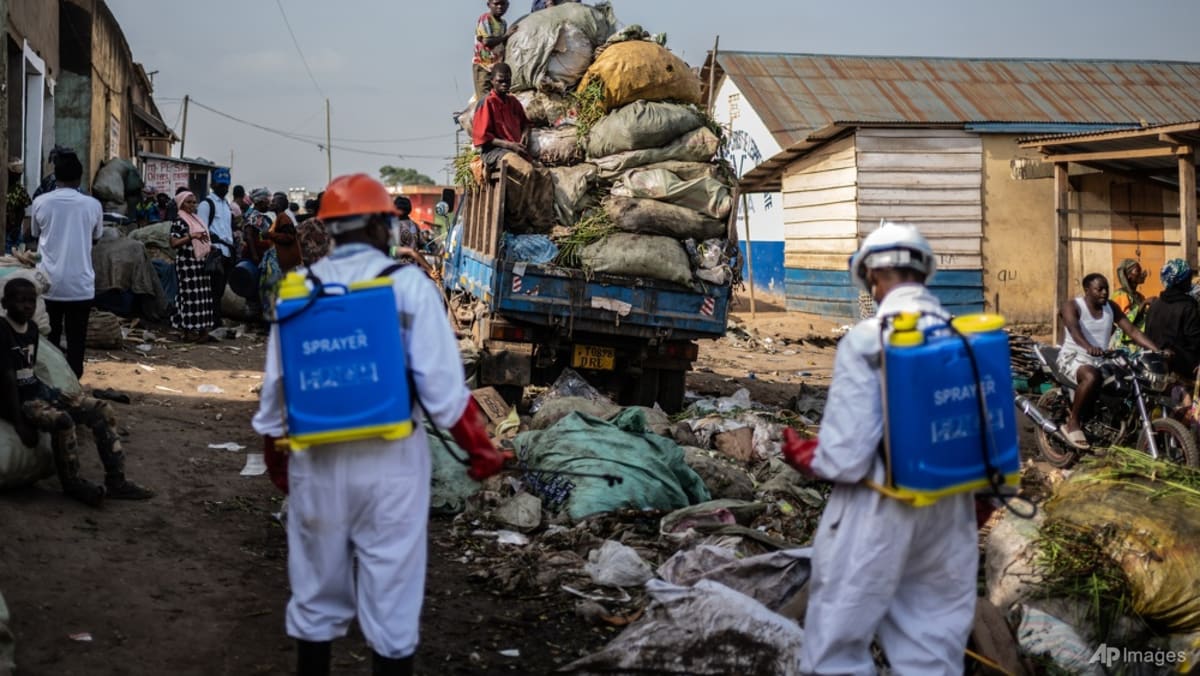
The Red Cross said on Saturday that three Congolese volunteers had died in Ituri after apparently contracting Ebola there.
The three “were carrying out dead body management activities on March 27 as part of a humanitarian mission unrelated to Ebola”, said the International Federation of Red Cross and Red Crescent Societies (IFRC).
“At the time of the intervention, the community was not aware of the Ebola virus disease outbreak… They are among the first known victims.”
Ebola has killed more than 15,000 people in Africa in the past half-century.
On Friday, the WHO raised the risk from Ebola in the DRC to its highest level – “very high”.
It said the risk in central Africa was “high” but the global risk remained “low”.
The outbreak, which experts suspect was circulating under the radar for some time, is caused by the less common Bundibugyo strain, for which there are no approved vaccines or treatments.
On Thursday, Uganda suspended public transport to the DRC after confirming its first two cases – one infection and one death – involving Congolese nationals who crossed the border.
It said the driver confirmed infected on Saturday had been at the wheel of the vehicle in which one of the ill Congolese nationals had travelled to Uganda.
The health worker was exposed to the virus when treating that Congolese patient.
The third case was a Congolese woman who had visited Uganda and tested positive for Ebola after returning to the DRC.
“EVERYONE’S PROBLEM”
The eastern DRC has been plagued for three decades by conflict involving a litany of armed groups.
State services in rural areas of Ituri have been largely absent for decades.
South Kivu is controlled by the Rwandan-backed armed group M23, which has never had to manage an epidemic like Ebola.
“This is everyone’s problem,” Congolese Health Minister Samuel Roger Kamba told a news conference in Addis Ababa alongside Kaseya.
He said the Kinshasa government needed to have “total control” of the DRC territory to stop the virus spreading.