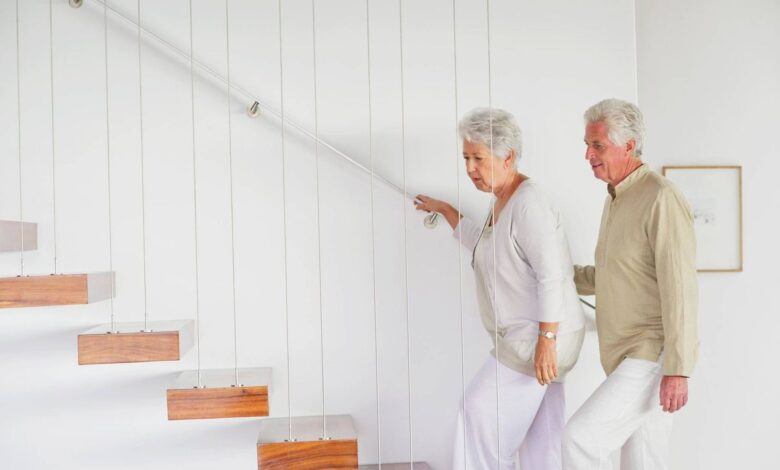
Dementia symptoms can appear in unexpected ways, with early walking difficulty and balance problems on stairs being an overlooked warning sign of cognitive decline that affects many in Ireland — experts advise consulting your GP if you notice these changes

Struggling with stairs could be an early warning sign of dementia, with experts highlighting this subtle symptom which can affect movement and spatial awareness before memory loss becomes apparent
Dementia is a general term that refers to a decline in cognitive abilities which seriously impacts everyday life. It’s not a single disease, but rather a syndrome caused by various conditions that damage the brain.
Alzheimer’s disease represents the most common type of dementia, although other forms exist, including vascular dementia, Lewy body dementia, and frontotemporal dementia.
While dementia is commonly associated with memory loss, confusion, and difficulty performing everyday tasks, one frequently overlooked symptom can appear unexpectedly – when using stairs.
Experts are drawing attention to this lesser-known early indicator of dementia that may present itself before significant behavioural changes become evident. Alzheimer Scotland, a leading dementia charity, has stressed the importance of recognising symptoms beyond memory loss.
The charity stated: “People often assume that memory loss and dementia are one and the same, but there are other key symptoms and signs to look out for. Every person with dementia is different. How their illness affects them depends on which areas of their brain are most damaged,” reports the Irish Mirror.
Dementia presents itself in various ways, and while memory deterioration, slower thinking, reduced mental sharpness, and language difficulties are well-known signs, there are other warning indicators that could suggest its onset. Changes in balance, coordination and spatial awareness can act as an early indicator that something may be amiss, though many dismiss these subtle shifts as simply a natural part of ageing.
Beyond cognitive deterioration, dementia can significantly affect physical movement, with sufferers often finding it difficult to judge distances correctly – most likely due to the brain’s diminished capacity to interpret spatial information.
The condition can result in impaired visuospatial awareness, rendering routine activities such as navigating stairs far more difficult. Affected individuals may find it hard to lift their legs adequately and become more vulnerable to slips or tumbles.
Alzheimer Scotland warns that dementia can transform how we engage with our environment, potentially increasing the likelihood of trips and falls.
The Alzheimer’s Society has highlighted that alterations in a person’s walking pattern, such as dragging their feet instead of raising them, could signal early-stage dementia.
“Things like slips, trips and falls might become more common. You might start to notice that a person is shuffling as opposed to lifting their legs when they are walking,” the charity explains. If someone is having difficulty with stairs alongside other dementia symptoms, it’s important to book a GP appointment for them. The society suggests discussing any necessary home adaptations with landlords or letting agents, and encourages participation in strength and balance exercises.
“You can reduce your risk of falling by doing strength or balance exercises twice a week. These include sitting, standing and walking exercises. Your GP could also refer you to a physiotherapist.”
Want to see more of the stories you love from RSVP ? To add RSVP as a preferred source of news on Google, simply click here