Bengal Power Clash: Mamata Refuses Exit Despite Rout, Constitution Points to Inevitable Change

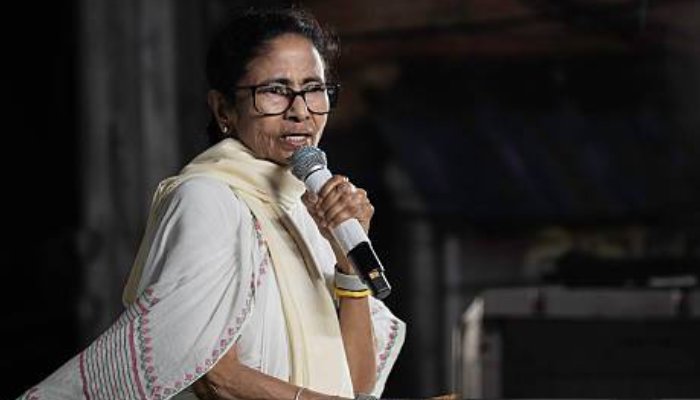
West Bengal has entered a rare constitutional flashpoint after Chief Minister Mamata Banerjee refused to resign despite a decisive defeat in the 2026 Assembly elections. The move sets up a confrontation that goes beyond routine politics and cuts to the core of democratic legitimacy. The Bharatiya Janata Party has secured a commanding 207 seats, while the Trinamool Congress has fallen to 80, leaving no ambiguity about the mandate.
Banerjee, who also lost her Bhabanipur seat by over 15,000 votes to BJP’s Suvendu Adhikari, has rejected the outcome. She alleged that the elections were not fair and accused the Centre and the Election Commission of interference. Her refusal to step down breaks long-standing democratic convention, where outgoing Chief Ministers accept electoral verdicts and ensure a smooth transfer of power.
Defiance Meets Democratic Arithmetic
At the centre of this standoff lies a principle that anchors India’s parliamentary system. A Chief Minister can remain in office only as long as they command the confidence of the legislative assembly. This is not a procedural formality but the foundation of representative governance.
With the BJP holding a clear majority, the TMC no longer has the numbers to sustain its claim to power. The gap is decisive and undeniable. In such a situation, political assertions cannot override legislative arithmetic. The electorate has delivered a clear mandate, and that mandate is not open to reinterpretation.
Banerjee’s stance moves beyond political disagreement and enters the territory of constitutional defiance. It tests the limits of executive authority against the will of the Assembly and raises a larger question about respect for electoral verdicts.
Governor as Constitutional Arbiter
As the impasse unfolds, the Governor now carries the responsibility to restore constitutional order. The Governor can ask the incumbent Chief Minister to resign and, if required, direct a floor test in the Assembly.
If the Chief Minister refuses to comply, the process moves forward regardless. A failure to prove majority ends the government’s legitimacy. The Governor can then dismiss the Council of Ministers and invite the leader of the majority party to form the next government.
The timing tightens the situation further. The current Assembly’s tenure will end in early May, triggering its automatic dissolution. In the newly elected Assembly, where the BJP holds a clear majority, the transition of power becomes a matter of procedure rather than contest.
President’s Rule: A Short Constitutional Bridge
If the deadlock continues, President’s Rule under Article 356 remains a real possibility. Even a brief imposition can ensure continuity and prevent administrative uncertainty during the transition.
Former Chief Election Commissioner S Y Quraishi has indicated that in such exceptional circumstances, President’s Rule may act as a temporary bridge until a new government takes oath. Legal experts have also warned that prolonged resistance risks pushing the state into avoidable constitutional disruption.
The Inevitable Outcome
Despite the resistance, the path ahead is clear. The BJP legislature party will elect its leader, who will take the oath as Chief Minister. The new government will assume office without delay.
India’s democratic record offers no precedent where a Chief Minister has held on after losing majority support so decisively. Courts have consistently upheld that the floor of the Assembly decides legitimacy.
In Bengal, the numbers are decisive, and the Constitution is unambiguous. Defiance may dominate headlines for now, but it cannot overturn the mandate. In a democracy, power rests not on refusal but on representation.