A federal magistrate judge expressed deep concern Monday with the post-arrest treatment of the California man charged for allegedly attempting to assassinate President Donald Trump at last month’s White House correspondents’ dinner and whether he has faced overly restrictive conditions that were “extremely disturbing.”
Magistrate Judge Zia Faruqui convened a hearing on Monday after attorneys for Cole Allen, 31, requested over the weekend that he be removed from suicide watch at the Washington, D.C., jail facility.
Even though Allen’s attorneys later moved to withdraw that request after they were informed he was taken off suicide watch, Faruqui ordered the hearing, citing “grave concerns” about the treatment Allen has faced.
The judge said some of Cole’s restrictions entailed being placed into a padded cell, with no access to phone calls, books or recreational time. Faruqui also raised the issue of sleep deprivation, noting that Cole had “constant lighting.”
In a heated line of questioning with a representative from D.C.’s Department of Corrections, Faruqui probed why it seemed that Allen had faced much harsher treatment since his arrest than many of those charged with participating in violence during the Jan. 6 attack on the U.S. Capitol who were granted transfers to D.C.’s less-restrictive Correctional Treatment Facility (CTF).
“People seem to have forgotten about Jan. 6 — I have not,” Faruqui said. “Pardons may erase convictions, but they do not erase history. I had many, you know, there was — easily right — dozens, if not more, of people that had firearms that day… People got closer to killing the president that day, they were hanging gallows outside of the front of the Capitol building.”
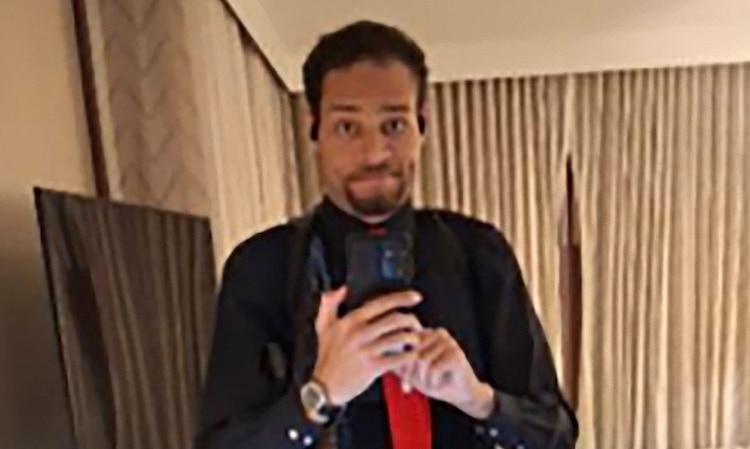
The xc released an image on April 29, 2026, it said was of suspect Cole Allen taking a selfie of himself in his hotel room before allegedly trying to breach security at the event while armed with multiple weapons.
Department of Justice
“I’m just trying to understand, why is there this great difference between Mr. Allen’s situation and what happened there, where they were given the benefit of the treatment going over to CTF,” Faruqui said. “If we were able to house all the January 6 defendants at CTF, why Mr. Allen doesn’t have that same benefit as someone without a criminal history?”
Faruqui claimed Allen was being treated “differently than anyone I’ve ever observed” including accused terrorists, gang members and others facing charges of political violence.
At one point during the hearing, Faruqui apologized to Allen for the conditions he has faced.
“We are obligated to make sure that you’re treated with the basic decency that human beings should have, let alone a presumed innocent person,” Faruqui said. “So I’m sorry. It sounds like things have not been the way that they’re supposed to.”
In trying to give some clarity over the initial move to put Allen under suicide watch, assistant U.S. Attorney Jocelyn Ballantine noted to Faruqui that after his arrest Allen did tell FBI agents that he did not expect to survive the attempted assassination. She further noted that in his email he sent to family and others just before carrying out the attack, he mentioned not likely being able to speak to them again.
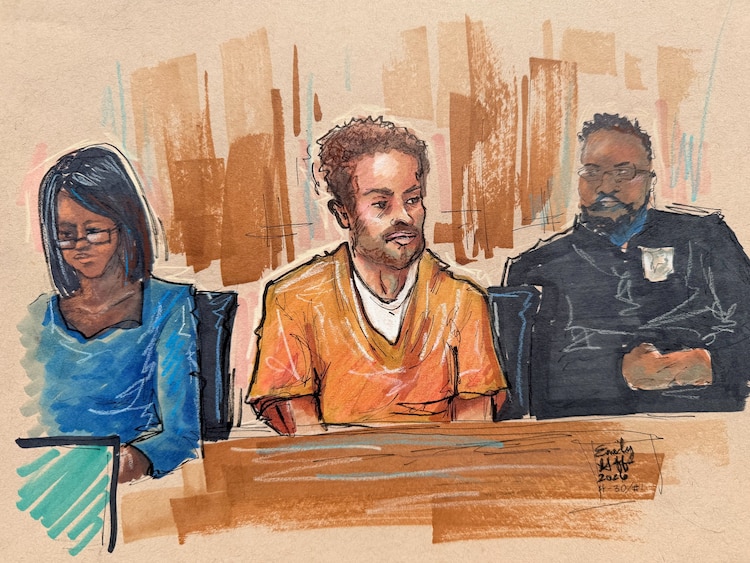
Cole Tomas Allen, a suspect in the White House Correspondents’ Association dinner shooting, sits in the courtroom during a hearing after being charged with attempting to assassinate President Donald Trump, in Washington April 30, 2026.
Emily Goff/Reuters
“I think coming into this, Mr. Allen traveled across country, a great distance over several days to commit this attack and it was clear at the time he committed the attack did not expect to survive it,” Ballantine said. “Which I think certainly initially gives rise to serious concerns about the potential for suicide.”
An attorney for the D.C. Dept of Corrections, Tony Towns, said at the hearing that decisions regarding Allen’s confinement conditions were intended to address safety concerns, and not intended to punish him.
Faruqui instructed Allen’s defense attorneys to keep him updated on the progress of his conditions, though Faruqui also acknowledged he had little in the way of power to compel D.C. Corrections to ease restrictions on his confinement.