
While there are roughly 18,000 people in Ireland with Parkinson’s, it is still a very misunderstood condition. Parkinson’s disease is a progressive neurological disorder that mainly affects movement. It is caused by the loss of the chemical dopamine.
The condition affects everyone differently, and some people’s Parkinson’s progresses more slowly. Medication can also slow down the progression of the disease.
Physical symptoms can include a tremor, stiffness, slowness, a stooped posture, a change in the way people walk, a change to handwriting and impaired balance.
However, many people don’t realise that Parkinson’s doesn’t just affect movement. It can also cause anxiety, bladder and bowel problems, depression, fatigue, low blood pressure, loss of sense of smell, memory problems, and trouble sleeping.
The condition is often associated with older men, but there has been an increase in the number of younger people being diagnosed.
Here, we chat to a woman who was diagnosed with Parkinson’s to find out more.
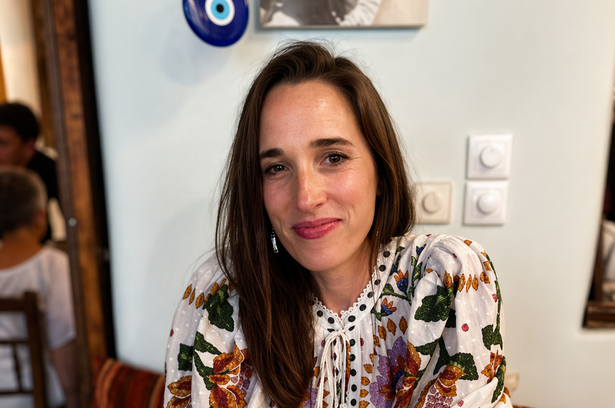
In her early 30s, Catriona Kinnevey started experiencing some strange symptoms that she couldn’t explain. She had just started a new job in LinkedIn and was preparing to get married, so, like many brides, she decided to start exercising more. “In the gym, I noticed that I had a bit of a tremor after I worked out. I just put that down to increasing my exercise.”
It was around 2015 when these symptoms began. She also noticed another change – when looking back at photos and videos, she realised her hand seemed to form a claw. “It wasn’t relaxed, it was always arched.”
She also experienced stiffness all down her left side. “I felt a curving and cramping sensation. My walk also changed around that time too. I was kicking the tops of my shoes off the pavement. I used to think to myself, ‘don’t kick, don’t kick’ and every time I would kick. It was really frustrating.”
Other people would also make comments, asking her if she was okay because she appeared to be limping.
Catriona visited her doctor, explaining that she had a bit of a shake. However, it was put down to anxiety. “I started going to cognitive behavioural therapy. I thought if I could feel less anxious, I could get the shake under control. But I could never fully stop it.”
Over the years, Catriona’s brother had experienced similar symptoms to her. “I noticed he had a laboured walk, a tremor and a clawed hand too. He always said I had a tremor like him, but I didn’t really want to hear it. I thought what I had was different. I convinced myself it was linked to PMS.”
Catriona’s brother was very determined to get to the bottom of his symptoms and, after 10 years of searching for answers, he received a diagnosis of Parkinson’s. He rang Catriona with the news, saying he thought she had it too. “Initially it was a real shock, I was upset. You wonder what your life is going to look like.”
Catriona added that she didn’t know much about Parkinson’s back then, and she associated it with the actor Michael J. Fox and older people with mobility issues.
Around the time her brother got diagnosed, Catriona was under a lot of stress. She had her first baby, but was struggling to conceive her second and had sadly gone through a few failed rounds of IVF and a miscarriage.
Catriona was very worried about getting an official diagnosis as she feared the doctors would advise her against having another baby. However, she needn’t have worried.
“I was so tense. Even though I knew there was a good chance I had Parkinson’s, it was still a shock. But the neurologist explained to me that when you have young onset Parkinson’s, it tends to progress slower. I was worried about my symptoms and having a second baby, but he said that it would be fine for me to have another child.”
This gave Catriona hope and an enormous sense of relief. “When I was getting the scans and procedures for fertility treatments, I just felt like I couldn’t relax. Obviously I had a tremor and was worried about what was causing it. One doctor thought I was really anxious and told me to try and stop shaking. They even advised me to get counselling.”
Armed with her new knowledge, Catriona was able to tell the fertility doctors that she had Parkinson’s, and she wasn’t as stressed about trying to ‘relax’ her body. She went on to have another baby. “I received an official Parkinson’s diagnosis in July 2024 at 39 years of age. I couldn’t start Parkinson’s medication until I stopped breastfeeding, which was March 2025. I noticed a huge difference as soon as I did start on medication.”
Catriona’s walk and tremor improved, and she felt her body was more relaxed in general. “I also understand now that I have to look after my body. I make sure I exercise, rest and eat well.”
By the time people experience Parkinson’s symptoms, roughly 80 percent of the dopamine in their body is gone, she explains. “Dopamine is responsible for movement, reward and motivation. You really have to manage your energy. For me, I have much more energy in the morning. By the time the afternoon rolls around, I slow down and shuffle more.”
Catriona shares her experience online so other people don’t feel so alone. “I wish I had seen someone like myself, living a normal life with Parkinson’s, having challenges but not letting it dictate their life.”
Catriona says every person with Parkinson’s has symptoms that are unique to them. She also doesn’t like to think too far in the future, instead preferring to live in the present.
For anyone who has just received a diagnosis, Catriona says they shouldn’t put too much pressure on themselves to be positive. “It took me a long time to get to where I am. I had symptoms for over 10 years. I had some really dark and hard times. In your own time, you’ll find your community, that might be online or in-person, like with Parkinson’s Ireland, who run a programme for newly diagnosed people. They also have nurse and counsellor support. The diagnosis is a huge change to anyone’s life.”
How can people support a loved one who has recently been diagnosed? “There’s still a stigma and shame around the condition. People should try and approach their friends in a positive and gentle way.”
Workplaces can also do more to help people with Parkinson’s stay in the workforce, but thankfully Catriona’s employer has been understanding. “I still work full time. I have worked with my employer, LinkedIn, to develop a recharge room where me and other people who need it can have a rest. There’s blankets, low lighting and meditative music.
“Sometimes when I am in the office I get really tired and need a half an hour to lie down. Other people use it too, people who are pregnant or have MS for example. These things benefit everyone.”
Catriona’s daughters are now six and two years old, and she has explained what Parkinson’s is in terms they can understand. “One of my older daughter’s friends said to her once: ‘Your mommy is wobbly’. I was conscious that people might make comments about me in front of her, so I wanted her to be aware of it and feel safe. We just explained to her that I used to shake a lot, but I take medication now that helps with that.”
Catriona also hopes that by continuing to work full time, and by speaking out publicly in the media about her diagnosis, she will show her girls that they can do anything. “I am trying to normalise it. I don’t want there to be any shame around Parkinson’s or my symptoms.”
- You can follow Catriona on IG: @parkinsonsgirly
- Parkinson’s Ireland’s national freephone helpline is 1800 359 359 and opens 9am-5pm on weekdays. Visit parkinsons.ie
To read the full story, pick up a copy of RSVP, on shelves now.
Want to see more of the stories you love from RSVP ? To add RSVP as a preferred source of news on Google, simply click here