
The crisis in Dakshinpuri Block 10 has worsened to the point where several domestic workers now depend on their employers’ homes for bathing facilities.

Published: May 23, 2026 9:57 PM IST
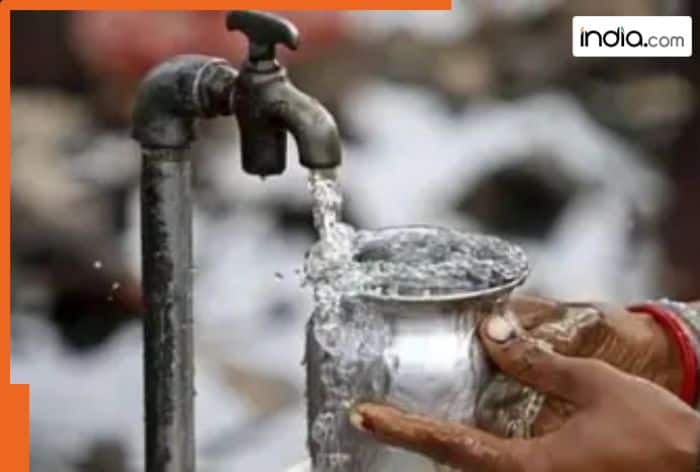
The scorching heat in Delhi has worsened the water crisis in areas like Dakshinpuri in South Delhi. Images shared online showed empty buckets placed in queues as residents alleged they had been dealing with water shortages for several months.
The national capital has been battling a severe heatwave over the past few days as temperatures soared beyond 45 degrees Celsius in many areas, bringing scorching conditions, heat-related illnesses, and uncomfortable nights.
“We are facing a severe water crisis in Dakshinpuri’s Ambedkar Nagar Sector-5. Water supply remains unavailable for months, and when it finally arrives, it is dirty and resembles sewage water,” a resident was quoted by IANS as saying.
Around 5,000 residents from various blocks in Dakshinpuri are dealing with a severe water crisis, according to the Times of India. According to TOI, the situation in Dakshinpuri Block 10 is so dire that several domestic workers have been forced to seek permission from employers to use water and bathe at work.

Ishita, who works in Kalkaji as a domestic helper, told TOI that the water crisis had forced her to depend on her employers for basic needs. “They agreed to let me take a shower there. Sometimes I even take my younger sister, but this is not a long-term solution,” she said.
Also Read: Video: Delhi Jal Board Office Vandalised Amid Severe Water Crisis
According to TOI, 30-year-old Gurmeet Singh said the water crisis had become so severe that he had not bathed properly for an entire week. “This may sound unreal, but this is how we are surviving. In this weather, water is the bare minimum people need,” he said.
“Forget everything else, we do not even have enough water to drink. For how long will we keep buying water? We have already been purchasing it for more than a month,” he told the newspaper.
The report claimed that the only relief for many residents is a tap at the Shree Shiv Krishan Mandir near their block. As soon as the supply starts in the evening, residents rush with drums, buckets and bottles, leading to chaos, it added.
Residents said the water is often dirty and black, but people still collect it so that it can at least be used in toilets.
What did the Delhi Jal Board say?
Speaking to TOI, a Delhi Jal Board (DJB) official said the agency and the government are working round the clock to ensure people face as little disruption as possible, despite reduced raw water availability from upstream areas.
“On average, approximately 6,500 tanker rounds are being carried out every day to ensure water reaches affected areas across Delhi. We are working on urgent solutions to improve the situation,” the DJB official was quoted as saying.
At least 200–250 kilos of fish die in Sanjay Lake
Hundreds of dead fish were spotted floating in Trilokpuri’s Sanjay Lake, highlighting the worsening condition of the water body as low water levels and lack of oxygen severely affected aquatic life.
Describing the harrowing scene, a guard assigned for garden maintenance, Bhavesh Sarkar told PTI, “I came here this morning. We were called yesterday, but we could not come then. Today, I came at 9 am and saw that all the fish had died.”
Also Read: AAP Chief Arvind Kejriwal Skips ‘Ilegal’ ED Summons In Delhi Jal Board Case
“This happened because of the lack of water. The water level is very low, and the water has become extremely hot due to the high temperature, which is why the fish are dying. There were at least 200–250 kilos of fish here,” he said.
“We have removed some of them, and the rest will also be cleared by evening. It has been at least two-and-a-half to three months since water stopped coming here. I don’t know what the issue is. Earlier, when water was available, we used to work here regularly. We have been working here for around six years,” he added.