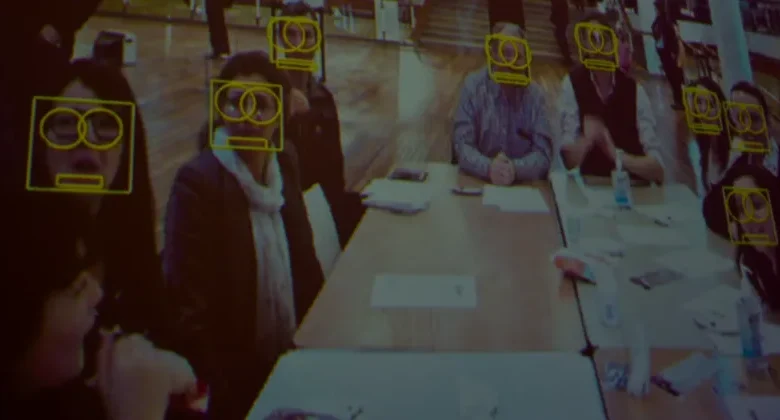
The use of facial recognition technology in Uttar Pradesh’s recent Nagar Panchayat bypolls can appear like a small administrative experiment, but it has opened a much larger debate: Is India moving towards biometric-based elections? And if the pilot succeeds, could facial recognition eventually become part of Assembly and even Lok Sabha elections in the future? For the first time, the Uttar Pradesh State Election Commission has deployed facial recognition technology during civic by-elections to strengthen voter verification and prevent any sort of impersonation. The system was introduced on a pilot basis in selected urban local body polls, becoming one of the biggest technology based changes in Bharat’s election process after EVMs and VVPAT systems.
It is being closely watched not just by political observers, but also by election authorities across Bharat, policy experts, cyber-security analysts, and privacy advocates. With India conducting the world’s largest democratic exercises involving nearly a billion voters, the question is no longer whether technology will play a bigger role in elections, but how far that technological integration will go.
The Uttar Pradesh State Election Commission has been gradually preparing the ground for technology-enabled elections. Ahead of the upcoming Panchayat Elections 2026, the commission had already announced two major reforms, facial recognition verification and the introduction of a State Voter Number (SVN) system which aims to reduce the duplicate and fake voting. Officials say the purpose behind facial recognition is straightforward: ensuring that the person entering the polling booth is the genuine voter who is listed in electoral records. The technology matches a voter’s live photo with the image already available in the voter database. This will reduce the fake voting, impersonation, and duplicate voter entries.
The civic bypoll experiment was more than a local administrative initiative. It is a testing ground for a future electoral model where identity verification may increasingly rely on digital and biometric systems. The timing is also important, as Uttar Pradesh recently completed major voter list revision and digital verification exercises. Reports indicate that over 13 crore voters are part of the updated rolls, while multiple names have been scrutinised during the SIR.
India’s elections are steadily becoming more technology-driven, and facial recognition is only the latest step in that transformation. Over the past two decades, the country’s electoral system has increasingly integrated digital tools to improve efficiency, transparency, and security. The introduction of Electronic Voting Machines (EVMs) transformed the voting logistics by replacing paper ballots, while the later addition of Voter Verifiable Paper Audit Trail (VVPAT) slips tried to strengthen voter confidence and transparency in the counting process. Now, election authorities are moving toward even more advanced systems, including QR-code-based access verification at counting centres, digitised voter databases, online electoral services, mobile-based e-voting pilots in select states, and discussions around biometric verification technologies.
Tamil Nadu recently implemented QR code verification systems at counting centres to prevent unauthorised entry and improve election security. The Election Commission described the move as part of more than 30 technology-oriented initiatives introduced over the past year. Bihar also explored mobile-based e-voting systems for urban local body elections and became one of the first Indian states to test remote digital voting methods. Together, these changes show that Indian elections are gradually entering a new era where digital authentication, automated verification, and AI-assisted systems may eventually become routine parts of the electoral process.
Telangana had already tested facial recognition software during local body polls in 2020 but that was on a pilot basis at selected polling stations with the aim of reducing impersonation and fake voting. However, the Uttar Pradesh experiment is politically more important because of the state’s large size and influence. As India’s most populous state and a central player in national politics, innovations introduced in Uttar Pradesh often attract nationwide attention. This is why the current facial recognition pilot in UP is being viewed as potentially more influential than earlier experiments elsewhere.
At present, there has been no official announcement from the Election Commission of India regarding nationwide facial recognition-based verification in Lok Sabha elections. Yet it can be estimated that biometric electoral systems are increasingly entering mainstream policy discussions. The Supreme Court also issued notices to the Centre and the Election Commission on petitions seeking fingerprint, iris, and biometric verification at polling booths to prevent duplicate and fraudulent voting. The petitions argued that conventional voter ID verification suffers from problems like outdated photographs and weak real-time authentication. Supporters believe biometric systems could significantly reduce impersonation and strengthen electoral integrity.
With more than 96 crore registered voters, maintaining accurate voter rolls and preventing fraud is a major administrative challenge. Duplicate voter entries, impersonation, bogus voting, and outdated databases have long been concerns in Indian elections. Biometric verification is seen as a potential solution to these structural problems. Despite these promises, facial recognition remains one of the most controversial surveillance technologies in the world.