UAE deports 15,000 Pakistanis, freezes life savings amid strains in Ties— after Etihad’s pink-slip purge | Iran War

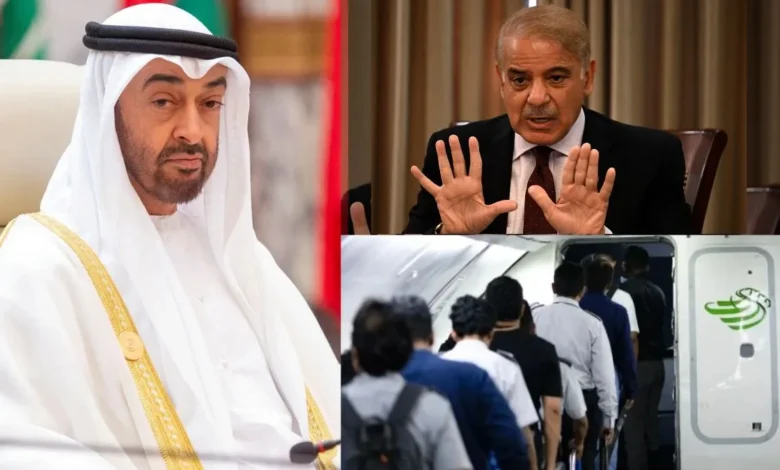
Abu Dhabi: It did not begin with a courtroom or a policy memo. It began at an immigration counter. Fifteen Pakistani employees of Etihad Airways — including a veteran with nearly two decades of service — were handed a verdict with no appeal: you have 48 hours to leave the country. It has been clear that the termination of 15 employees by UAE’s Etihad Airways was state policy.
Amid the termination of employees from the state run Etihad, 15,000 Pakistani nationals have been reportedly has been deported from UAE with freezing their whole life savings. According to New Lines Magazine, the actions followed a pattern of arrests, phone confiscations, transfers between detention sites and deportation flights to Pakistan.
The report says that many of those expelled had spent decades working in the UAE, where migrant remittances remain a critical source of income for families and foreign exchange for Pakistan. Affected individuals include laborers, doctors, teachers, and small business owners.
UAE authorities have reportedly cited visa violations and residency issues as standard enforcement measures.
Strains between Pakistan-UAE dur to Iran War?
The financial trigger is stark. On April 23, 2026, the Abu Dhabi Fund for Development demanded immediate repayment of $1 billion against a total $3.45 billion debt — an arrangement that had previously been managed with deliberate patience. The demand was a demotion: Pakistan reclassified from strategic partner to credit risk.
The labour crackdown is the next chapter of that ledger. Remittances from the Gulf account for a critical share of Pakistan’s foreign exchange inflows. By targeting workers en masse, Abu Dhabi has found the pressure point that no military signal could replicate.
On April 23, 2026, the Abu Dhabi Fund for Development demanded immediate repayment of $1 billion — the opening instalment on a $3.45 billion obligation that had previously been managed with patient diplomacy. The demand was categorical: Pakistan is no longer a partner to be sustained. It is a liability to be settled.
Simultaneously, the UAE has formalised a tectonic strategic realignment. The deployment of Israel’s Iron Dome onto Emirati soil — following over 2,700 Iranian missile and drone strikes — has transformed the Abraham Accords from a diplomatic framework into a wartime military alliance. UAE presidential advisor Anwar Gargash has warned that restoring trust with Iran will take “ages and ages,” signalling a permanent rupture with Tehran.
The UAE’s formal exit from OPEC completes a different rupture — this one with Saudi Arabia. Mohamed bin Zayed and Mohammed bin Salman, once close allies, now represent incompatible regional visions. The UAE has been on opposite sides of Saudi Arabia in Yemen, Sudan, Libya, and Somalia. By leaving OPEC, Abu Dhabi declares itself a diversified global player rather than a junior partner in a Gulf bloc.
UAE–India trade and defence ties
As UAE–India trade and defence ties deepen under the Abraham Accords framework, Indian nationals in the Emirates face no equivalent vulnerability. New Delhi’s diplomatic posture — neutral on the Iran question, expanding its Gulf footprint — has positioned India as the region’s preferred South Asian partner.
Why the sudden hostility? Look to the Saudi-Pakistan axis. As Islamabad doubles down on its defense alignment with Riyadh—offering troops and strategic backing—it has inadvertently placed itself on the “wrong side” of an emerging intra-Gulf rift. Abu Dhabi, now anchored in a new security architecture alongside Israel and India, increasingly views Pakistan’s tilt toward Saudi Arabia as a strategic irritant.