The counting of votes for the 2026 West Bengal Assembly elections is underway, and early trends indicate a significant political shift in the state. The Bharatiya Janata Party (BJP) is leading in over 200 of the 294 seats, pointing towards a potentially historic mandate.
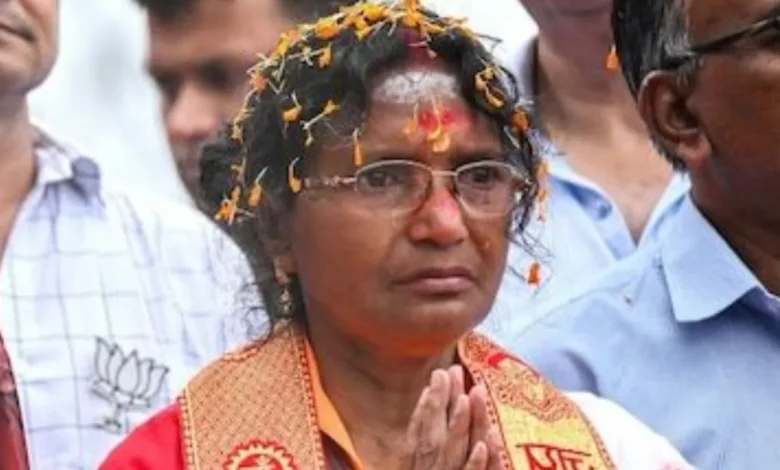
Among the most closely watched constituencies is Panihati, where BJP candidate Ratna Debnath—mother of the RG Kar Medical College rape and murder victim has surged ahead with a decisive margin of over 20,000 votes, according to the latest data available on the Election Commission website.
Debnath’s nearest rival is TMC’s Tirthankar Ghosh, while CPI(M)’s Kalatan Dasgupta remains in third position, far behind in the race.
“This is a Fight for Justice”
Speaking amid the counting process, Debnath described the election as more than just a political contest. “My daughter is no longer just mine; the whole world is looking at Panihati. My daughter will surely make the lotus bloom in all of Bengal. This vote is for that purpose,” she said.
Reiterating her resolve, she added, “This fight will not stop here; I will continue as long as I live. Then, on the 12th, there’s a hearing in court at 10 AM. I am pursuing both.”
Her words underline a rare moment in electoral politics where a personal tragedy has evolved into a broader call for justice, resonating far beyond constituency boundaries.
A bastion under challenge
Panihati, located in North 24 Parganas district and falling under the Dum Dum Lok Sabha seat, has long been considered a stronghold of the Trinamool Congress, having remained under its control since 2009.
However, the brutal rape and murder of Debnath’s daughter inside a government hospital in 2024 triggered widespread outrage, not just in West Bengal but across the country. The gravity of the case drew the attention of the Supreme Court, intensifying scrutiny on law and order as well as institutional accountability.
This incident appears to have significantly altered the political mood in the region, with voters rallying around Debnath’s campaign centred on justice and systemic reform.
Ratna Debnath’s personal journey has become emblematic of this election. According to reports, she has not combed her hair since her daughter’s death, observing it as a mark of mourning and protest—a symbol that has struck an emotional chord with many voters.
Her decision to enter politics came months after the tragedy. BJP leaders reportedly approached her around six months ago, encouraging her to take her fight for justice into the political arena. Accepting the proposal, Debnath positioned her candidacy as an extension of her legal and moral battle.
“My daughter’s tragedy could have happened to anyone,” became a recurring theme in her campaign, transforming an individual case into a collective concern for women’s safety.
Who is Ratna Debnath?
Ratna Debnath, 54, is the BJP candidate from Panihati. According to her election affidavit, she is married to Sekhar Ranjan Debnath and has declared total assets worth approximately ₹74 lakh.
Until recently a private citizen, her entry into politics marks a significant shift—from a grieving mother seeking justice to a public figure leading one of the most emotionally charged campaigns in recent electoral history.
As per the latest counting figures, Debnath has secured over 56,000 votes, while TMC’s Tirthankar Ghosh trails with around 35,704 votes, creating a gap of more than 20,000 votes. CPI(M)’s Kalatan Dasgupta has polled 14,729 votes, remaining a distant third.
This substantial lead not only indicates a likely victory in Panihati but also reflects a broader swing in the urban-industrial belt, traditionally dominated by the TMC.
The campaign in Panihati witnessed tense moments as well. On polling day, Debnath alleged that she was surrounded, verbally abused, and intimidated by rival party workers, who accused her of “doing business” in her daughter’s name.
Such incidents, however, appear to have strengthened her support base. Observers suggest that these confrontations may have contributed to consolidating a silent but decisive voter sentiment in her favour.
Women’s safety at the core of the election
A central pillar of Debnath’s campaign has been women’s safety. In the days leading up to the results, she had issued a strong warning against the ruling establishment, stating that people were ready to “uproot and throw out” the government.
She also criticised remarks attributed to the state leadership regarding women’s safety, saying, “Our only regret is that when such an incident happens, our female Chief Minister herself insults women. This time, Bengal will fight against this.”
With record voter turnout reported in several phases, the issue appears to have significantly influenced public participation and electoral choices.
The 2026 West Bengal elections may ultimately be remembered for one defining figure—Ratna Debnath. Her transformation from a grieving mother into a political contender leading a major electoral surge has reshaped the narrative of the polls.
With the BJP leading across the state and Debnath firmly ahead in Panihati, the results could mark not just a political shift, but a deeper public demand for justice, accountability, and change.