
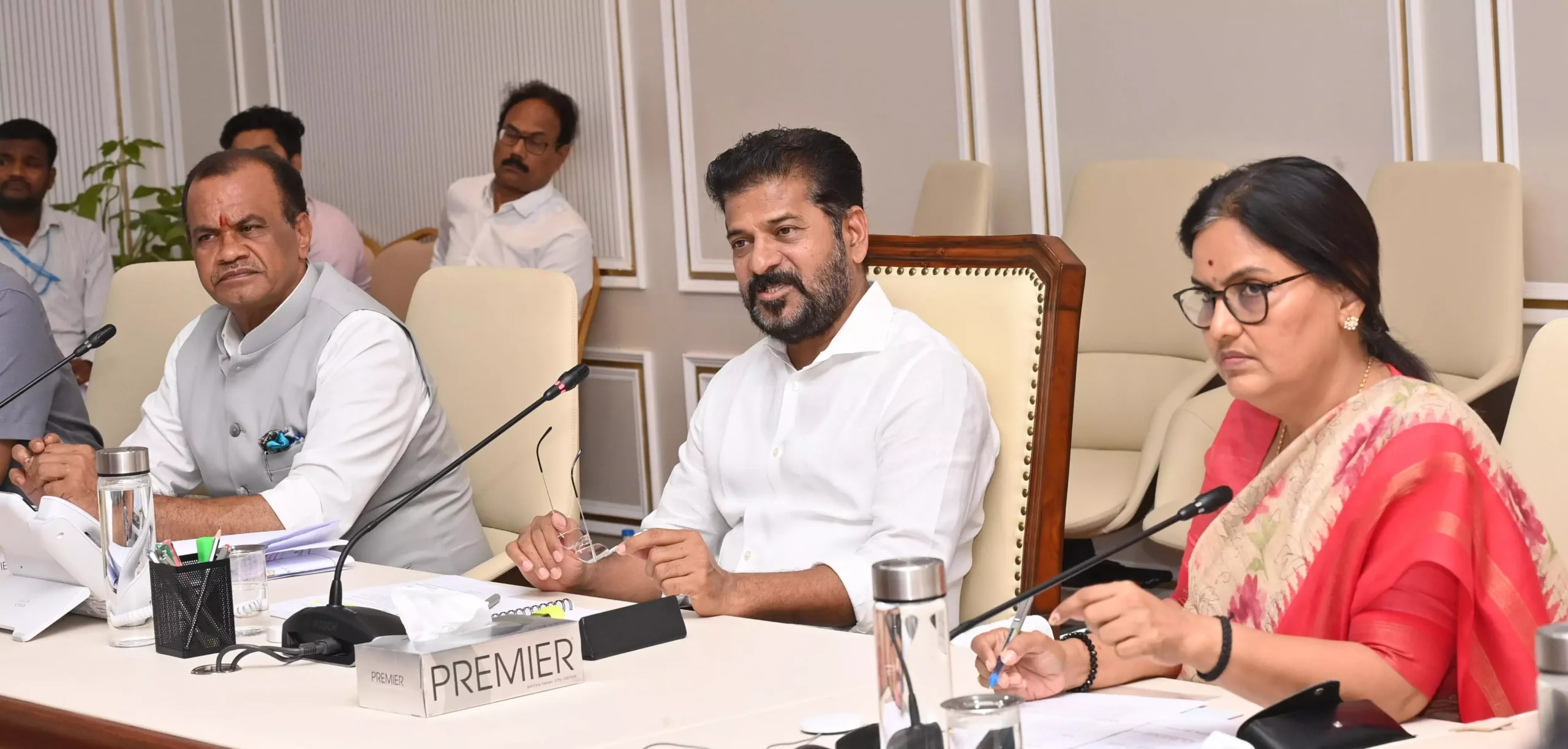
The Telangana government has unveiled an ambitious plan to transform Hyderabad into a signal-free city through a revolutionary three-level traffic management model. The proposed system will feature underpasses at the lowest level, roads at the surface level, and elevated corridors above, creating a comprehensive multi-tier transportation network. This announcement was made during a Parliamentary Standing Committee meeting on Housing and Urban Affairs held at the Telangana Secretariat.
Chief Minister Revanth Reddy emphasized that traditional road widening measures alone would not be sufficient to address the city’s future traffic challenges. He stated that the government is shifting its focus towards integrated urban mobility solutions and multi-modal transport systems to ensure smooth traffic flow across the rapidly growing metropolitan area. The three-level approach aims to maximize road capacity without requiring extensive land acquisition.
The meeting was chaired by Committee Chairperson Magunta Srinivasulu Reddy, with CM Revanth Reddy participating alongside other key officials. MP Chamala Kiran Kumar Reddy and Chief Secretary Ramakrishna Rao were among the prominent attendees. The session also included committee members and senior officials from both state and central governments who discussed various aspects of urban development and traffic management.
The proposed three-tier system represents a significant departure from conventional traffic management strategies. By utilizing vertical space through underpasses and elevated corridors, the government aims to create multiple traffic streams that operate independently. This approach is expected to reduce congestion at intersections and eliminate the need for traffic signals, thereby improving overall traffic flow and reducing commute times for residents.
The initiative aligns with the state government’s broader vision of developing Hyderabad as a world-class city with modern infrastructure. The multi-modal transport system will integrate various modes of transportation, including metro rail, buses, and private vehicles, creating a seamless connectivity network. Officials indicated that detailed planning and feasibility studies are currently underway to implement this comprehensive traffic management solution.
During the meeting, discussions centered on the implementation timeline and coordination between state and central government agencies for funding and execution. The Parliamentary Standing Committee reviewed the proposed plans and examined how similar models have been successfully implemented in other metropolitan cities. Senior officials from both governments presented technical details and financial projections for the ambitious project that aims to revolutionize urban mobility in the state capital.