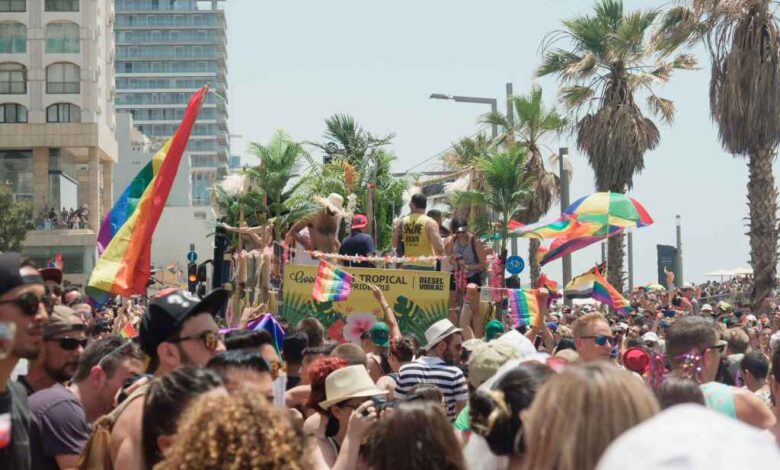
A large-scale LGBTQ festival titled Pride Land is scheduled to take place from June 1 to June 4 2026 along the shores of the Dead Sea drawing international attention due to its scale, location, and timing.
Organizers describe the four-day event as the largest LGBTQ festival ever planned in the Middle East. The project is expected to temporarily transform part of the Judean Desert into a structured festival zone often referred to as a “Pride City,” featuring integrated hospitality, entertainment, and community spaces.
According to reports the event will be centered in Ein Bokek where around 15 hotels, beach areas, performance venues, wellness zones, and cultural spaces are expected to be included within the festival footprint.
The concept aims to combine tourism infrastructure with continuous cultural programming, including music performances, social events, and public gatherings.
The initiative is being led by private producer Aaron Cohen. While not a government-organized event Israeli media reports indicate that the Israeli Ministry of Foreign Affairs has supported international promotion of the festival, giving it wider visibility beyond the cultural sector.
Organizers say the goal is to expand LGBTQ cultural spaces beyond Tel Aviv which has traditionally been the country’s main hub for Pride-related events. The festival is being designed as a multi-dimensional experience, incorporating entertainment, tourism, wellness activities, and community engagement.

The choice of location has also contributed to broader discussion. The Dead Sea region holds significant historical and religious importance in Islamic, Christian, and Jewish traditions.
In Islamic tradition the area is associated with the narrative of Qoum-e-Lut (the people of Prophet Lot). Similarly in the Bible nearby ancient cities are referred to as Sodom and Gomorrah. These associations are widely recognized in religious texts and traditions; however, historians and archaeologists note that the exact geographical identification of these ancient sites remains a subject of scholarly discussion.
The announcement has generated mixed responses online and in public discourse. Supporters view the festival as a platform for cultural expression, inclusion, and tourism development. Critics.
however, have raised concerns, linking the event to broader regional tensions and debating its symbolism in the current geopolitical climate.

Analysts note that large cultural events in the region are often interpreted beyond their entertainment value, particularly when they take place in politically sensitive environments.
From a tourism perspective, Pride Land is also seen as a significant project for the hospitality sector. The Dead Sea region a major international tourist destination, is expected to see increased demand for accommodation, with early bookings likely required due to limited capacity during the festival period.
While the festival is being described as the largest of its kind in the Middle East it is not positioned as the largest globally. Major international Pride events such as São Paulo Gay Pride Parade, NYC Pride, and Pride Toronto continue to attract significantly larger global audiences.