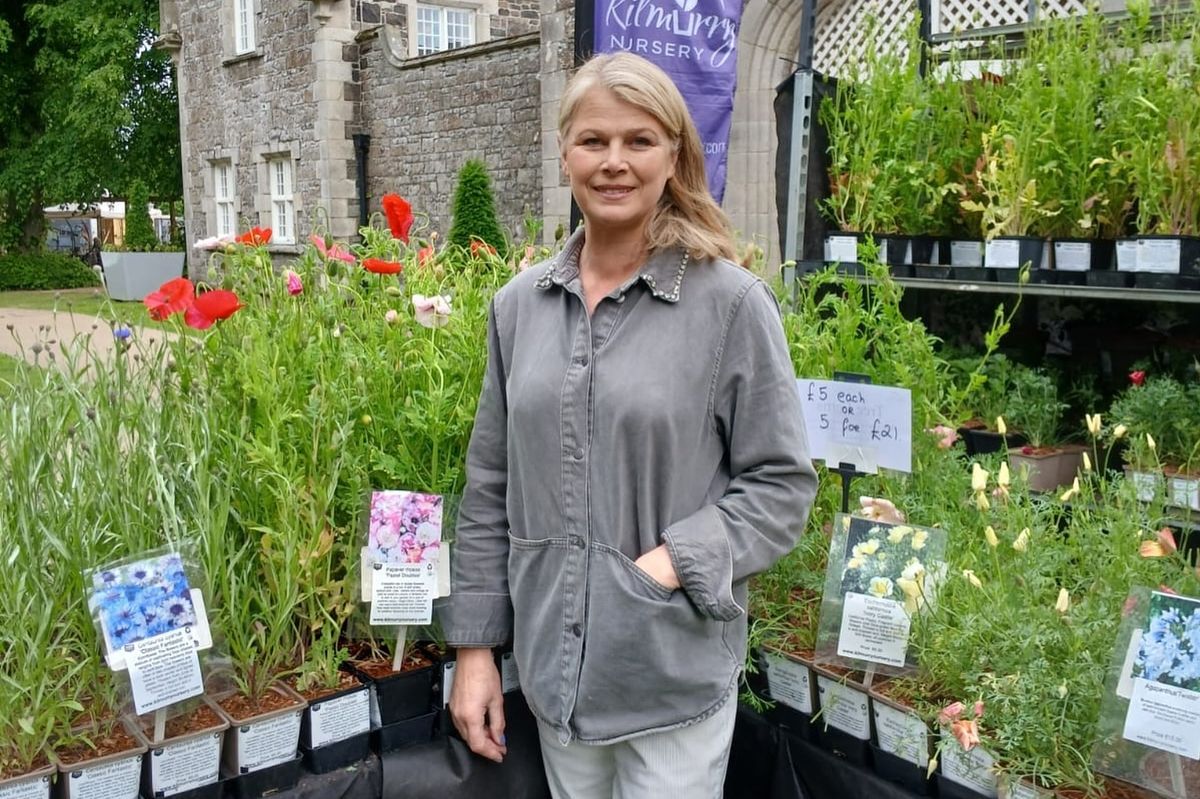
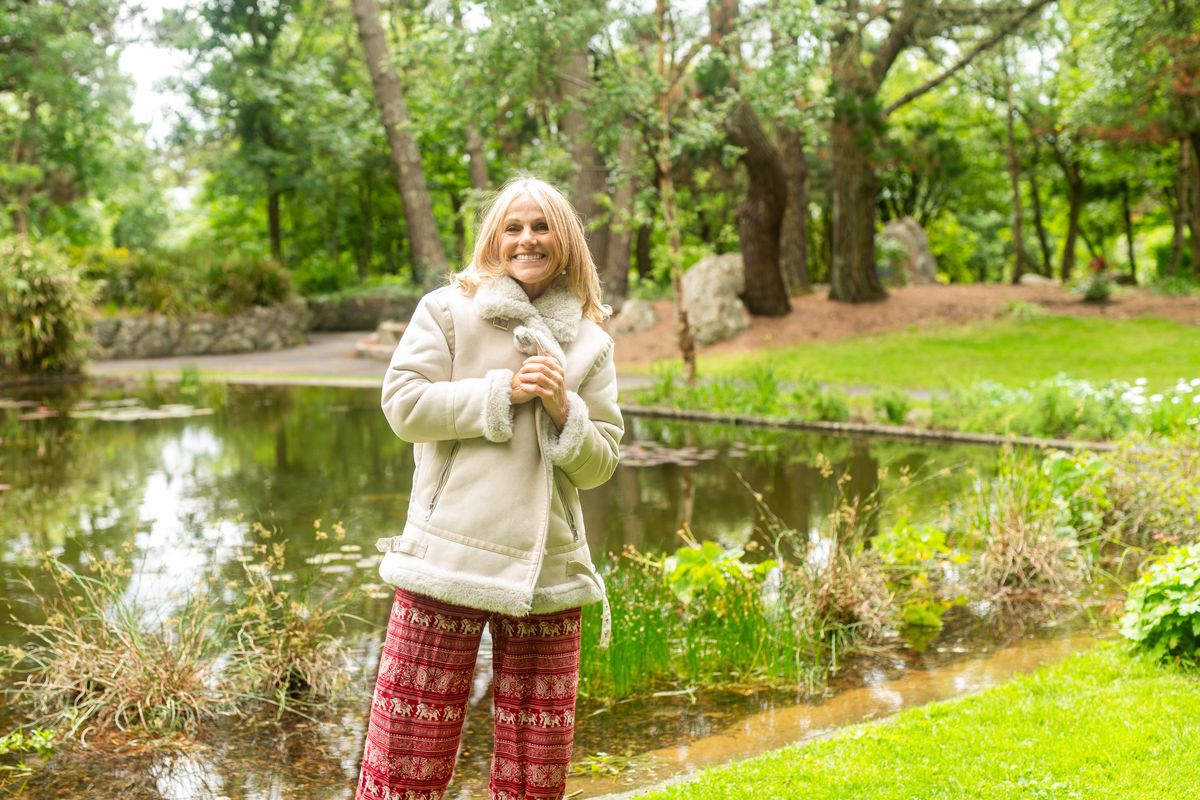
Trad icon Sharon Shannon tells why music has been a lifesaver for her, as well as her happy home in Salthill in Galway that she is continually refreshing and updating

Sharon Shannon
Sharon Shannon has had an incredible career spanning 35 years, and, for her, music has been amazing in helping her deal with whatever life has thrown at her.
Sharon tells RSVP Country: “I’m not really a person who looks back, I prefer to live day to day. I like where I am in life right now.”
Here, in a fun and open conversation, Sharon opens up about marrying her two loves, music and the outdoors, her love for interior design and the lessons she has learned over the course of her incredible life to date.
We’re seeing a big rejuvenation and revitalisation of trad music at the moment. Where is that coming from? Or do you think it has always been there?
I didn’t notice any difference recently, but I know that the scene is always getting stronger. Trad music is way more popular than it was when I was a teenager. When I was in Corofin National School and Ruan National School growing up in Clare, hardly any of the families played music. There was one exception in Toonagh, where Frank Custy used to teach. Every child in that school played an instrument thanks to him. These days, it seems like there’s a lot of music in school. A lot of young kids are amazing musicians and multi-instrumentalists.
As a figurehead for Irish music, does that make you feel proud?
I love seeing Irish music thrive. Things are going from strength to strength, and I’m proud and excited to hear the fantastic music the young people are coming out with these days. A lot of young people are experimenting with music and mixing trad with other genres. It’s lovely to see.
There seems to be a blurring or crossover between trad, folk and country music at the moment, too.
Ballads have suddenly become really popular over the last six or seven years. Dan McCabe is a fantastic singer, and he started to upload videos online of himself singing, and it just took off for him. It’s great to see all of this newfound respect for the ballads. A lot of young people are listening to these songs, and they think they are newly composed.
You toured with Willie Nelson in the past, what was that like?
He and his band were amazing to watch. They were really brilliant. Willie is fantastic on the guitar and his voice is as strong and as beautiful as ever. We only met him once when he invited us out on his tour bus. Richie Buckley, Dessie O’Halloran, Eddi Reader and I sat with him, and we had a chat. It was so nice.
You came out to publicly support Irish band Kneecap after they were criticised heavily for their pro-Palestine stance and political views.
I think they’re absolutely fantastic. I agree with Kneecap that the suffering of the Palestinian people is a tragedy, and it’s clear that as a global community, we’re not doing enough to address it. Any artist who speaks out on complex and emotionally-charged issues is taking a risk, and that takes courage. I also think we’re living in a time where short-form media, particularly on social platforms, can distort meaning and strip away vital context. When it comes to big issues –whether political, cultural, or humanitarian – we need to look at the full picture, not isolated fragments. Reducing any situation or person to a headline or a soundbite does a disservice to understanding. So I try not to rush to judgment, especially when the real stories are layered and deeply human.
On a personal level, were you ever afraid to speak out on issues?
With regard to Gaza, I’ve always supported Palestine. I help in any way that I can with fundraising because it’s outrageous what’s going on. I’ve always stood up for animal rights as well. If you feel passionate about something, you will speak out. Did you ever worry that might affect your career? The people who criticise me or how I feel about animals or how I feel politically, that’s fine. They can unfollow me, I don’t mind.
You’ve married your music career with your love of outdoors.
Big time. I’m a real outdoorsy person, I love being outside. I was brought up on a farm and I spent a lot more time outside with the animals than I did inside with the humans. It used to upset me that the animals weren’t allowed inside the house. We’re a close family and we get on great. My parents were fantastic.
What has music taught you over the years?
Music has been a lifesaver for me, it has been my whole life. Music is so important in helping you through the hard times. It’s a brilliant healer, and it helps you to deal with all sorts of emotions. If you need to cry, music will help to bring that out. You can’t bottle things up. Music is amazing in helping you deal with whatever life throws at you. Most of the time, music makes me very happy. Even sad songs are still beautiful.
You’ve had amazing highlights over the course of your career. It’s hard to narrow them down, but what stands out the most for you?
I’m not really a person who looks back, I prefer to live day to day. I like where I am in life right now. I’ve had many, many highlights in the past and I’d be here all day listing them all out. Being part of The Waterboys was fantastic, we played amazing gigs to incredible audiences. I loved that music. After that, releasing my first album was a big highlight, as well as the success of it. Having a full episode of The Late Late Show dedicated to me at such a young age was unreal. It was a big honour. Answering a question like that feels like I’m blowing my own trumpet. I’ve had so many amazing moments in life over the last 35 years thanks to music.
When you say you don’t look back and you prefer to look ahead, does that mean you’ve no regrets in life?
Everybody has regrets, but it’s about how you deal with those feelings. If you do something wrong or make a mistake, that’s great because you learn a lesson from them. If you don’t learn a lesson, that’s not good. If you learn a lesson and make sure that doesn’t happen again then it might prevent a worse version of it happening.
What life lessons have you learned?
Every day is a school day. We all learn something new every single day. A big thing for me is that a positive outlook is very healthy for us all, both mentally and physically. Try not to focus on negativity because if we do, it multiplies. And if we focus on positivity it multiplies. It’s a domino effect.
You’ve been quite independent throughout your career. Are you the same away from music?
I like to be independent and I wouldn’t like to depend on anybody else for money or for anything. For me, it’s really important to have my own independence. It’s hard for people to make money in the music industry.
Do you feel a sense of accomplishment that you “made it” because so many others don’t?
A lot of it is to do with being in the right place at the right time. I’ve been very lucky and I’m really grateful for all of the opportunities that I’ve had over the years and all of the people that have been good to me. These days there are so many brilliant young musicians out there, so it might not be as easy for someone to stand out. They astonish me with how great they are.
If you weren’t a full-time musician, what would you do?
I hope that I would have had the confidence to work as something that I love doing and not be afraid to take that chance. I imagine I would be working with animals or working outside.
You’ve remastered your 1991 debut album, tell us about it.
This was my first solo studio album. The tunes were very easy to select because they were a mixture of my favourite tunes since I was a teenager, and also some great tunes that I used to play at sessions with The Waterboys, in particular The Blackbird and Coridinio. These tracks became two of the tunes most associated with me, partly because my album was a surprise big hit, but also because those two tracks were included in the first A Woman’s Heart album in 1992. I’ll always be grateful for how well this first album was received and I’m especially grateful to all the amazing people who played on it, and everyone else who took a chance on me.
What do you do in your downtime?
I love working on my house and doing it up. I’m always doing something with the house and I’m very hands-on. I’ve a big interest in interior design. I would never take on somebody else’s house though, I wouldn’t have the confidence to do that because I have a very specific taste.
What’s your favourite room in your house and why?
I’m based in Salthill in Galway and the kitchen is where I live. I’m always sitting at the kitchen table. It’s a real country house-style kitchen with the table in the middle of the room.
What’s the biggest project you’ve taken on in the house?
When I got this house first I built an extension onto the kitchen. It’s really homely and a lovely place to hang out. I love cooking and I love eating. I’ve got loads of rescue cats and dogs living in the house with me.
If you were to have a conversation now with Sharon Shannon in the 1980s, what would you say to her?
I would show her how delicious and nutritious vegan food can be. If I could change anything, it would be that I became vegan a lot earlier on in my life because of my great love for animals, all animals, not just dogs and cats and horses and donkeys.
- Sharon Shannon’s magical 1991 debut album with remastered audio for 2025 is out now.
This article first appeared in the Autumn 2025 issue.