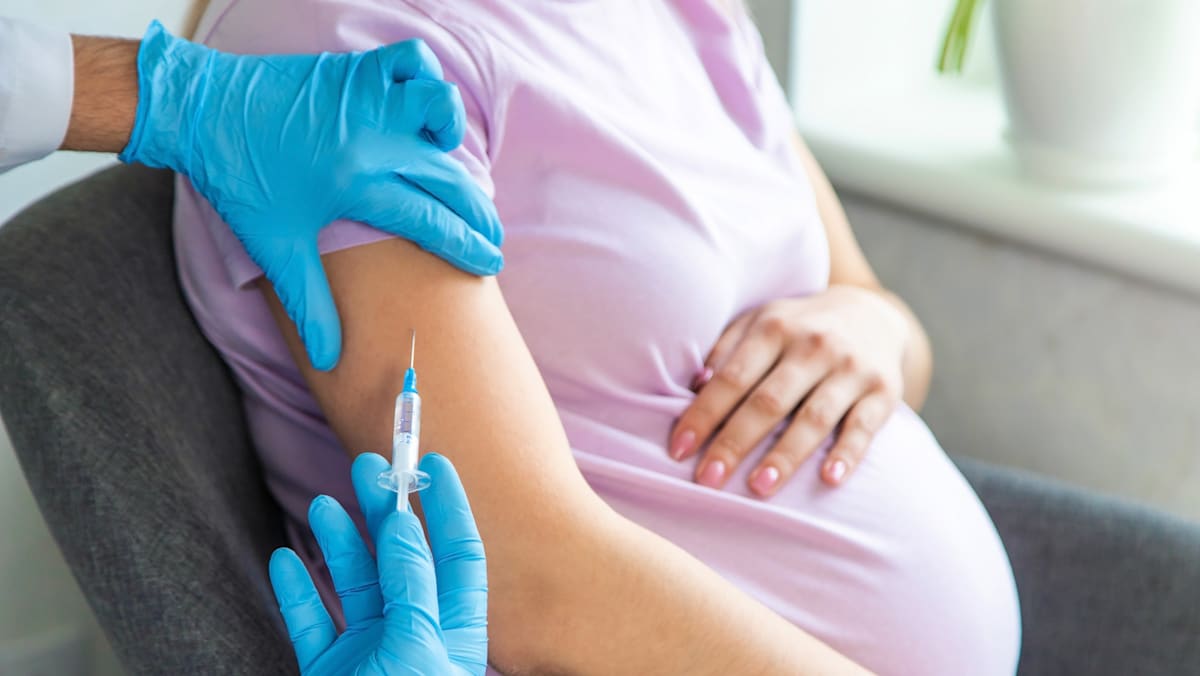
SINGAPORE: Nearly two years after Singapore approved a vaccine for pregnant women to protect their newborns against respiratory syncytial virus (RSV), more are opting for the jab.
But uptake remains too low to make a dent in infant hospitalisation rates, doctors said.
“So far, there has been no significant decrease in RSV-related infant admissions. The numbers remain steady and are similar to previous years,” said Dr Yang Linqi, a paediatrician at Thomson Paediatric Centre.
Anecdotally, he noted that some infants have contracted RSV despite maternal vaccination, although these cases appear to be milder and do not require hospitalisation.
“At this stage, the number of mothers receiving the RSV vaccine is still too low to create a noticeable impact,” he said.
RSV is a common respiratory virus with symptoms including cough and fever but can cause severe illness such as bronchiolitis and pneumonia in infants.
According to the World Health Organization, most children are infected by the age of two.
Unlike in temperate countries, RSV infections occur year-round in Singapore instead of seasonal spikes.
The RSV vaccine, Abrysvo, was approved in Singapore in 2024 for adults over the age of 60, and for infants through maternal vaccination. It is one of two RSV vaccines registered in Singapore but the only one licensed for use in pregnant women.
Manufactured by pharmaceutical giant Pfizer, the Abrysvo jab can be given to women who are between 32 and 36 weeks pregnant, and the antibodies will be passed to their babies.
Data from the United Kingdom, where pregnant women have been offered the RSV vaccine since 2024, show that the vaccine can reduce infant hospital admissions by more than 80 per cent, with protection rising to about 85 per cent when the vaccine is given earlier in pregnancy.
INCREASING AWARENESS
Obstetricians CNA spoke to said awareness and acceptance of the vaccination are gradually improving.
Dr Ryan Lee, an obstetrician and gynaecologist at Thomson Specialists (Woodleigh), said he has seen a “significant increase” in the number of pregnant women taking up the vaccine, particularly between 34 and 36 weeks of pregnancy.
He added that the vaccine rollout is encouraging, noting that maternal immunisation can provide about 70 to 80 per cent protection against RSV-related hospitalisation in infants.
A 2025 study led by Singapore General Hospital researchers found that patients hospitalised with RSV – both adults and children – can face long-term health complications, comparable to, and in some cases exceeding, those seen after influenza or Omicron COVID-19 infections.
Meanwhile, in the public sector, the National University Hospital (NUH) said the vaccine is now part of routine antenatal discussions and is being offered to patients from 32 weeks onwards.
“Clinicians support expectant mothers through shared decision-making during pregnancy,” said Dr Anita Kale, a senior consultant in maternal fetal medicine at NUH.
Still, uptake is not universal.
Dr Petrina Wong, a paediatrician at Gleneagles Hospital, said concerns about vaccine safety, cost and how long protection lasts continue to influence decisions among expectant mothers.
Checks by CNA reveal that the vaccine, which is administered as a single dose and is not subsidised in Singapore, costs between S$250 and S$350.
In response to CNA’s queries, the Ministry of Health and the Communicable Diseases Agency said subsidies are available only for vaccinations under the National Adult Immunisation Schedule and National Childhood Immunisation Schedule, neither of which includes the RSV vaccine for pregnant women.
“These vaccinations were included after considering the disease burden in Singapore, clinical and cost effectiveness, and safety of the vaccine,” the agencies said in a joint reply.
They added that vaccination policies and the inclusion of vaccines in the schedules are reviewed regularly, in consultation with the Expert Committee on Immunisation.
According to the Communicable Diseases Agency’s website, while single RSV cases are not notifiable, medical practitioners should report events of public health significance such as clusters of infectious diseases in the community.
NO CLEAR DROP ADMISSIONS
Despite increased awareness, paediatricians say RSV-related hospital admissions among infants remain largely unchanged since the vaccine was introduced.
At NUH, infants continue to be admitted regularly for RSV infections and bronchiolitis throughout the year, with a few cases requiring intensive care every month, said Dr Chan Si Min, head of paediatric infectious diseases at NUH.
“Since the introduction of maternal RSV vaccine in Singapore in July 2024, infant hospitalisations for RSV infection and/or bronchiolitis in 2025 and 2026 have remained stable so far,” she said, adding that longer-term data will be important to understand trends over time.
A similar trend is seen in the private sector.
Doctors say improving uptake will be key to seeing a meaningful decline in hospitalisations.
They also point to the growing role of additional preventive options, such as an RSV vaccine for infants – which was approved in June 2025 for children up to the age of 24 months.