
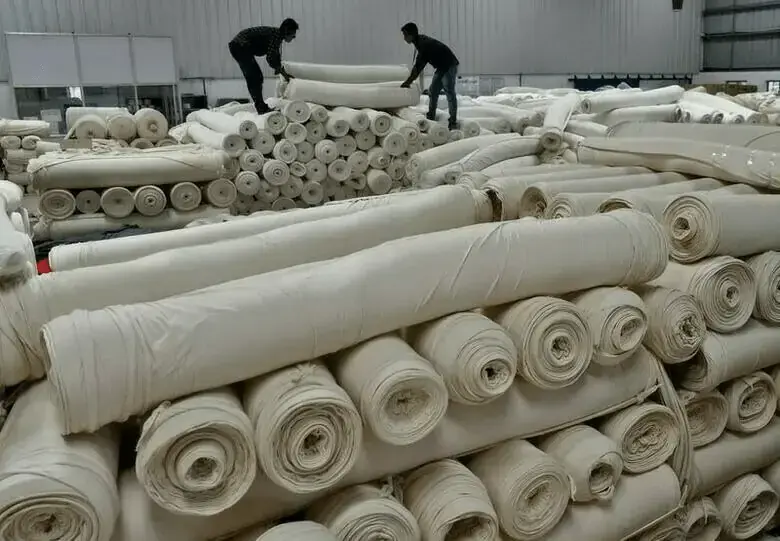
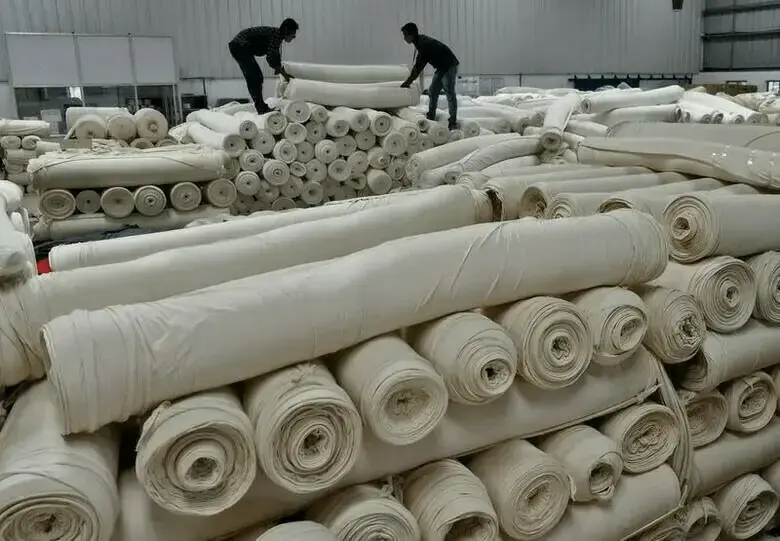
EDITORIAL: Federal Bureau of Statistics (PBS) released provisional data that showed textile exports rebounding in April this year, by 21 percent, compared to the same month last year.
In fiscal year 2026, textile and clothing exports declined during five months (0.57 percent in October, 2.57 percent in November, 8.56 percent in December, 7.22 percent in February and 7.06 percent in February).
The major contributors for the rise in April 2026 were knitwear (from 23.54 million rupees in April last year to 24.94 million rupees in March 2026) and ready-made garments (15.18 million rupees in April last year to 16.30 million rupees in March this year). This is significant, given the global recession that has impacted on demand for consumer items subsequent to the US/Israel war on Iran that began on 28 February 2026.
The improved data of the textile sector indicates that in spite of the government suspending incentives – fiscal and monetary as well as subsidised electricity attributable to the conditions agreed with the International Monetary Fund (IMF) under the ongoing 7 billion-dollar Extended Fund Facility programme – exports nonetheless did increase and therefore a rigorous analysis is required to determine the causes so as to better replicate these effects on other export sectors.
And, it is also critical for the government to challenge the textile sector’s repeated claims that over 150 units have closed down due to the withdrawal of incentives.
In addition, oil seeds, nuts and kernels exports surged by 419.7 percent to 33.4 million dollars in April 2026 over the same month last year, and chemicals and pharmaceutical exports also rose by 35.15 percent year on year as did sports, rising by 33.8 percent; surgical goods and medical instruments exports rose by 7.62 percent and tobacco posted a gain of 80.29 percent.
A decline was noted in food group, 4.55 percent, and in rice exports, 9.33 percent, with vegetable exports declining by a whopping 78.3 percent in April this year over the same month last year.
Cumulative exports in April this year amounted to 2479 million dollars compared to 2174 million dollars in April last year (a 14 percent rise) and 691,589 million rupees this year over 610,190 million-rupees last year (13.34 percent rise) April 2025. Imports rose from 6,098 million dollars in April 2025 to 6763 million dollars last month, a 10.91 percent rise.
Total exports (July-April) 2025 amounted to 26,892 million dollars; however, in the corresponding period this year exports declined to 25,209 million dollars – a decline of 6.26 percent. Total imports (July-April), however, rose on the back of the Middle East conflict with oil, fertilizer and minerals supply disruptions raising total imports to 7,494,398 million rupees in 2025 compared to 16,141,381 million rupees in the same period this year.
The trade deficit rose to negative 9059.9 billion rupees (32.199 billion dollars) July-April 2026 (against negative 7,418 million rupees (26.59 billion dollars) in the comparable period of last year – rising by a disturbing 21 percent in dollar terms and 22.14 percent in rupee terms.
The IMF insisted in the third review documents that “the next phase of duty reductions under the National Tariff Policy will be legislated under the FY27 budget, and efforts to remove and simplify Pakistan’s extensive non-tariff barriers also need to move forward” with obvious implications for a rise in imports.
In addition, the Fund maintained that “as part of the broader regulatory streamlining effort, a new national regulatory registry will be established as a comprehensive source on business regulations, starting with the federal government and ICT governments (new proposed end-June 2027 Structural Benchmark), which will improve transparency and reduce regulatory uncertainty. The authorities are also in the process of finalizing amendments to the Companies Act for submission to Parliament (end-June 2026 SB), focusing on reducing regulatory burdens and transaction costs and improving corporate governance and transparency for both listed and unlisted companies.” And, of course, the phasing out of fiscal incentives for special economic zones (SEZs), special technology zones (STZs), and export processing zones (EPZs) by 2035 will reduce fiscal costs; however, it is also expected to negatively impact on output.
To conclude, these structural benchmarks may negatively impact on existing productive units and would be resisted; however, as noted by the Fund in 2024 extending fiscal and monetary incentives to industries has yet to lead to the graduation of infant industries. And, while the transition phase would have negative consequences one can only hope that in the medium term domestic industry is strengthened and enabled to compete internationally.
Copyright Business Recorder, 2026