On May 18, 1974, India achieved one of the most defining moments in its scientific, strategic and defence history by successfully conducting its first nuclear test at the Pokhran test range in Rajasthan. The mission, officially codenamed “Operation Smiling Buddha”, transformed India into a nuclear-capable nation and marked its entry into an exclusive group of world powers possessing nuclear technology.
The operation was conducted under the leadership of noted nuclear scientist Raja Ramanna, who was then serving as the Director of the Bhabha Atomic Research Centre (BARC). The nuclear test took place on Buddha Purnima, which is believed to be the reason behind the codename “Smiling Buddha”.
Apart from Dr Raja Ramanna, then director of BARC, others who worked with him include, Dr. Basanti Dulal Nag Chaudhuri, director of DRDO to put together and coordinate the team for developing the explosive device. Dr. P.K. Iyengar, Ramanna’s second in command at BARC played a key role in the design and assembly of the plutonium implosion device and in overcoming the technical challenges of the test. Dr. R. Chidambaram who later became the Chairman of the Atomic Energy Commission of India contributed significantly to the success of Operation Smiling Buddha. Dr. Homi N. Sethna the Chairman of the Atomic Energy Commission at that time provided strategic oversight and ensured the project received the necessary resources and support. Dr. N.S. Venkatesan and his team at the Terminal Ballistics Research Laboratory (TBRL) Chandigarh played a key role in the design and engineering of the nuclear device, particularly the high explosive implosion mechanism. Apart from them Dr. M.R. Srinivasan, Dr. P. K. K. Menon and Dr. C.N.R. Rao played a key role at various stages of the nuclear test project. These scientists, along with many unnamed engineers, technicians, and support staff, collectively brought Operation Smiling Buddha to fruition.
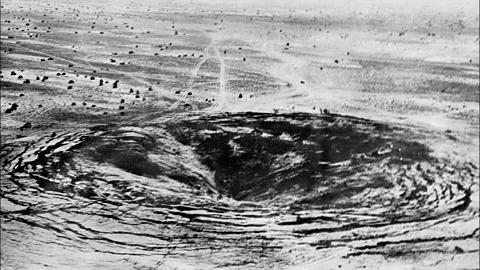
India tested an underground nuclear device at the Pokhran firing range in the Thar desert. Although the exact explosive yield of the device has remained a matter of debate over the decades, several reports estimated it to be between 8 and 12 kilotons of TNT.
The successful detonation made India the sixth country in the world to conduct a nuclear test. Before India, only the five permanent members of the United Nations Security Council, the United States, Soviet Union, United Kingdom, France and China, had demonstrated nuclear capability through atomic testing.
According to accounts associated with the operation, Raja Ramanna conveyed the success of the mission to then Prime Minister Indira Gandhi with the famous message: “The Buddha has smiled.”
One of the most remarkable aspects of Operation Smiling Buddha was the secrecy surrounding the mission. Reports suggest that India managed to conduct the nuclear test without prior detection by major international intelligence agencies, including those of the United States.
The roots of India’s nuclear programme leading to the 1974 test can be traced back to September 7, 1972, when Indira Gandhi reportedly authorised Indian scientists to develop and detonate an indigenous nuclear device. Scientists and engineers worked in secrecy for nearly two years before the successful test at Pokhran.
While the test was celebrated domestically as a symbol of scientific achievement and national strength, it triggered sharp reactions from several Western countries. Nations including the United States imposed sanctions and restrictions on India, citing concerns over nuclear proliferation and regional security.
Despite the international pressure, Operation Smiling Buddha became a turning point in India’s strategic policy and defence preparedness. It laid the foundation for India’s later nuclear doctrine and future nuclear tests.
More than two decades later, India once again carried out a series of nuclear tests at Pokhran in May 1998 under Operation Shakti. Conducted during the tenure of then Prime Minister Atal Bihari Vajpayee, the tests firmly established India as a declared nuclear weapons state.
Today, Operation Smiling Buddha is remembered as a milestone that reshaped India’s global standing and demonstrated the country’s growing scientific and strategic capabilities during a challenging phase of Cold War geopolitics.