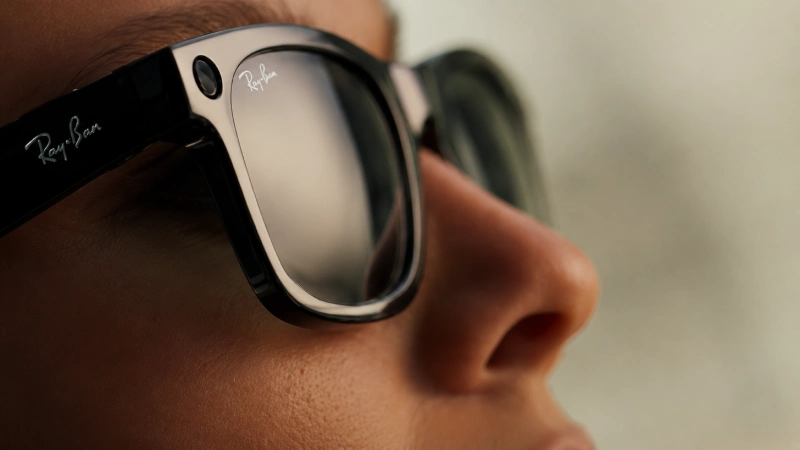
The race for the space right in front of your eyes just turned into an all-out platform war. In a massive global software deployment, Meta has supercharged its flagship Meta Ray-Ban Display smart glasses, bringing a sci-fi “Neural Handwriting” input method to all users alongside heavy-hitting third-party media integrations designed to dominate the wearable ecosystem.
As reported by India Today and The Verge, this update transitions the hardware from a slick hands-free camera accessory into an independent, gesture-controlled computing platform. However, the true story isn’t just the software; it’s the timing. Meta’s sudden feature dump lands right as leaked hardware schedules reveal Samsung is preparing a massive counter-offensive in the smart eyewear market.
How Meta Ray-Ban Glasses Now Type Without Your Voice
Dig a little deeper, and there’s more going on under the hood than basic camera motion tracking. The headline addition to the platform is the broad rollout of gesture-based virtual writing, a feature built to solve the awkward social friction of shouting voice commands to an AI assistant in quiet or public spaces.
The system relies entirely on Meta’s companion EMG Neural Wristband. Rather than utilising power-hungry frame cameras to track hand movements, the wristband uses surface electromyography (sEMG) to read the tiny electrical impulses passing through your wrist muscles as you move your fingers.

Finger Air-Motion -> Wrist Tendon Contraction -> EMG Sensor Reads Impulse -> Millisecond Text Translation
When you draw invisible characters in the air with your finger, machine learning models decode those muscle handshakes in milliseconds. The text translates natively into active conversation boxes inside WhatsApp, Facebook Messenger, Instagram Direct, and default system texting layers on both iOS and Android.
The Entertainment Overlay: Disney+, Spotify, and ESPN Support
Your phone screen won’t be completely obsolete anytime soon, but it is losing its monopoly on data visualization. Alongside the gesture input mechanics, Meta has officially stripped away its restrictive ecosystem barriers, opening up the right-eye monocular display to major streaming frameworks.

Out of the box, the new update adds dedicated eye-level display cards for core entertainment platforms:
| Supported Third-Party App | What It Appears Like on the In-Lens Display |
| Spotify | Full library browsing and quick-launch playlist menus via eye-level widgets. |
| Audible | Audiobooks sync natively, displaying chapter progress bars and book titles. |
| Disney+ & ESPN | Live updates, flight trackers, movie playback control, and real-time sports scores. |
Additionally, the patch introduces a high-demand Display Recording tool. The feature systematically merges the virtual data layer floating on the wearer’s screen, the 12MP ultra-wide camera feed, and local microphone audio into a single cohesive video file for seamless content sharing.
The Big Tech Deflation: Preempting the Samsung Galaxy Leaks
The velocity of Meta’s software updates is a direct, calculated preemption of Google and Samsung’s incoming hardware push.

- Just days before this rollout, leaked design layouts published by GSMArena confirmed that Samsung is preparing to unveil its highly anticipated Galaxy Glasses at its next Galaxy Unpacked event in London on July 22, 2026.
- The leaks reveal that Samsung’s initial entry into the smart glasses space, developed in partnership with Gentle Monster, will run Google’s brand-new Android XR operating system with Gemini built in, but will lack any form of a physical display.
By establishing robust visual web apps, deep streaming partnerships, and muscle-reading air-typing right now, Meta is capitalizing on its hardware display advantage, ensuring consumer muscle memory is locked down before Samsung’s screenless audio frames even hit the market.
Final Thoughts
The Ray-Ban Meta frames were already a viral success for content creation, but adding muscle-reading text input changes the entire conversation. If waving your finger in an empty room lets you silently reply to a message without looking down at a glass rectangle, our social habits are about to change forever, and Google has a massive hill to climb if it wants to catch up.