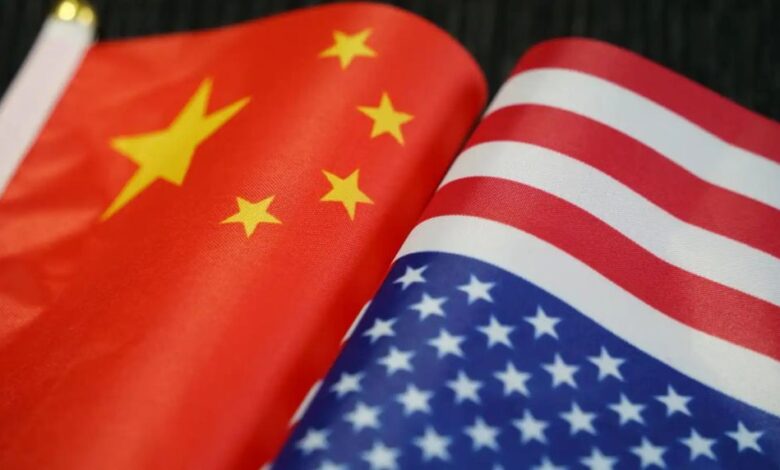
The US-Iran conflict projected a complex, high-stakes geostrategic scenario for China as the biggest importer of Iranian oil. The calculated and somewhat leaned back Chinese approach can be identified as “strategic restraint” or “strategic management ,” exploited through amalgamation of diplomatic maneuvering, economic pragmatism, and moral support to maximize its interests without direct military involvement.
China’s strategic response is skillfully structured around long-term gains rather than knee-jerk swift reactions, balancing its energy requirements coupled with the geopolitical motives of undermining the US influence in the region. While displaying strategic patience, China is watching from the sidelines as the US exhausts its resources while allowing China to maintain its posture as the most critical economic partner to Iran.
While the mute mode of the Chinese mindset may confuse bystanders but it is being manifested through cool pragmatism and articulated statecraft. Following their famous scholar, Sun Tzu’s saying, “The greatest victory is that which requires no battle. China opted for a “wait and see” policy instead of direct intervention, while getting the strategic opportunity to analyze the US military capabilities and potential weaknesses vis-a-vis its own geopolitical challenges and opportunities.
Key Aspects of the Chinese Mindset
- Strategic Restraint. Chinese strategic patience is a very well thoughtful and calculated restraint, not a mere show of passivity. Instead of providing direct military support to Iran, China wisely chose to stay neutral in the conflict.
- Competiting Narratives. In total contrast of the US hegemonic power projections coupled with economic coercions to get compliance, China employs economic cooperation and mutual growth model, like Belt and Road Initiative (BRI) to foster long term relationships. Chinese restraint is a testament to its cooperation model.
- Balancing Geopolitical Challenges vis-a-vis Economic Interests. China is a key buyer of discounted Iranian oil while receiving 80-90% of Iran’s oil exports through the shadow fleet despite the US sanctions. In the face of the blockade of the Strait of Hormuz, China voiced serious concerns and urged a ceasefire to protect its economic lifeline but didn’t show any inclination for military involvement.
- Accentuating US Mistake. Following a wise mindset of “never interrupt your enemy when he’s making a mistake,” China considers the US aggression against Iran as an inordinate drain on US resources and erosion of credibility as super power. Chinese leadership believed in Sun Tzu’s wisdom, “Don’t move unless you see an advantage and don’t fight unless the situation is critical”.
- Shaping Favorable Geopolitical Situation. China officially condemned the US and Israeli aggression as violations of international law and termed it as return to the “law of the jungle.” Chinese interpret the US-Iran conflict as a zero-sum game for the US as it will erode the US power in the Middle East. The prolonged engagement in the US-Iran clash will serve as the strategic distraction for the US that will limit its ability to focus on other core strategic objectives in the South China Sea.
- Advocating Multipolarity. China is exploiting the opportunity to project US foreign policy’s recklessness while attempting to enhance its influence among Global South’s states by presenting China as a more stable, sincere partner as an alternative to the US. China is also supporting multipolarity and multilateral arrangements like the UN.
- Critical Analysis of Enemy. China is utilizing US-Iran conflict to closely study war potential, capacity, and military strength of the US and Israel to sharpen its own response mechanisms.
- Focus on Core Strategic Interests. The conflict is being viewed by Chinese as a case study for the potential economic and political costs to refine its own strategy regarding Taiwan. The policy makers are taking into cognizance the Iranian asymmetric tactics to streamline their strategic options and improve war campaigns for a potential conflict over Taiwan. The visit of Taiwanese opposition leader to China signaled their strategic priorities and objectives.
- Diplomatic Support for Peace. China has strongly persuaded both the US and Iran for peace negotiations. Chinese 5-point peace initiative alongside Pakistan provided a pragmatic resolution of the ongoing conflict.
- Cold War Phenomenon. China viewed the US aggression against Iran as a signal of fresh wave of cold war and a wicked move to destabilize the development of new world order.
- Diplomatic Balancing in Middle East. While offering strong diplomatic support to Iran, China has maintained a relatively neutral stance to avoid worsening its relationships with the gulf states, especially Saudi Arabia.
Summing Up
Chinese non-aligned posture in the US-Iran clash is reflective of its strategic wisdom while ensuring adequate protection of economic interests it stayed away from direct involvement. Its efforts are focused on economic stability, energy security, and gathering regional collaborations to boost long-term relationships in a new world order.
US-Iran conflict is seen as a significant geopolitical challenge while simultaneously threatening to swing to regional hostilities due to the direct involvement of China. Luckily, China showed a responsible mindset, which can be characterized by calculated opportunism, using the conflict to question the US hegemony at all diplomatic forums while avoiding entanglement in the warfare itself. Chinese leadership stood true to Sun Tzu’s saying, “Anger blinds strategy, and patience wins the field”.
Article by Brig. Hamid Rashid (R)
This story has been reported by PakTribune. All rights reserved.