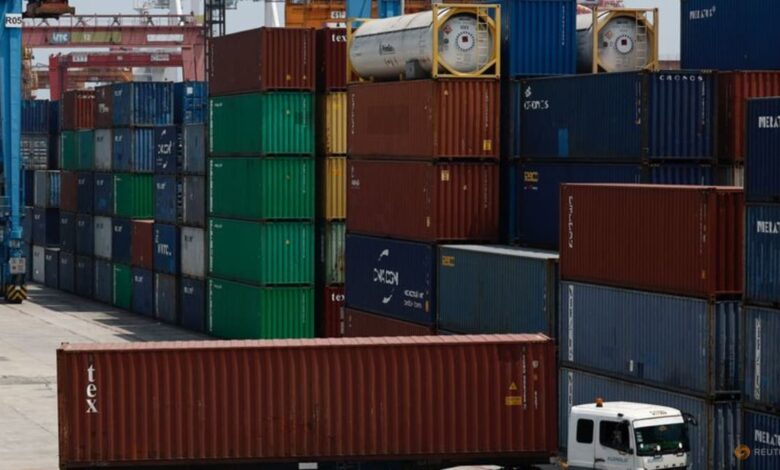
JAKARTA, May 4 : Indonesia’s trade surplus expanded in March to $3.32 billion, the largest since September, official data showed on Monday, even as exports fell in annual terms.
The March surplus was larger than both the median forecast of a $2.41 billion surplus in a Reuters poll of economists and a $1.28 billion surplus a month earlier.
The resource-rich country has run sizeable surpluses in recent years, but analysts expect exports will be affected by slower global demand due to the Middle East war and as a weaker rupiah raises import costs.
The rupiah last week hit a record low of 17,385 per dollar amid worries about the war in Iran.
Exports from Southeast Asia’s largest economy in March declined by 3.1 per cent annually to $22.53 billion, below both the 0.96 per cent increase expected in the poll and a 1.01 per cent rise in February.
Imports were up 1.51 per cent to $19.21 billion, compared with a forecast of a 10 per cent increase.
Indonesia exported 5.85 million metric tons of crude and refined palm oil in the January-to-March quarter, up 9.30 per cent from the same period a year earlier, statistics bureau data showed.
Coal, iron and steel shipments were down. Indonesia exported 85.87 million metric tons of coal, worth $5.50 billion, in the January-to-March quarter, down 6.62 per cent in terms of volume from the same period a year earlier, the data showed.
INFLATION
The April annual inflation rate eased to 2.42 per cent from 3.48 per cent in March, the data showed, and was also below economists’ expectations of a 2.76 per cent rate.
The monthly inflation rate eased to 0.13 per cent in April, lower than the median poll forecast of 0.42 per cent inflation, and a March reading of 0.41 per cent.
Annual core inflation, which strips out government-controlled prices and volatile food prices, cooled slightly to 2.44 per cent, compared to 2.52 per cent in the previous month and 2.52 per cent in the Reuters poll.
The war in Iran has triggered spikes in oil and other commodity prices globally, but the government has shielded most consumers from rising fuel prices by increasing subsidy spending.
The central bank has said inflation is expected within its 1.5 per cent to 3.5 per cent target range until 2027 due to subsidies and a joint effort with government officials to control food prices.