
Infertility is rarely spoken about openly, yet it touches thousands of families in Ireland every year. The HSE estimates that one in six heterosexual Irish couples will face setbacks or heartbreak when trying to conceive, with secondary infertility accounting for an estimated 35% to 40% of these cases.
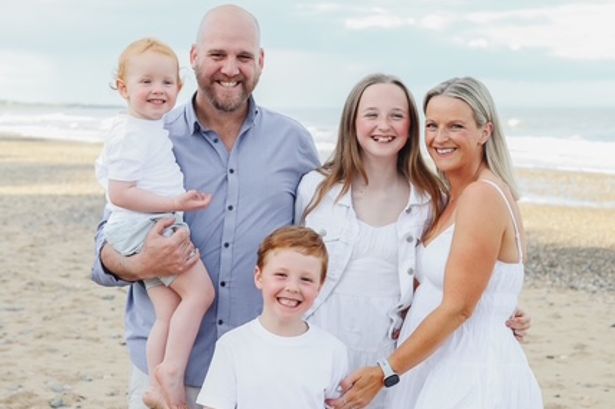
Yet despite its prevalence it is often overlooked. For Sinead Hingston Green, having a third baby felt like a natural next step. She already had two healthy children, Lily and Dylan, and had no history of fertility issues.
In early 2020, just after getting married and shortly before the country entered lockdown, Sinead discovered she was expecting again. But the pregnancy ended in miscarriage — the first of four in total. “I was naive,” she says. “I’d never even considered it could happen. I assumed I’d get pregnant and end up with a baby.”
That first miscarriage was followed quickly by a second pregnancy — this time, an ectopic. She was rushed to hospital and had emergency surgery to remove her left fallopian tube. Still, she didn’t pause. “I was like a dog with a bone. Nobody was going to tell me I couldn’t have another baby.”
Sinead became pregnant again a few weeks later. Weekly scans showed everything progressing normally until nine weeks, when she sensed something was wrong. “I rang Holles Street and said I didn’t feel right. They were kind but said I was just anxious. She insisted on a scan — and there was no heartbeat.
As it was her third loss, tests were carried out, and Sinead learned the baby had Trisomy 21. “He was a little boy. I found that really hard. In some ways it helped to know there was a reason, but knowing his gender made it so much more personal.”
After a fourth pregnancy — a chemical loss at home — Sinead was physically and emotionally drained. She had conversations with a specialist in Holles Street, who confirmed all her tests were normal but that her age — 40 at the time — meant her egg quality had declined. IVF was an option, but one she didn’t feel drawn to. “We already had two amazing kids. I didn’t want to go down a path that didn’t feel right for us.”
Her husband, Michael, wasn’t ready to give up just yet. “He’s an only child and said he’d love to try one last time. So we gave it one more month.”
That month, Sinead began lighting a candle every day of her two-week wait. “I’d strike the match and imagine it as the spark — egg meeting sperm. As the wick burned, I saw it as the baby growing.” The candle ritual became a symbol of hope and later inspired her charity initiative, Spark a Life, which now raises funds for maternity care and bereavement support.
That final pregnancy brought their son Albie. “The relief when he came out was unbelievable. I still look at him and think, how did we get so lucky?”
Sinead describes Albie as the final piece of the puzzle. “He’s pure joy — always smiling, full of hugs. There’s something really special about him. I don’t have that longing anymore. I feel complete.”
Looking back, she believes secondary infertility isn’t always understood. “There’s this sense of, ‘You already have kids, what are you upset about?’ But when you’ve imagined another baby, grieved for multiple losses, and fought so hard, it doesn’t matter how many kids you already have — the pain is still real.”
Her advice to others is simple but heartfelt. “Try not to lose hope. Find your tribe, those people who’ve been through it and talk to them. That’s what helped me — connecting with people who truly got it.
Want to see more of the stories you love from RSVP ? To add RSVP as a preferred source of news on Google, simply click here