
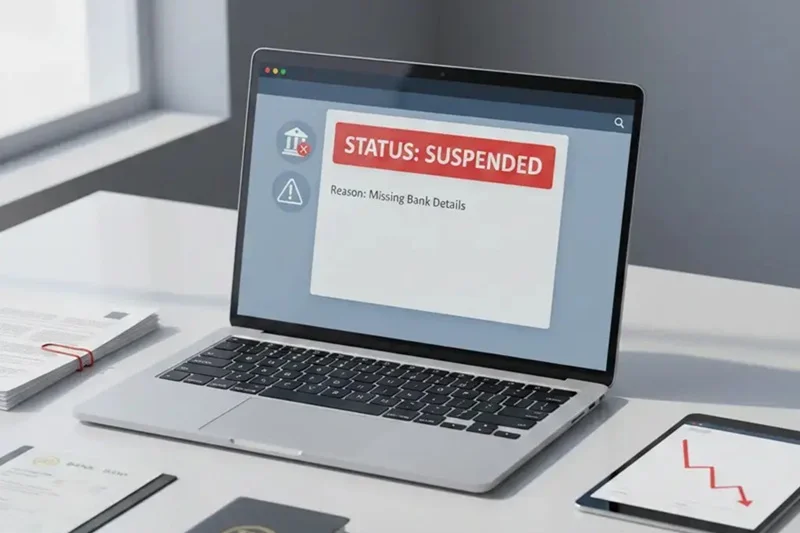
Taxpayers throughout India have come to realize that they have received warning messages, compliance notices, or even suspensions of their GST registration due to failure to verify their bank accounts.
This is especially true in view of the heightened scrutiny by the GST network of GST registrations regarding mismatches in banking details and bank account verification.
In cases where there has been a problem with GST registration because of failure to verify the banking details, it is always best to try and rectify this problem immediately through the GST portal.
Why GST Bank Verification Has Become So Important
There have been substantial improvements in digital compliance audits under the GST regime.
More efforts have been put into detecting fictitious registration, shell companies, suspicious input tax credits, and defunct organizations with inaccurate documentation.
Therefore, bank account verification has become an integral component of compliance to ensure that the company’s registration is correct.
In case there are discrepancies such as invalid account numbers, mismatches between PAN and bank accounts, or lack of verification, there could be restrictions on GST registration, notifications, or even temporary suspension.
This is the reason why GST bank verification is now getting high priority amongst taxpayers.
What Happens If Your GST Registration Gets Suspended?
GST suspension poses several issues when it comes to running businesses effectively.
Taxpayers could be limited from issuing GST invoices, submitting return statements as well as enjoying tax advantages during the period when the registration is suspended.
Most of the time, firms only become aware of the problem once they receive compliance notices or see warnings upon logging in to their GST account.
Discrepancies that go unattended for long increase the probability of facing further challenges. That explains why banking details need to be verified immediately thereafter.
Why Bank Details Often Fail Verification
There are various reasons why GST-based bank validation can go wrong.
For instance, IFSC codes may be entered incorrectly, the name of the account holder may be inconsistent, the bank account may be inactive, the information pertaining to banking may have become outdated, the spelling on the PAN card may differ from that on the bank account, and so forth.
It may also happen that the taxpayer has shifted his/her bank account, but failed to do so on the GST portal.
How to Re-Verify Your Bank Details on the GST Portal
Re-verification of the bank details is expected to be carried out via digital means from the GST portal itself.
In most cases, taxpayers will be required to visit the GST portal and log in with their username and password.
From there, the taxpayer should be able to access his or her registration details and check whether there are any discrepancies or issues that need to be corrected.
Typically, this involves entering the correct bank account number and IFSC code, together with any supporting documents required, such as a cancelled cheque.
Upon submission of the details, the system will automatically verify the account details through online banking networks.
Why PAN and Bank Name Matching Matters
One of the main causes of failure in the process of GST bank verification is the inconsistency between the PAN account and the bank account information.
For instance, where there is an organization that uses a trade name for its operations, the bank accounts may not be consistent with the GST name.
The slightest inconsistencies will make GST verification fail. Hence, the importance of ensuring total consistency between the above accounts.
How Long Does Re-Verification Take?
The timeline can be influenced by the nature of the discrepancy. Simple discrepancies with proper documentation may be processed relatively fast.
Mismatches, compliance checks, or human verification will increase processing time.
It is recommended that companies not postpone action when a notice or alert appears. Timely updating will reduce the risk of further delays and problems associated with compliance requirements.
Why the Government Is Tightening Verification Systems
The GST system in India has grown at an incredibly fast rate, handling millions of invoices and tax claims electronically.
With the growth, there will be increased use of software solutions to detect any unusual transactions.
GST Bank Verification is just one component of this strategy aimed at achieving greater transparency in financial transactions and reducing fraud. Therefore, it is likely that the need for strict documentation will be seen going forward.
What Businesses Should Do Right Now
Taxpayers need to verify their account details linked to the GST system. In case businesses have not received any notification yet, there is an advantage for them in checking the status of their profile details in order to avoid any problem in the future.
The consistency of PAN and GST registration with the banking details of the business must be a standard practice now. Monitoring notifications in the portal is also essential for businesses.
Top Headlines You Must Explore
Discover Why US Warned Iran Recently?
Check how this warning affects the ongoing Israel-Hamas conflict dynamics.
Check What India-Iran Port Deal Means?
Explore the implications of the new port agreement and rising US concerns.
Check What Happened In Erbil Strike?
Explore details of the drone attack on Castrol amid rising Iran tensions.
Explore Why Beer Prices May Rise?
Discover how global tensions could impact beer and bottled water costs worldwide.
Explore Fake MBBS Letters Warning Details?
Discover how NMC is alerting students about fraudulent medical allotments.
Conclusion
The recent emphasis on GST bank verification shows how tax compliance in India is moving towards automation and stricter monitoring.
It may be necessary for companies that are suspended or receive a warning about their compliance to get verified bank information immediately on the GST portal.
In the Indian digital taxation process, even minor discrepancies in bank details can have significant repercussions.