In a message posted on X, Modi paid tribute to the scientists behind the Pokhran-II tests. He said their dedication and hard work reflected India’s scientific excellence and national resolve. At the same time, he described technology as a key pillar of Aatmanirbhar Bharat.
According to the Prime Minister, innovation and research are creating opportunities, accelerating growth, and strengthening India across sectors. He also stressed that the government would continue to support talent, encourage research, and promote indigenous solutions.
National Technology Day is observed every year on May 11. The occasion commemorates the successful nuclear tests conducted in Pokhran, Rajasthan, in 1998. However, over the years, the day has evolved into a broader celebration of India’s scientific and technological achievements.
The Moment That Changed India’s Strategic Standing
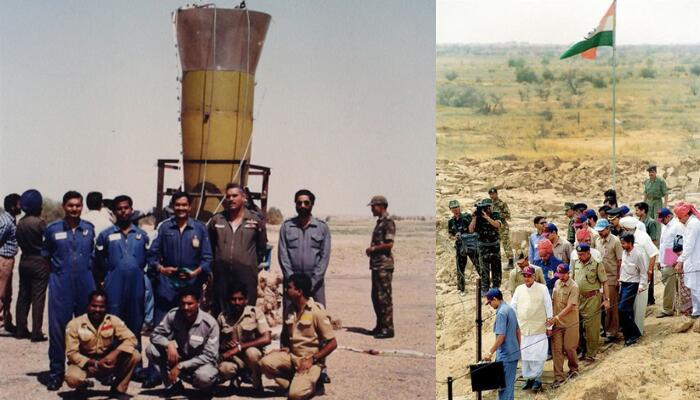
The Pokhran-II tests remain one of the most decisive moments in India’s modern history. On May 11, 1998, India carried out three underground nuclear tests under the leadership of aerospace scientist A. P. J. Abdul Kalam. Subsequently, India conducted two more tests on May 13.
The operation, known as Operation Shakti, established India as the world’s sixth declared nuclear power. Moreover, the tests demonstrated India’s capability to develop both thermonuclear and fission weapons.
Former Prime Minister Atal Bihari Vajpayee led the government that authorised the tests. Later, his government declared May 11 as National Technology Day to honour India’s scientists, engineers and innovators.
Pokhran-II also transformed India’s strategic identity. Following the tests, several global powers criticised India and imposed sanctions. Nevertheless, New Delhi refused to retreat under international pressure. Instead, India defended its sovereign right to protect its national interests.
Over time, the same countries that criticised India began engaging with it as a major strategic and geopolitical force. As a result, Pokhran emerged not only as a military milestone but also as a statement of national confidence.
Beyond the Nuclear Tests
The importance of May 11 extends beyond Pokhran alone. On the same day in 1998, India successfully test-flew Hansa-3, the country’s first indigenous light aircraft designed for surveillance and pilot training.
Meanwhile, the Defence Research and Development Organisation successfully tested the Trishul surface-to-air missile. Together, these achievements highlighted India’s growing defence and technological capabilities.
Today, that same spirit shapes India’s push into artificial intelligence, semiconductors, cybersecurity and advanced manufacturing. The Modi government has repeatedly argued that technological dependence weakens nations. In contrast, technological capability strengthens sovereignty and strategic independence.
Therefore, Modi’s message on National Technology Day carried significance beyond symbolism. The memory of Pokhran still represents scientific confidence, political determination and India’s willingness to take difficult decisions in defence of national interest.