
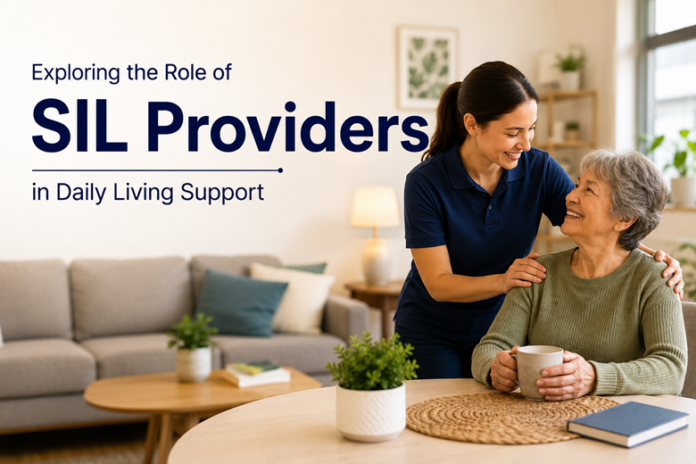

As services for disabilities change and grow, Supported Independent Living (SIL) providers have become champions of the service system and are essential in providing support. It is these providers who can play such a key role in helping people with a disability live an enriched, more independent life. One important area of their services is SIL provider support, assuring clients receive personalised support to address their day-to-day access to services.
Understanding Supported Independent Living
Supported Independent Living is a type of service where the individual disability service(s) are intended to assist a person with a disability to live as independently as he or she can be. SIL’s main goal is to provide personalized support that can vary from assistance with simple activities to more complex needs, enabling people to live in the community.
The Importance of Daily Living Support
Daily living support is not just defined by one single type of service; it’s a range of services that may help a person with their daily living. This encompasses personal hygiene, cooking, cleaning and maintaining clean spaces, taking medication and support in the household. Its clients rely on SIL providers for delivery of these services, which are crucial in improving their way of life.
Personalised Care Plans
The concept of daily living support includes various services that assist an individual in his/her everyday activities. These plans are tailored and focussed on the individual’s needs and preferences and provide appropriate support. Individually tailored strategies give the client a sense of empowerment and are aware of their individual goals and aspirations.
Promoting Independence
The SIL services aim to empower clients to achieve independence. Through the provision of life skills, providers build confidence and the ability to be independent and self-assured, treating everyone with respect and encouraging the growth of each person’s confidence. This is not only to substantially better their quality of life, but also to motivate and encourage them to be active in community life.
Collaboration with Support Networks
Collaborating with an individual’s support networks (including family/friend networks and other healthcare professionals) is important to supporting the effectiveness of such a SIL. The holistic approach guarantees a complete treatment and supports the client’s current supportive systems.
Continuous Improvement and Feedback
SIL providers will get feedback from clients and their families in an attempt to keep care of high quality. The conversation is essential and continuous for them to accommodate services and make them more satisfying and supportive to clients’ needs.
Ensuring Accessibility and Inclusivity
Accessibility is one of the fundamental values of any SIL program provider. The services provided are designed to be accessible and flexible enough to ensure that every individual, despite his/her disability, has access to these services. Inclusiveness is good for both individuals and the community as a whole.
Regulatory Compliance and Quality Assurance
SIL providers work under very strict regulations and standards, ensuring a high quality and safe environment in which their services are delivered. These standards are carried out and evaluated regularly to ensure that they continue to be maintained and giving clients or their families peace of mind in such a form.
Technological Integration in SIL Services
Technology has become an integral part of SIL and has provided possibilities to improve client support. Technology has an important place in today’s SIL service, in the areas of communication, to assist, and administrative, to streamline.
The Future of SIL Providers
Innovation and increased services are to be the main drivers in the future of SIL providers. Both the public’s awareness and understanding of disabilities will continue to increase and an increasing number of people are seeking more all-encompassing and empowering support services. SIL providers will be required to remain flexible to meet these needs to ensure the client lives their life to the fullest – independently living!
Conclusion
This is where SIL providers, like the daily living support services, come into play: to enable those who have a disability to be more independent and higher quality of life. Personalised care, independence and new technologies are vital to putting their clients’ wellbeing first and improving the lives of society, and these providers all have a vital part to play in this regard.