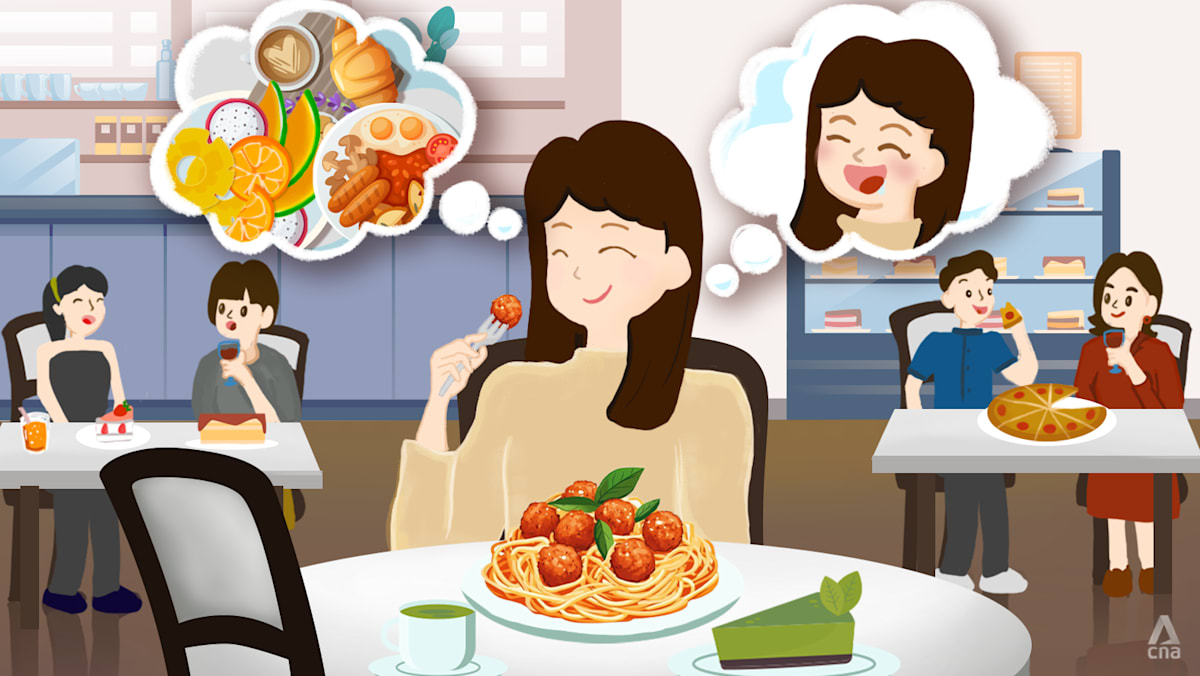
I was puzzled despite myself. Eating alone has never been a tall order for me. In fact, I regularly treat myself every now and then with a visit to my favourite conveyor belt sushi chain, settling in and ordering exactly what I want, at my own pace.
But somehow, that izakaya experience felt different.
Now, in hindsight, I’m able to make sense of it: Simply eating alone in public is one thing, but dining alone in a “real” restaurant is entirely another.
There’s a difference between grabbing a quick meal at a coffee shop, food court or casual chain eatery, versus sitting down to a pricier meal at a nice restaurant that’s just as much about style as it is sustenance.
The latter still carries a certain stigma, often associated with loneliness or social awkwardness, as if being by yourself must mean something is lacking.
But the tide appears to be turning.
Based on data from restaurant reservation platform OpenTable, bookings for individual diners worldwide surged 19 per cent year on year in 2025, the largest jump across all group sizes.
Mr Tan Whey Han, OpenTable’s senior director for Asia and the Middle East, said that across Asia, solo dining also jumped 10 per cent in 2025 compared to the previous year.
While dining in Southeast Asia has traditionally been seen as a communal activity, Mr Tan called the increase “a clear sign that dining alone is becoming a more confident, intentional choice”.
A few months ago, the Michelin Guide even published a piece on its inspectors’ top tips for solo dining, suggesting this shift has been taking shape more visibly.
Clearly, more people are finding appeal in dining alone, whether for the flexibility, the quiet or simply the chance to spend time on their own terms.