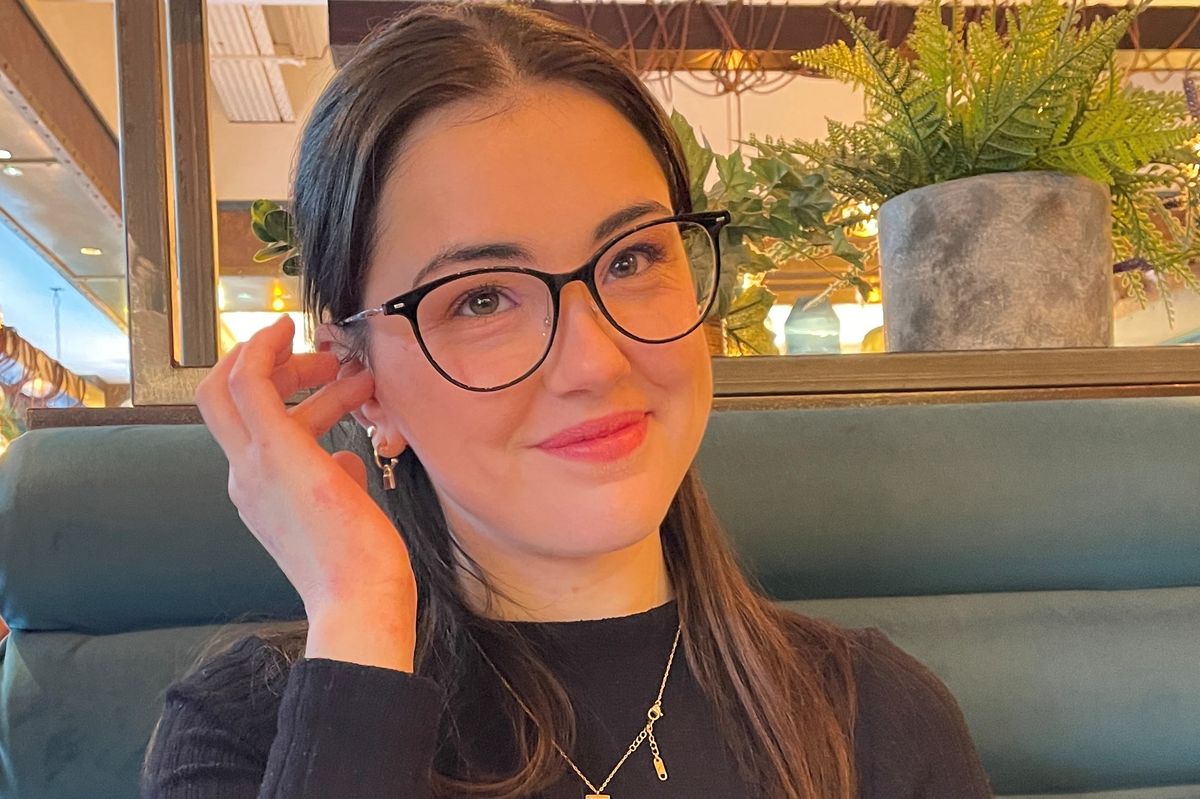
Emily Farrell, aged 24, was diagnosied with ulcerative colitis in 2014 and wants to share her story to raise awareness about inflammatory bowel disease in Ireland

Emily Farrell
Dublin woman Emily Farrell has told of how she was close to organ failure before finding a life-changing medication to manage her chronic condition.
24-year-old Emily, from Blanchardstown, was diagnosed with ulcerative colitis in 2014.
Over ten years on from her initial diagnosis, she says life is much better now, and the bad times she has experienced have shaped her into the person she is today.
Recalling how her journey with ulcerative colitis, an inflammatory bowel disease (IBD), started, Emily told RSVP Live: “I got diagnosed between sixth class and first year of secondary school and I specifically remember getting symptoms in fifth class.
“My stomach would be sore going to school. I thought it was my cereal, so I stopped eating that and switched to toast and butter.
“That still annoyed me, so I cut out the butter so I’d have plain toast. Eventually, it would turn into me not having breakfast before school, and then not having lunch.
“I didn’t know why my tummy was sore and I didn’t really know how to talk about it with my mum and dad because I was a picky eater in general as a kid.”
Emily eventually told her mum her stomach was hurting her and was brought to the GP.
She said: “I went to my GP but he misdiagnosed me with a more treatable condition but that made my situation worse.
“I then got a referral to Crumlin hospital and got my diagnosis of ulcerative colitis.”
Aged only 13, Emily was confused about the reality of her diagnosis.
“I remember sitting in the consultant’s office with my mum and dad. I asked how to get rid of it, and I was told it was chronic and something I’d have to manage for the rest of my life,” she explained.
“I think that matured me a lot, but I remember feeling useless, thinking, ‘Why can’t my body work the way it’s meant to?’”
To help manage symptoms, Emily was given medication, which she says was “horrible to take”.
Later in life, she learned she had autism, which explained why some medications were harder for her to take because of their texture.
Emily was learning to live with ulcerative colitis when she had a nasty flare-up aged 14.
“That was terrible. I would wake up in the night, up and down to the loo,” she recalled.
“I experienced a lot of bleeding. I was crying with the pain and was brought to hospital.
“I got bloods done and was told I was extremely anaemic.
“The doctors told my mum and dad if it had kept going, I was getting close to organ failure because there was just nothing in my body.
“I was severely malnourished because I wasn’t able to eat or keep anything down and I had a really low blood count so I needed a blood transfusion.
“After being discharged, for a period of time I had to go back to the hospital once a week for bloods and then every Friday again for iron transfusions.”
Emily was so weak that specialists told her she might need surgery to get a colostomy bag to help her recover.
But she managed to avoid this after being put on “life-changing” medication.
“I was put on my first biologic medication, called Infliximab, and that completely changed my life in the most positive way,” she said.
“Getting a colostomy bag would have completely changed my teen years. Infliximab helped me to start recovery really well.”
After nine years, Infliximab stopped working on Emily and she started getting sick again.
She added: “Now I’m on injections, Vedolizumab. I take it every two weeks, and, again, it changed my life.
“At the end of Infliximab, I was really not well, I was getting sicker.
“So I changed onto this new drug, I’ve been on it for over a year and it’s great.”
Twelve years on from her diagnosis, Emily says life is “definitely more manageable” now.
She graduated from Maynooth University in 2023 with a degree in business and law and works as a book representative with a publishing company, marketing books to bookshops all around Ireland.
Emily said: “I think my condition has caused my gauge of discomfort to be a little bit more skewed, but yes there are good days and bad days.
“I can definitely do more than I would have before, especially with his new medication because it’s very gut focused, so it doesn’t affect the whole body.
“I do also have to pace myself sometimes. Right now, I’m not in work as I’m not well.
“But I don’t really feel I have much to complain about at all. Things are going great.
“I think everything has worked out in the way it should have.
“I wouldn’t be the person I am today without the bad times that have come with this condition.”
As for a message to others out there with IBD, Emily said: “Even after long periods of the toughest times, things always find a way of getting better.
“Even if that means some adjustments need to be made, you are stronger than you think.”
Marking World IBD Day (May 19), Crohn’s and Colitis Ireland has developed a new hands-on guide on supporting people with inflammatory bowel disease as part of the It Takes A Village campaign. It is also hosting a webinar on the day. To access the guide, and to register for the free webinar, see www.crohnscolitis.ie/ItTakesAVillage.
Want to see more of the stories you love from RSVP ? To add RSVP as a preferred source of news on Google, simply click here