
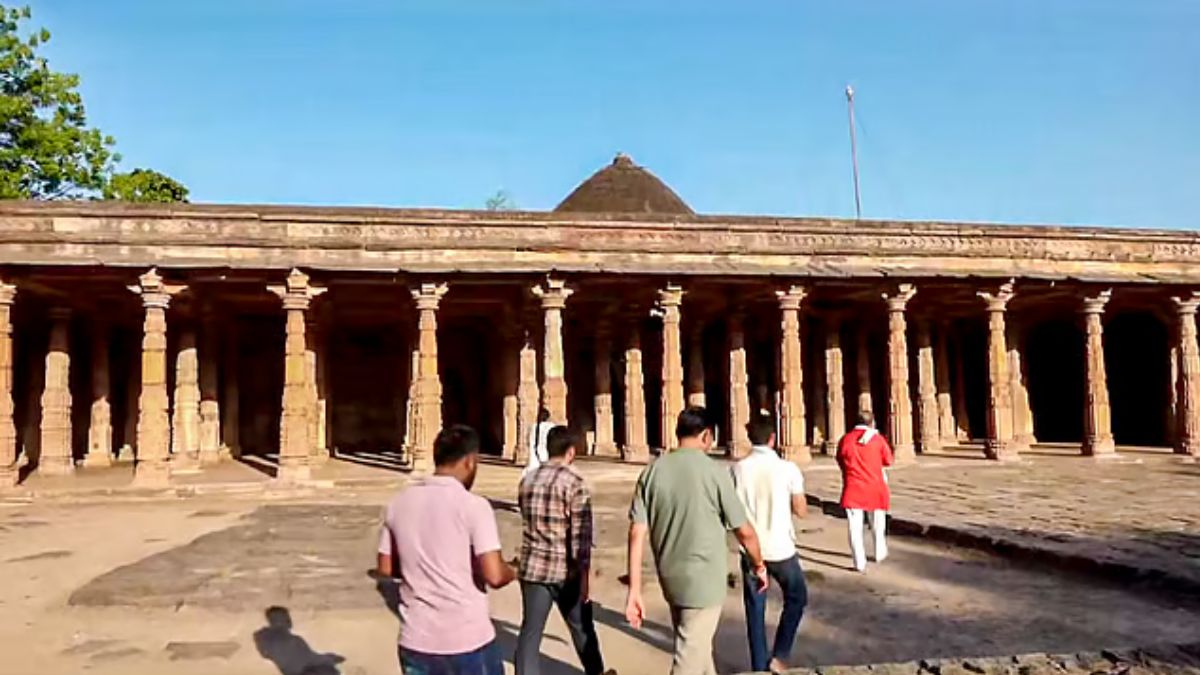
The Indore bench of the Madhya Pradesh High Court declared the Hindu Bhojshala Temple dedicated to Goddess Saraswati. This decision drew on principles from the 2019 Ayodhya verdict.
The court overturned the 2003 ASI order that allowed Hindus and Muslims to worship on different days, giving Hindus exclusive access while suggesting alternate land for a mosque. The court kept ASI’s administrative control over the monument to protect its heritage value.
Court Rules Bhojshala Temple
The Jain community argued that the site originally dedicated to Goddess Ambika, citing a marble idol now in the British Museum. However, the court found no structural or archaeological evidence of exclusive Jain use.
It noted the historical overlap between Hindu and Jain iconography in the 11th century. The court concluded that neither the idol’s identity nor Jain motifs surpass the broader historical and architectural evidence indicating the Bhojshala as a Hindu temple and a Sanskrit learning center.
Provide worship rights
A 98-day ASI survey uncovered over 1,700 artifacts, including Hindu deity idols, Sanskrit inscriptions like ‘Shri Saraswatyai Namaha’, and architectural fragments from earlier temples. Though Jain-related figurines found, the court pointed out that the inscriptions celebrated Hindu traditions and Sanskrit scholarship. It strengthened the Bhojshala narrative. The Muslim side argued bias and procedural errors, but the court considered ASI’s multi-volume report credible and decisive.
The judgment, reflecting aspects of the Ayodhya ruling, may impact other heritage disputes in India, such as those in Mathura and Varanasi. By framing Jainism as a branch of Hinduism and emphasizing archaeological evidence, the court supported a legal approach that blends historical interpretation with constitutional rights to worship.
Read also: Pune Teacher Arrested in NEET Biology Paper Leak Case