
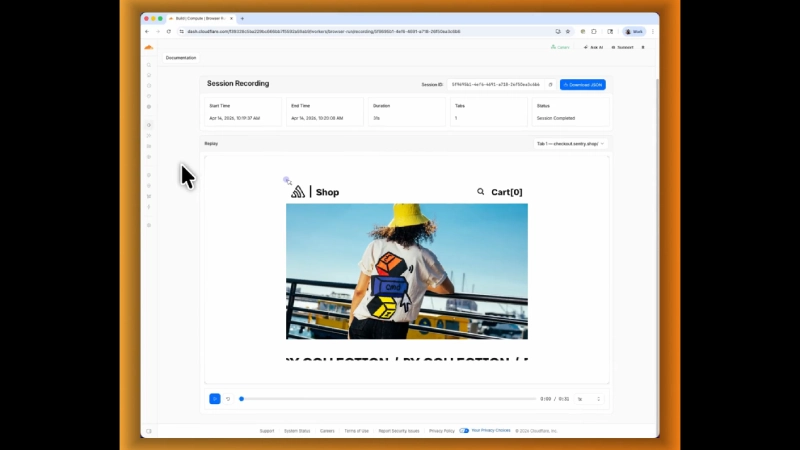
Announced on May 19, 2026, the new Cloudflare Anthropic partnership targets enterprises that need autonomous AI workflows at scale without building their own orchestration layers. Developers can choose between full Linux microVMs for heavy workloads or lightweight V8 isolated sandboxes that boot in milliseconds. Analysts are split: Barclays and Piper Sandler maintain Overweight ratings with $250 price targets, while InvestingPro flags the stock as overvalued at its current market cap of $71.3 billion. This article cuts through the announcement to examine what the integration actually delivers and what it quietly sidesteps.
Cloudflare Anthropic Partnership: The Economic Friction
Cloudflare is cutting approximately 20% of its workforce and absorbing between $140 million and $150 million in restructuring charges. The company is explicitly reorganising around an AI-first model, and the Anthropic deal is one of the first concrete products to emerge from that bet.

Revenue grew 31.55% over the last twelve months. Gross margins hold at 73%. The stock has climbed 28% in a year. And yet Cloudflare is not profitable. At a market cap of $71.3 billion, InvestingPro’s analysis flags the shares as overvalued relative to fair value estimates. Analysts at Stifel trimmed their price target from $275 to $260. Wolfe Research holds a Peerperform rating and noted the stock dropped after the Q1 2026 earnings beat.
| Company Claims | Real-World Impact |
| Millisecond sandbox boot times | True for V8 isolates; full microVMs still take longer |
| Zero-trust private connectivity | Requires Cloudflare Mesh setup and it is not instant |
| Built-in audit trails and session recording | Available by default, but storage and retention costs apply |
| Massively scalable to tens of millions of agents | Technically plausible with isolates; microVM costs scale differently |
| Custom tools without additional infrastructure | Requires familiarity with Cloudflare Workers and Wrangler config |
Who This Actually Reaches

| Target Audience | Key Structural Benefits | Friction Points & Constraints |
| Students & Independent Developers | Pre-built Deployment Templates: Compresses months of complex security architecture into an immediate, usable starting point. | Steep Learning Curve: Requires users to master the specific nuances of Cloudflare’s Workers ecosystem. |
| Small Businesses (Building Internal AI) | Private Service Connectivity: Gains secure, private connectivity without the overhead of setting up a VPN or dedicated bastion host. | Ecosystem Lock-in: Only removes significant infrastructure overhead if the company is already utilizing Cloudflare. |
| Enterprise Compliance Teams | Baked-in Security Auditing: Session recordings and robust audit trails are built directly into the platform. | Strict Evaluation Required: Highly valuable for regulated industries, but adoption depends on passing enterprise security reviews. |
The Global Mood
Reactions from developer communities have been cautious. One comment circulating on X captured the sentiment plainly: “Cool integration, but you’re still locked into two vendors instead of one.”
Another noted: “The isolated sandbox idea is smart until you hit a problem that needs a real filesystem.”
A third, more bluntly: “Cloudflare keeps announcing AI pivots while laying off the people who built their core product.”
Moving Forward
This partnership solves a real problem for enterprises already inside Cloudflare’s ecosystem. It simplifies the compliance, security, and execution layers that make agentic AI operationally viable at scale. The technology is credible, and the timing is logical.
What it does not resolve is that Cloudflare’s path to profitability while funding aggressive AI infrastructure investment, the concentration risk of coupling two major vendor dependencies, and whether the restructuring pain produces the AI-first productivity gains management is promising.
The product is worth evaluating seriously. The stock, at current valuations, demands harder questions.