Gold rose on Thursday on optimism over a potential US-Iran peace deal, easing concerns about inflation and prolonged higher interest rates, though gains were capped after a report said Tehran would not allow the reopening of the Strait of Hormuz.
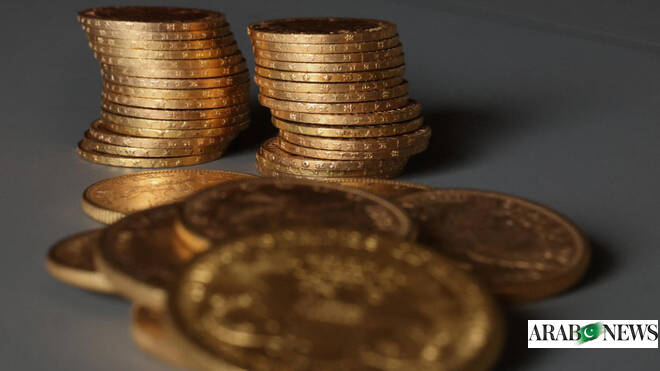
Spot gold was up 0.3 percent at $4,700.98 per ounce, by 1:53 p.m. EDT (1753 GMT), after hitting a two-week peak earlier in the session.
US gold futures settled 0.4 percent higher at $4,710.90.
“If the ceasefire holds, and we can put this war behind us, and get back to business with the Strait being open, I can see gold push to $5,000/oz,” Bob Haberkorn, senior market strategist at RJO Futures, said.
“The market is just watching the situation in the Middle East, as well as the direction the US Federal Reserve is looking at.”
The US and Iran are edging toward a temporary agreement to halt their war, sources and officials said, with Tehran reviewing a proposal that would stop the fighting but leave the most contentious issues unresolved.
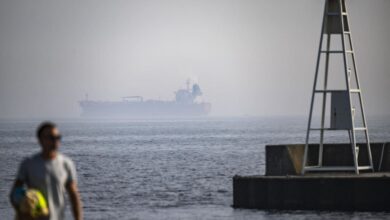
Oil reversed course and turned positive. A senior Iranian official said Iran would not allow the US to reopen the Strait of Hormuz with “an unrealistic plan,” the Wall Street Journal said, citing Iran’s state broadcaster Press TV.
Rising energy costs tend to drive inflation. In such a scenario, policymakers may be less inclined to cut interest rates to contain price pressures. Despite its role as an inflation hedge, gold becomes less attractive in a higher-rate environment because it offers no yield.
There is a path to above $5,200/oz for gold once the conflict and oil-driven inflation pressures fade, TD Securities said in a note.
“A later pivot toward the Fed’s maximum employment mandate, lower yields and a softer US dollar, plus renewed investor and central-bank demand, could reignite the bull trend,” it said.
Markets await the monthly US employment report on Friday to assess how the Fed will move forward with monetary policy this year.
China’s central bank loaded up on gold for an eighteenth straight month in April, data showed.
Spot silver rose 2.6 percent to $79.32, after hitting the highest since April 17.
Platinum lost 1.2 percent at $2,036.28, while palladium fell 2.5 percent to $1,498.86.