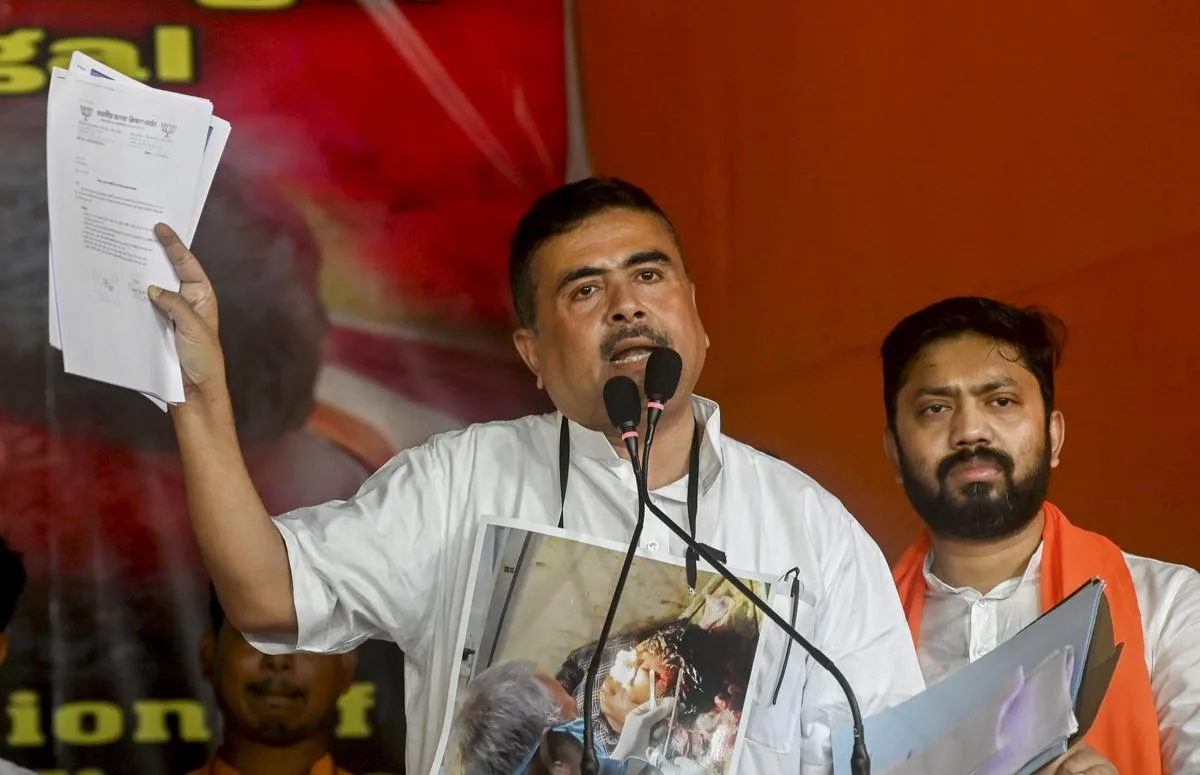
In a significant early move which can be termed as a decisive legal pivot, the West Bengal government led by BJP leader Suvendu Adhikari has chosen to withdraw the state’s petition in the Supreme Court of India challenging the Calcutta High Court’s 2024 judgment on OBC classification.
The withdrawal, once approved, will leave the High Court verdict fully operational, thus nullifying what was but mere blatant appeasement of the Muslim votebank by Trinamool Congress chief Mamata Banerjee, in contravention of the country’s constitutional tenets.
That HC judgment had invalidated the inclusion of 77 communities in the state’s OBC list, cancelling nearly five lakh certificates issued since 2010. Of these, 75 belonged to Muslim communities.
This is not merely a legal technicality. It is a clear policy reversal that accepts the High Court’s core finding: that the process of inclusion was constitutionally flawed.
What the High Court found
The Calcutta High Court did not strike down the list casually. Its ruling was rooted in three critical observations.
First, the state failed to conduct a rigorous, data-backed assessment of social and educational backwardness. Second, the inclusion process relied on narrow and inadequate sampling. Third, and most significantly, the court held that religion appeared to be the primary basis for classification in several cases, which runs contrary to constitutional principles governing reservations.
The court went as far as to describe the exercise as a “fraud on constitutional power,” underlining the seriousness of the deviation.
The politics behind the policy
The communities (most of them Muslims, and a small section others – possibly for optics) in question were added between 2010 and 2012, a period that saw transition from the Left Front to the All India Trinamool Congress government under Mamata Banerjee.
It began as an expansion of the OBC list but quite soon turned into a politically charged exercise. The numbers themselves tell the story. A disproportionately high share of the newly added communities were Muslim groups, dramatically altering the composition of the OBC list in the state.
This was not a marginal adjustment. It was a structural shift in how backwardness was identified and distributed within the reservation framework.
Critics, including petitioners in the case, argued that the process bypassed established norms, side-lined the Backward Classes Commission, and prioritised speed over scrutiny. In some instances, classification exercises were allegedly completed within implausibly short timeframes.
Appeasement versus constitutional method
The controversy is not about whether any community deserves affirmative action. The Constitution allows for inclusion based on measurable backwardness. The issue is how that determination is made.
The High Court’s ruling drew a line between welfare and what it viewed as politically driven classification. By foregrounding religion over empirical criteria, the state risked weakening the very basis of reservation policy.
Over time, this approach fed a broader perception that the OBC framework in West Bengal was being reshaped less by data and more by electoral considerations. The expansion from a modest list to nearly 180 communities, with a significant tilt towards one religious group – the followers and adherents of Islam, intensified that perception.
The fallout was not just legal. It triggered resentment among existing OBC groups, raised questions of fairness, and deepened social fault lines.
The Supreme Court route, and its abandonment
After the High Court verdict, the All India Trinamool Congress government approached the Supreme Court of India, arguing that due process had been followed.
The matter lingered, with interim developments but no final resolution.
The new government’s decision to withdraw that appeal effectively ends that line of defence. It signals that the state will no longer contest the High Court’s findings and instead move towards a reset.
Administrative fallout: A massive verification drive
Parallel to the legal move, the state has ordered a sweeping verification of caste certificates issued since 2011. Nearly 1.69 crore documents, including SC, ST, and OBC certificates, are under scrutiny.
This includes certificates issued through mass outreach programmes such as “Duare Sarkar,” which had been a flagship initiative of the previous regime.
Officials have been tasked with examining not just first-generation certificates but also derivative claims. Any irregularities could lead to cancellations, potentially affecting employment and admissions.
What comes next
The government has indicated that a fresh, legally compliant survey will be undertaken to identify genuinely backward communities. That process, if conducted transparently and rigorously, could rebuild credibility in the system.
But the immediate reality is stark. The 77 communities covered by the High Court ruling stand excluded from the OBC list, and the benefits tied to that status are no longer available to them.
A broader reckoning
This episode is no longer just about a list of communities. It has become a case study in how affirmative action policies can be undermined when due process is diluted.
The decision to withdraw the Supreme Court appeal marks a clear break from the past approach. It also places the spotlight back on a fundamental question: whether reservation policy in the state will be driven by verifiable backwardness or shaped by political expediency.
The answer to that will determine not just legal outcomes, but the social balance that such policies are meant to protect.