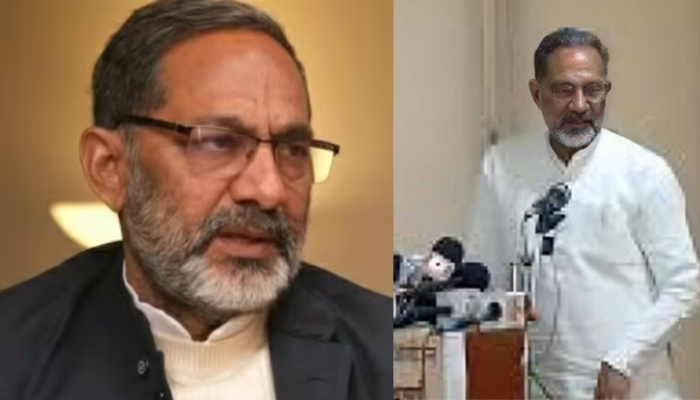
A political controversy has erupted in Uttar Pradesh after police registered an FIR against Samajwadi Party spokesperson Rajkumar Bhati over objectionable remarks against the Brahmin community. The case was filed at the Kavinagar police station in Ghaziabad after a viral video triggered immediate outrage and swift police action.
Police booked Bhati under Section 196(1) of the Bharatiya Nyaya Sanhita (BNS). The provision deals with promoting enmity between groups on religious or community grounds. The FIR followed a complaint by BJP leader and former metropolitan president Ajay Sharma. He stated that the remarks hurt religious sentiments and disturbed social harmony. Consequently, police have initiated an investigation.
Viral clip sparks immediate backlash
At the centre of the controversy lies a widely circulated video. In the clip, Bhati says, “Neither a Brahmin is good, nor is a courtesan.” As soon as the video surfaced, it spread rapidly across social media platforms. As a result, it triggered strong reactions from Brahmin groups and political organisations.
Meanwhile, pressure mounted on law enforcement agencies. Authorities then registered the FIR at Kavinagar police station. In response, officials confirmed that they are examining the full speech. They are also verifying whether the clip presents complete context or a selectively edited version.
Complaint triggers legal proceedings
Ajay Sharma, in his complaint, demanded strict action against Bhati. He stated that the remarks damaged communal harmony. Acting on this, police invoked relevant provisions under the Bharatiya Nyaya Sanhita and registered the case.
In addition, investigators have begun analysing the digital circulation of the video. They are studying how the clip spread so quickly online. At the same time, they are reviewing the intent behind the statement. Police are also cross-checking the original speech for accuracy and context.
Political tensions escalate sharply
Notably, the controversy soon turned into a major political flashpoint. Deputy Chief Minister Brajesh Pathak strongly condemned the remarks. He described them as reflective of what he called a divisive mindset within the Samajwadi Party.
Furthermore, Pathak said such incidents are not isolated. He referred to earlier controversies involving SP leaders, including Azam Khan and Swami Prasad Maurya. He also cited remarks linked to national leaders and institutions.
He then questioned whether Bhati’s statement reflects the party’s ideology. He urged SP chief Akhilesh Yadav to clarify the party’s position. Moreover, he demanded strict action if the party disagrees with the statement.
At the same time, Pathak warned that society would not accept such remarks. He added that people would respond through democratic means if divisive rhetoric continues.
Ultimately, the controversy exposes a hard political reality: caste remains deeply embedded in India’s public and electoral discourse, and it continues to shape how leaders speak and how society reacts. In such an environment, remarks that reference caste identities, whether intended as critique or commentary, rarely remain neutral and often escalate quickly. This makes public speech a matter of responsibility rather than impulse, especially for those in positions of influence. As a result, the episode highlights a clear expectation from public representatives to exercise restraint, since words spoken in the public domain today travel instantly, lose context rapidly, and can deepen social divides before clarification even follows.