Ancient, stubborn and impossible to ignore, horsetail is a plant that divides opinion in gardens across Ireland, here gardening expert Peter Dowdall explains why fighting it isn’t always the answer

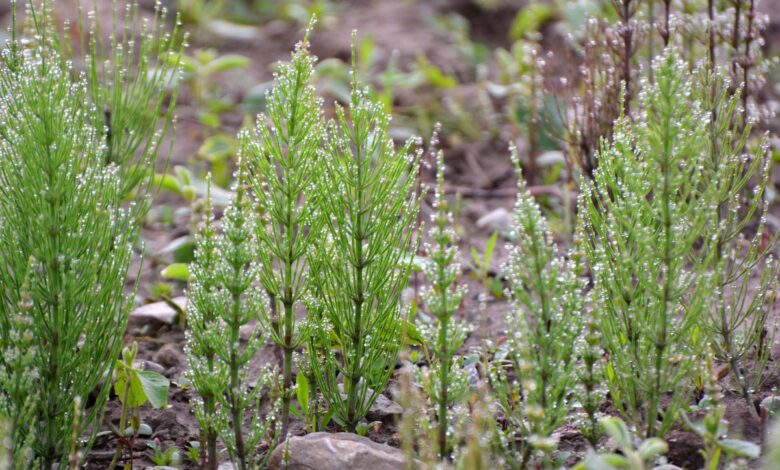
Horsetail, also known as mare’s tail, can be a real nuisance for gardeners as it grows rapidly and spreads quickly – but there are a few ways to get rid of it(Image: Orest Lyzhechka via Getty Images)
Irish gardening expert Peter Dowdall takes a closer look at one of the most stubborn and misunderstood plants found in gardens across Ireland. Often dismissed as an invasive nuisance, horsetail — or marestail — has survived since the time of the dinosaurs and continues to spark debate among gardeners today.
Here, Peter explains why fighting it is not always the answer, what its presence can reveal about your soil, and why this ancient plant may deserve a little more understanding than it usually gets.
Horsetail, or marestail, is often seen as an unwelcome visitor. It appears quietly, returns persistently, and rarely responds to the usual efforts to remove it. Yet it is also one of the oldest plants on earth, with origins that go back to the time of the dinosaurs.
That alone offers some explanation for its resilience.
I am regularly asked how best to deal with it, particularly at this time of year when it begins to reappear in borders and lawns. The natural instinct is to try to remove it completely, but in reality that approach rarely brings lasting success.
Horsetail grows from a wide underground system that can spread deep and far. Even when it appears to be cleared, it often returns, sometimes stronger than before. Many gardeners find themselves caught in a cycle of trying different approaches, from digging and cutting to various treatments, with mixed results.
What has been interesting recently is the range of perspectives people are sharing. Some still focus on removal. Others take a more measured approach, choosing to manage it over time. A growing number, including myself, suggest something different again, learning to work around it rather than constantly trying to eliminate it.
That shift in thinking reflects a broader change in how we look at our gardens.
Plants like horsetail tend to thrive in soil that is compacted, low in nutrients, or lacking in structure. In that sense, its presence can be informative. It highlights areas where the soil may benefit from attention and improvement.
Improving soil conditions by adding organic matter and encouraging biological activity is the most effective long-term approach. As the garden becomes more balanced, horsetail often becomes less dominant.
At the same time, it is worth noting that this is not simply a plant defined by its inconvenience.
Historically, horsetail has been used in a variety of ways. Its high silica content meant it was once valued for polishing wood and metal. Some gardeners still use it to make a natural plant feed or spray, believing it can help strengthen other plants.
There are also long-standing references to its use in traditional remedies. Some people prepare it as a tea or infusion, although such uses are widely discussed rather than universally understood, and should always be approached with care.
Even in a purely ornamental sense, a few gardeners have begun to see it differently. Its upright, architectural form can have a certain appeal when viewed in the right context, particularly in more naturalistic or relaxed planting styles.
Perhaps that is the most interesting aspect of all.
A plant that has survived for millions of years, adapting through enormous change, is always going to be resilient. Whether we choose to resist it, manage it, or simply understand it better, there is something to be learned from its persistence.
- Find more great gardening tips and tricks at theirishgardener.com
- To book a garden or planting design consultation with Peter visit www.theirishgardener.com/pages/garden-design-by-peter-dowdall
Want to see more of the stories you love from RSVP ? To add RSVP as a preferred source of news on Google, simply click here