Dr Punam Krishan urged women to know help was out there, revealing: “If you are a woman in your late 30s or 40s and you feel like you’re losing your mind, you’re absolutely not. You’re not making it up… so, let’s talk about it, because every single day in my clinic, I hear women say this.”

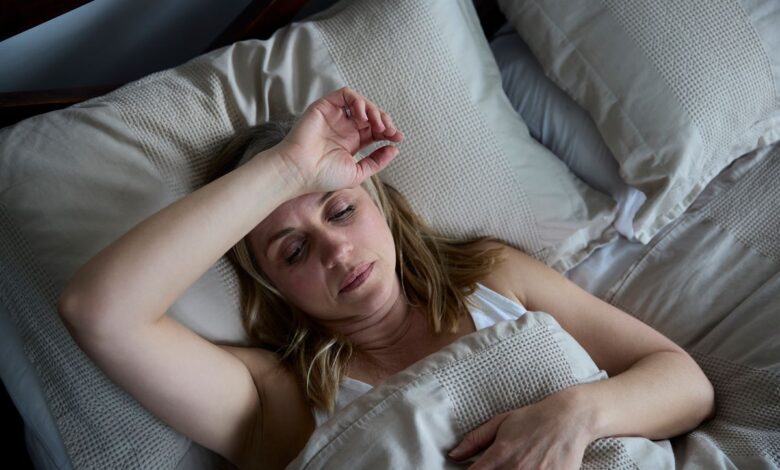
If you have night sweats regularly that wake you up or worry you, you should see a GP(Image: Getty)
A GP has made an urgent appeal to women in their 30s and 40s who find themselves continuously experiencing particular symptoms.
Dr Punam Krishan, an NHS doctor, took to social media to raise awareness around an issue, she says she encounters ‘every single day’ at her surgery, predominantly affecting women in their 30s and 40s.
Posting on Instagram, the 42-year-old, revealed she is currently ‘right at the beginning’ of her own perimenopause journey – highlighting that too many women begin this stage of life inadequately informed or supported about what lies ahead.
What is perimenopause?
“Perimenopause is the transitional phase leading up to menopause. During this phase, hormone levels, particularly oestrogen, begin to fluctuate irregularly. Women may experience symptoms such as irregular menstrual periods, hot flushes, night sweats, mood swings and changes in libido. Perimenopause can last for several years and continues until menopause is officially reached,” explains Hanna Yusuf.
Despite the average perimenopausal age being around 47, symptoms can appear as early as the mid-30s. As a result, symptoms can be misdiagnosed and attributed to other conditions like anxiety, depression or thyroid disorders. Misunderstanding these early signs can delay important treatment options, such as HRT, non-hormonal therapies and lifestyle changes.
How do I know once I’ve hit menopause?
If you haven’t had a menstrual period for 12 consecutive months, you’ve hit menopause. This rule helps women tell the difference between perimenopausal symptoms and the point at which their hormone levels have significantly changed.
“Menopause is officially defined as the point at which a woman has not had a menstrual period for 12 consecutive months. It typically occurs in the late 40s to early 50s but can vary widely among individuals.
“At this stage, the ovaries have largely ceased producing eggs, and oestrogen and progesterone levels have significantly decreased. Menstrual periods cease entirely, and many of the symptoms experienced during perimenopause continue into the early stages of menopause.”
Symptoms
According to the HSE, common symptoms frequently include hot flushes, sleep disturbances, palpitations, headaches and migraines, muscular aches and joint discomfort, weight increase, changes to skin, diminished libido, vaginal dryness, recurring urinary tract infections, and tooth and gum sensitivity.
Despite how challenging this period can be, Dr Punam emphasised that help is out there. She said: “If you are a woman in your late 30s or 40s and you feel like you’re losing your mind, you’re absolutely not. You’re not making it up, you’re not going crazy, it might be that you’re perimenopausal. So, let’s talk about it, because every single day in my clinic, I hear women say this. In fact, today, I heard it three times, so I thought, let’s talk about it.
“Perimenopause just doesn’t mean it’s hot flushes or missed periods – it can sneak up years before menopause actually begins. And the worst bit is, hardly anybody warns you that it’s happening. It just creeps in quietly and suddenly, you’re questioning everything about yourself, when really your body is going through a massive internal shake-up.
Sleep might fall apart; you’re wide awake at 3am, your brain’s all foggy, you’re wired but exhausted, your joints are achy, your fatigue feels deep-boned
Dr Punam went on to say: “And the sad thing is that it often gets dismissed as stress, burnout, or even depression. So many women get disregarded, and that makes me both sad and just really mad because I know it doesn’t have to be this way. Your body isn’t broken, your hormones are shifting, and that affects everything: your energy, your memory, your relationships, your confidence.
“So if this sounds like you, you’re not going crazy, you’re not failing, you’re not just tired and stressed. Perimenopause is real, it’s powerful, it’s a transition into a new phase, it’s a whole new sense of identity and yes, it takes time to figure out, but that’s okay. Because the most important thing is, there is help and support, whether that is lifestyle support, HRT, or just finally being heard.
“Please don’t suffer in silence, ’cause you deserve to feel like yourself again. And if it helps at all, I am right at the beginning of my perimenopause journey too, so I totally get it – not just as a doctor, but as a woman who’s feeling all the wobbles too. We’re in this together, and if you are struggling, please make an appointment with your GP and get the support and help that you deserve.”