
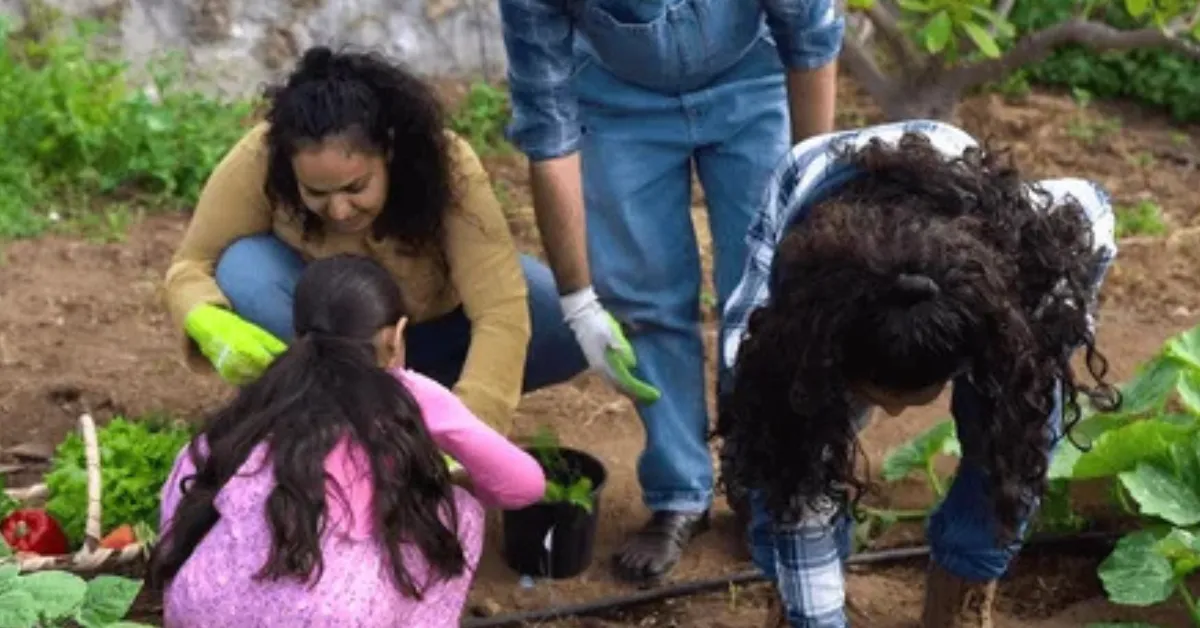
A small patch of sunlight on a balcony, terrace, or courtyard can become a living organic garden where children learn by doing rather than being told. With a few containers and basic materials, they can experience how food is grown, how soil works, and how plants depend on care and balance.
Organic gardening keeps this space natural and safe, relying on processes such as composting and biological pest control instead of chemicals.
1. Starting with healthy soil
Every successful organic garden begins with soil. Children can be shown that soil is not just dirt, but a healthy system full of nutrients and organisms. A simple mix of garden soil and homemade compost works well for containers.
/filters:format(webp)/english-betterindia/media/media_files/2026/05/27/children-organic-gardening-2026-05-27-16-15-12.png)
Kitchen scraps such as vegetable peels, fruit skins, and tea leaves can be turned into compost over time.
This helps children see how waste can return to the earth as nourishment. When they mix compost into soil with their hands, they begin to understand how plants are fed naturally, rather than through artificial fertilisers.
2. Choosing the right plants
For early success, fast-growing and useful plants are ideal. Herbs like mint and coriander, leafy greens such as spinach, and easy vegetables like tomatoes or chillies work well in small spaces.
These plants grow fast enough to keep children interested. Seeing visible change within days or weeks helps maintain interest and encourages regular care. Each seed planted becomes a small experiment in patience and attention.
3. Planting seeds the natural way
Children can be guided to plant seeds at the correct depth, usually about twice the size of the seed itself. Seeds should not be crowded; each plant needs space for roots to spread and leaves to grow.
After planting, the soil should be gently pressed and watered lightly. You should avoid overwatering, as too much moisture can stop seeds from sprouting. This basic act introduces the idea of balance, which is central to organic gardening.
4. Understanding sunlight and water
Plants depend on sunlight to grow through photosynthesis. Children can observe how plants placed in brighter areas grow faster and healthier than those kept in shade.
Watering becomes a daily responsibility, but not a fixed rule. Instead, children learn to check the soil with their fingers. If it feels dry, watering is needed; if it is damp, it can wait. This builds observation skills and prevents common mistakes like overwatering.
5. Composting and natural recycling
Organic gardening is closely linked to natural recycling. A compost container can be kept in a corner, where kitchen waste slowly breaks down through composting.
Children can take part in adding dry leaves, vegetable scraps, and fruit peels. Over time, they see waste change into dark, crumbly soil. This process teaches that nothing in nature is wasted and everything has a role in the cycle of growth.
/filters:format(webp)/english-betterindia/media/media_files/2026/05/27/children-organic-gardening-2026-05-27-16-17-55.png)
6. Caring for plants without chemicals
Instead of synthetic pesticides, organic gardening uses natural methods to keep plants healthy. Neem-based sprays, for example, help manage pests without harming beneficial insects.
Children can also learn easy companion planting, which is growing certain plants together so they protect each other. Mint, for instance, can help deter pests from nearby plants. These methods show how nature provides its own solutions when balanced correctly.
7. Observing growth and learning patience
Each stage of growth, including sprouting, leaf formation, flowering, and harvesting, can be observed slowly over time. Children can keep a record of changes, noting height, leaf size, or the appearance of flowers and fruits.
This regular observation builds patience. Unlike instant results, gardening rewards consistency. Missing a watering or forgetting care leads to visible changes, making responsibility easy to understand.
8. Harvesting and completing the cycle
When herbs or vegetables are finally ready to harvest, children experience the full cycle of food production. Picking mint leaves or tomatoes that they have grown themselves creates a strong connection to what they eat.
Even after harvesting, the cycle continues as plant waste returns to the compost bin, feeding the next generation of growth.
/filters:format(webp)/english-betterindia/media/media_files/2026/05/27/children-organic-gardening-2026-05-27-16-21-49.png)
A small garden with lasting lessons
A small organic garden is more than a collection of plants. It becomes a teacher of balance, responsibility, and respect for natural systems. With basic tools, everyday waste, and regular care, children learn how life grows, sustains itself, and begins again.