At a time when the advertising industry is trying to redefine creativity in the age of AI, creators, algorithms and collapsing attention spans, global award shows are increasingly reflecting wider shifts in the advertising industry. The work winning today is revealing what the industry values now: speed versus craft, creator influence versus traditional storytelling, and increasingly, the tension between machine-assisted efficiency and human originality.
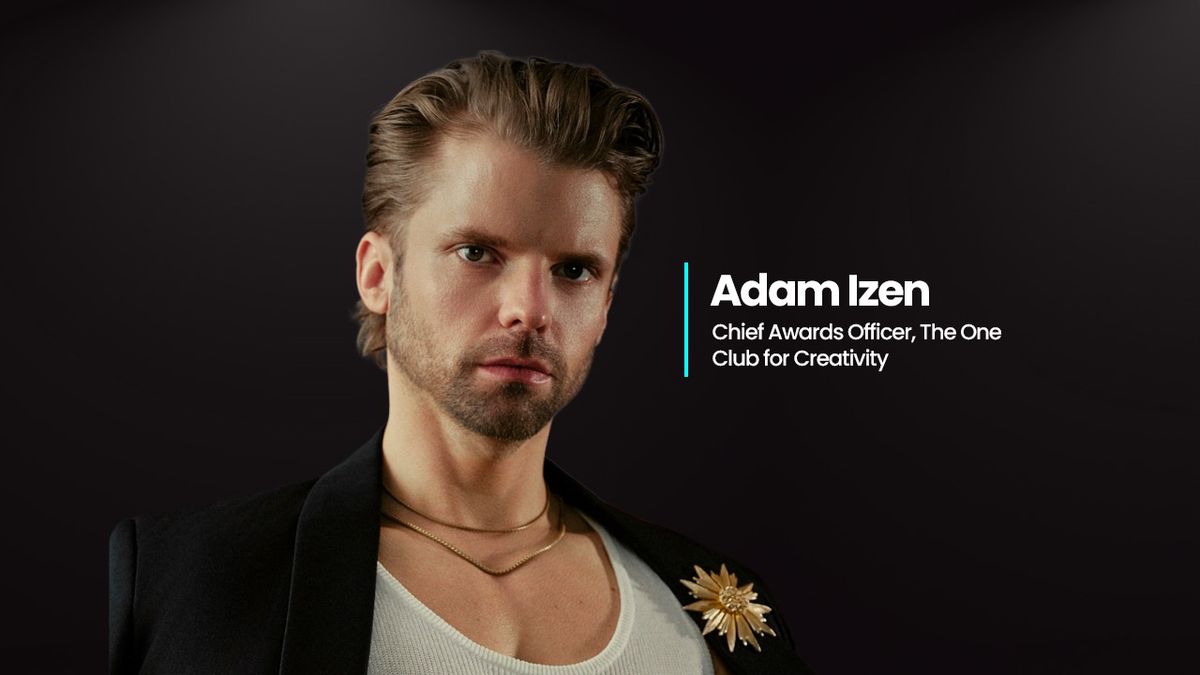
That shift is also reshaping institutions like The One Club for Creativity, the global non-profit behind some of advertising and design’s honours including The One Show, the ADC Annual Awards and ONE Asia Creative Awards. Earlier this year, Adam Izen was elevated to the newly created role of Chief Awards Officer, overseeing the organisation’s entire global awards ecosystem. The role itself was designed to “future-proof” the club’s creative portfolio at a moment when the definition of creativity is rapidly evolving. Under his remit now sit platforms that influence how global creativity is judged, rewarded and remembered across advertising, design, typography and creator-led work.
Speaking to Social Samosa, Adam Izen reflected on the evolving global creative landscape, the rise of creator-led content, and why culturally rooted storytelling still has the power to stand out on the world stage.
While AI tools, algorithms and real-time content cycles continue to dominate industry conversations, Izen believes creativity is not becoming flatter, it is becoming more personal.
“We also see people hunkering down into their roots and showcasing who they truly are and connecting with more niche audiences,” he said. “Despite the inclination to think originality would suffer, I think we’re kind of seeing the opposite.”
The era of fast content without abandoning craft
One of the biggest shifts visible across global award shows today is the rise of creator-led work and culturally reactive content. According to Izen, brands and agencies are increasingly balancing two worlds: the demand for speed and the hunger for craft.
“We saw big wins from creator content across the show,” he noted, pointing to the growing influence of creators in shaping contemporary advertising narratives. But at the same time, he emphasised that meticulously crafted storytelling continues to command attention from juries and audiences alike.
“A lot of amazing crafts came to the forefront. Judges are really hungry for it and really love to see it.”
For him, the industry is not necessarily losing patience for long-term brand building. Instead, the ecosystem now requires coexistence between immediacy and depth.
“There’s definitely a huge marketplace for faster content to cut through, get to people right away and respond in real time to culture. But the strategy requires a bit of both.”
He also pointed to broader cultural signals that indicate audiences still value human creativity and artistic effort. “People really care about what’s human-made,” he said, referring to examples like Disney returning to hand-drawn animation and other carefully crafted storytelling formats. The shift, then, is not from storytelling to speed, but from singular approaches to hybrid creative thinking.
Why Indian creativity still stands out globally
As conversations around global creativity increasingly become homogenised by trends and platform behaviours, Izen believes Indian advertising continues to possess a distinct advantage: emotional storytelling rooted in culture.
But he feels Indian agencies are often missing out simply by holding back. “Enter. If you don’t enter the work, we can’t judge it,” he said.
Beyond participation, he stressed the importance of contextualising Indian work for global juries. Since award show panels consist of professionals from across markets and cultures, work cannot assume prior understanding of local nuances. “Don’t take for granted what people know,” he explained. “Take the time to explain the brand and the cultural context so that people can judge the work authentically.”
Yet while clarity matters, Izen warned against diluting cultural identity in pursuit of global appeal.
“Don’t hold back from true Indian creativity,” he said. “The work that really represented that beauty and storytelling, those were the ones that succeeded.”
For an industry constantly debating whether technology is flattening originality, Izen’s perspective offers a more optimistic reading of the moment. The platforms may be changing, the formats may be faster, and the audiences more fragmented, but the work that continues to resonate globally is still the work that feels deeply human, culturally specific and emotionally honest.