
India is rapidly modernising its military capabilities with a strong emphasis on drones, artificial intelligence (AI), and advanced combat vehicles, gearing up for the future of warfare which is expected to be dominated by autonomous and AI-enabled systems. This transformation is comprehensive, integrating indigenous innovation, strategic imports, and a focus on self-reliance under programmes like “Make in India. “India is building a future-ready military force centred on AI-enabled combat drones, sophisticated counter-drone systems, and a large fleet of modern combat vehicles infused with advanced technology. This effort aligns with a global shift toward unmanned and AI-driven warfare, aiming to maintain operational superiority and strategic autonomy amidst an increasingly complex security environment. Artificial Intelligence (AI) is rapidly redefining global defence, and India is emerging as an important player in the military-tech race. Under the Atmanirbhar Bharat vision and the iDEX (Innovation for Defence Excellence) framework, Indian defence companies—both state-owned and private—are embedding AI across surveillance, combat systems, and aerospace platforms. By combining the capabilities of traditional PSUs like BEL and HAL with agile private innovators like Zen Technologies, Paras Defence, and Data Patterns, India is building an AI-powered defence ecosystem that enhances national security and opens new opportunities for global defence exports. AI adoption is not just delivering operational superiority, but also accelerating self-reliance, marking a decisive shift in how India prepares for 21st-century warfare.
Predictive AI models at the individual level in India are outperforming human analysts.
The Indian Army inducted the Saksham Counter-Unmanned Aerial System Grid — an AI-driven, BEL-developed network for real-time drone detection, tracking, and neutralisation, securing India’s tactical airspace.
The Indian Army began induction of the ‘Saksham’ Counter-Unmanned Aerial System (UAS) Grid, an indigenous real-time drone detection and neutralisation network.
‘Saksham’ (Situational Awareness for Kinetic Soft and Hard Kill Assets Management) is a modular, AI-driven Command and Control (C2) System designed to detect, track, identify, and neutralise hostile drones and unmanned aerial systems (UAS) in real time.
It forms the backbone of India’s Counter-UAS Grid, securing both ground and low-altitude airspace known as the Tactical Battlefield Space (TBS).
The system has been indigenously designed and developed by Bharat Electronics Limited (BEL), Ghaziabad, in collaboration with the Indian Army’s Corps of Air Defence.
Approved for induction under the Fast Track Procurement (FTP) route for rapid rollout across all field formations.
It aims to strengthen India’s defence preparedness against drone-based surveillance, weapon delivery, and airspace incursions.
Its objective is to ensure integrated airspace control up to 3,000 metres (10,000 feet) — the Air Littoral zone — enhancing situational awareness and response capability in modern hybrid warfare.
Operates over the secure Army Data Network (ADN), integrating real-time inputs from all sensors, drones, and counter-UAS systems.
It provides a GIS-based unified air picture that merges data from friendly, hostile, and neutral aerial entities.
It integrates seamlessly with the Akashteer System, India’s automated air defence network, to intercept and neutralise threats instantly.
It employs AI-based fusion technologies for automated threat classification and soft/hard kill decision-making.
Key Features:
Real-Time Detection & Neutralisation: Detects, tracks, identifies, and neutralises hostile drones up to 3,000 m (Air Littoral) instantly.
AI-Driven Fusion Technology: Uses AI/ML to classify drones as friendly, neutral, or hostile and trigger soft/hard kill responses automatically.
Integrated Command & Control System: Combines sensors, radars, and weapons on a GIS-based digital grid for unified airspace control.
Secure Army Data Network Connectivity: Operates over the encrypted ADN, enabling real-time, cyber-secure data sharing across formations.
Interoperability with Akashteer: Linked with Akashteer Air Defence System for automated interception of aerial threats.
Modular & Upgradable Design: Built for plug-and-play integration of new sensors, jammers, or laser/EMP systems.
Unified Threat Picture: Displays combined air and ground threats on a single operational dashboard.
Dual Soft & Hard Kill Capability: Employs jamming/spoofing (soft kill) and kinetic destruction (hard kill) based on threat level.
Inside IAF’s New AI-Driven Air Defence Shield to Counter Drone Swarms and Missile Threats in Seconds in 2026
The Indian Air Force upgraded IACCS with AI-native architecture to improve predictive air defence, reduce sensor-to-shooter timelines, and strengthen India’s multi-layered defence shield against drones and missile threats.
The IAF AI-native IACCS upgrade is set to become a major force multiplier for India’s air defence network. The Indian Air Force (IAF), along with Bharat Electronics Limited, is modernising the Integrated Air Command and Control System (IACCS) with advanced artificial intelligence capabilities to reduce sensor-to-shooter timelines, improve predictive threat analysis, and strengthen multi-layered air defence operations across the country.
It combines radar feeds, airborne warning systems, satellite inputs, fighter aircraft data, and missile defence systems into one common operational picture for faster military decisions.
Key functions of IACCS include:
- Real-time airspace monitoring
- Detection of drones, missiles, and enemy aircraft
- Coordination between radars and interceptor systems
- Faster engagement decisions during combat situations
- Integration of Army, Navy, and Air Force air defence assets
The system is built on the Indian Air Force’s AFNET digital backbone and is considered one of India’s most important network-centric warfare platforms.
IAF AI-native IACCS Upgrade: How AI Will Transform IACCS
The latest upgrade converts IACCS into an AI-native decision-support architecture.
Under the new system, artificial intelligence will automatically process and merge data from:
- Ground-based radars
- AWACS and AEW&C aircraft
- Space-based sensors
- Civilian radar systems
- Fighter aircraft like Rafale and Tejas
This creates a unified Common Operational Picture (COP) that helps military commanders identify threats faster and respond more accurately.
Major AI Capabilities Added
Intelligent Sensor Fusion
AI can instantly correlate multiple radar tracks and remove duplicate or false signals.
Benefits include:
- Faster target identification
- Reduced false alarms
- Better tracking of stealth aircraft and drones
- Improved battlefield awareness
Predictive Threat Analysis
The AI system studies movement patterns, speed, trajectory, and altitude to predict enemy intent before an attack fully develops.
Faster “Sensor-to-Shooter” Timelines
One of the biggest goals of the upgrade is to reduce the time between:
- Detecting a threat
- Confirming the target
- Launching an interceptor response
IAF AI-native IACCS Upgrade: AI-Based Decision Support System (DSS)
The upgraded IACCS includes an advanced Decision Support System (DSS). Once a threat is identified, the AI engine can recommend the best interception option based on:
- Target speed
- Range
- Altitude
- Probability of kill
- Weapon availability
Possible response systems include:
- S-400 air defence systems
- Akash missile systems
- Fighter aircraft interception
- Counter-drone weapons
However, final engagement approval will still remain with human commanders.
Focus on Drone Swarms and Modern Air Threats
Modern warfare is increasingly dominated by:
- UAV swarms
- Loitering munitions
- Cruise missiles
- Electronic warfare systems
The AI-enabled IACCS is designed to prioritize the most dangerous targets automatically and allocate interceptor systems accordingly.
This is important because:
- Drone attacks can overwhelm traditional systems
- Simultaneous attacks require rapid automated decisions
- Human-only monitoring is slower during mass attacks
Joint Air Defence Integration
The upgraded IACCS is also being integrated with:
- Army’s Akashteer system
- Navy’s Trigun network
- Joint Air Defence Centre (JADC)
This will improve tri-service coordination and create a unified national air defence grid. Experts believe this integration will play a major role in India’s future theatre command structure.
What is the Importance of IAF AI-native IACCS Upgrade
The AI-native IACCS upgrade is important because India faces growing regional air defence challenges, including:
- Drone incursions
- Long-range missile threats
- Electronic warfare
- Stealth aircraft
- Multi-front conflict scenarios
The new architecture aims to provide:
- Faster military response
- Better battlefield visibility
- Stronger airspace security
- Improved interception success rates
- Higher survivability during saturation attacks
India’s Push for Indigenous Defence Technology
The project also highlights India’s growing focus on indigenous military technologies under the “Atmanirbhar Bharat” initiative.
Bharat Electronics Limited (BEL) is playing a central role in developing:
- IACCS
- Akashteer
- Radar systems
- Electronic warfare platforms
- Counter-drone systems
The increasing use of AI in defence systems reflects a global shift toward intelligent warfare networks and predictive combat systems.
The ‘Saksham’ Counter-Unmanned Aerial System (CUAS) is specifically designed to combat misidentified sites by integrating real-time AI-driven analytics to distinguish between hostile, neutral, and friendly aerial entities.
The system handles these threats through several core mechanisms:
- Unified Battlefield Picture: It creates a GIS-based Recognised UAS Picture that merge inputs from radars, electronic sensors, and optical payloads across the battlefield.
- AI-Enabled Analytics: It uses AI-driven predictive threat analysis and payload signature assessments to determine whether a target is a genuine threat or a friendly asset.
Automated Safety Overrides: Because it accurately identifies targets in real-time, the system allows unrestricted movement for friendly aerial assets while prioritizing automated countermeasures (such as jamming, spoofing, or kinetic interception) strictly for identified hostile.
The Indian Air Force’s (IAF) AI-native upgrades to its Integrated Air Command and Control System (IACCS)—and indigenous platforms like the Akash and Indrajaal—are built to counter misidentified or spoofed sites. By integrating deep learning, automated sensor fusion, and real-time electronic warfare (EW) countermeasures, the system actively identifies, classifies, and neutralizes deceptive threats.
How it identifies and fights deceptive threats
- Sensor Fusion & Pattern Recognition: The AI cross-references data from 3D tactical radars, electro-optical sensors, and satellite networks simultaneously. This helps it distinguish genuine targets from radar reflections, decoy drones, or ghost-targets created by enemy spoofing.
- Electronic Warfare (EW) & GNSS Spoofing: To tackle adversarial electronic attacks that attempt to misguide or mask targets, the shield deploys RF jamming and global navigation satellite system (GNSS) spoofing. It cuts off the communication and navigational links of hostile swarms, breaking their ability to target or disguise sites.
“Friend-or-Foe” (IFF) Protocols: The AI-native architecture features automated Identification Friend or Foe (IFF) algorithms. This prevents friendly fire and ignores false coordinate placements in contested airspace.
The IAF’s shift towards this “smart” multi-layered, automated defence architecture replaces slow, human-in-the-loop decision-making with near-instant threat assessment. This ensures that both civilian infrastructure and military sites are protected even when an adversary is using saturation and swarm-deception tactics.
India’s AI-enabled drones and systems were highly effective during Operation Sindoor, achieving a reported over 90% accuracy rate in threat identification and intelligence analysis. The integration of artificial intelligence allowed Indian forces to bypass Pakistani air defences, analyze multi-sensor data in real time, and coordinate precision long-range strikes with high operational efficiency.
The effectiveness of these AI-driven capabilities during the cross-border hostilities can be broken down into the following operational successes:
- High-Precision Targeting: AI-driven applications, including Electronic Combat and Analysis Systems (ECAS), correctly identified and mapped enemy radar and missile signatures with 94% accuracy. This enabled the Indian Air Force and Army to neutralize targeted assets, such as terror bases and enemy air bases, without losing Indian military assets.
- Seamless Surveillance and Reconnaissance: Systems such as the Israeli-supplied Heron Mk II drones provided constant, real-time data feeds. Artificial intelligence was utilized for multi-sensor data fusion, providing combat commanders with a clear, cohesive picture of cross-border deployments.
- Predictive Weather and Tactical Modelling: The deployment of AI tools like “Anuman 2.0” delivered high-precision, 48-hour weather forecasting within a 200-kilometer radius. This predictive modelling gave Indian artillery regiments a distinct tactical advantage in calculating and directing fire.
Defensive Counter-UAS Integration: On the defensive front, India’s Integrated Counter Unmanned Aerial Systems (UAS) Grid—backed by modern AD systems such as the indigenous Akash missile—successfully intercepted and neutralized incoming Pakistani drones and missile.
Pakistan continues to pose a persistent security threat and challenge to India. Top Indian security officials, including Army Chief General Upendra Dwivedi, maintain that Pakistan has not fundamentally altered its behaviour regarding cross-border terrorism, keeping the two-front threat for India highly active.
Key aspects of the ongoing dynamic include:
- State-Sponsored Terrorism: India maintains that Pakistan continues to harbour, support, and utilize militant outfits as state proxies, necessitating continuous high-level border vigilance and deterrence.
- Hostile Rhetoric: High-ranking Pakistani military and political figures, including Army Chief Asim Munir, have issued public warnings to India, signalling that Islamabad remains ready to respond aggressively to any perceived future provocations.
- Information Warfare: In the aftermath of past conflicts, Pakistan has actively engaged in digital campaigns and psychological operations intended to mislead the global public and distort the strategic narrative.
Technological & Cross-Border Alliances: Security analysts note that Pakistan continues to receive external technological, intelligence, and equipment support, posing ongoing interoperability and intelligence challenges for Indian defence planning.
Pakistan’s AI-enabled targeting capabilities are centred on its Intelligence, Surveillance, and Reconnaissance (ISR) systems, automated electronic warfare platforms, and networked combat coordination, bolstered heavily by strategic partnerships with China.
Key pillars of Pakistan’s AI and automated defence ecosystem include:
- CENTAIC: The Pakistan Air Force operates the Centre for Artificial Intelligence and Computing (CENTAIC), which serves as the primary hub for data analytics, sensor fusion, and intelligence archiving.
- Automated Cyber-Defensive Frameworks: During past border conflicts, Pakistan has utilized cyber-defensive reflex systems (such as Operation Shadow Gate). These networks employ AI algorithms and cloud-computing platforms to analyze legacy radar data, optimize jamming frequencies, and disrupt automated Indian defences.
- Sensor Networks and Drone Swarms: Pakistan uses AI-assisted software to enhance the targeting accuracy of its indigenously developed and foreign-supplied Unmanned Aerial Vehicles (UAVs), such as the Burraq and Shahpar. By training image-recognition models on satellite and drone footage, these systems can assist operators in distinguishing military targets from civilian environments.
Chinese Integration: Pakistan’s AI modernization is closely tied to its hardware procurements from China. By integrating Chinese-supplied J-10C fighter jets, HQ-series air defence systems, and networked satellite relays, the Pakistani military generates real-time kill-chains for faster targeting and electronic countermeasures
Unlike India—which actively invests in fully autonomous and automated Lethal Autonomous Weapons Systems (LAWS)—Pakistan’s strategic doctrine largely emphasizes a “human-in-the-loop” or “human-on-the-loop” approach. Islamabad maintains that autonomous strike drones and fully automated targeting without human judgment lower the threshold for war, and therefore officially opposes the use of LAWS in the region.
Corruption of AI processes, whether in India or globally, generally occurs through intentional manipulation of the data, code, or decision-making frameworks that govern these systems. In the context of India’s growing AI ecosystem, several vulnerabilities have been identified by experts and researchers:
Methods of AI Corruption
- Algorithmic Capture: This occurs when AI systems are intentionally manipulated to systematically favour specific groups. For example, the code for electronic procurement or fraud detection can be tweaked to steer contracts toward “cronies” or to hide wrongdoing.
- Data Manipulation & Poisoning: AI models are only as good as the data they learn from. If training data is inherently biased or intentionally corrupted, the resulting AI will mirror those flaws.
- Input Manipulation: Systems can be “tricked” through minor changes to input data. In healthcare, for instance, doctors could theoretically alter a few pixels in an image to fool an AI into misidentifying a harmless mole as cancerous to justify expensive treatments.
- Bribing Human Gatekeepers: Corruption can still enter the process through the humans who oversee the AI. Corrupt insiders might be bribed to manipulate digital systems or grant unauthorized access to sensitive data.
“AI Washing” and Financial Misconduct: Some firms have been accused of exaggerating their AI capabilities—using human labour while claiming it is automated—to secure funding or inflate growth metrics.
Vulnerabilities in the Indian Context
- Black Box Problem: The opacity of AI systems makes it difficult to audit how they reach specific conclusions, which can allow corrupt manipulations to escape detection.
- Legacy Systems: Critics argue that existing corrupt systems (involving police, judges, or bureaucracy) may resist being replaced or improved by AI.
Implementation Lags: While India is pushing initiatives like the IndiaAI Mission and establishing AI Cities like Lucknow, regulatory frameworks often lag behind the rapid pace of technological development.
Non-state actors (NSAs)—such as militant groups, cybercriminals, and proxies—manipulate modern AI and battle networks primarily through AI-assisted cyberattacks, data poisoning, and cognitive warfare. By exploiting vulnerabilities in network architecture, NSAs bypass conventional defences and disrupt command systems.
These actors target sophisticated software through several specific vectors:
- Data Poisoning & Algorithmic Manipulation: NSAs inject adversarial data into the training datasets or live operational streams of AI models. This “poisons” the algorithm, causing it to misclassify targets, misinterpret situational data, or fail during critical moments (e.g., misidentifying hostile drones as friendly).
- AI-Generated Distractions and Deepfakes: Using generative AI, NSAs flood communications networks with synthetic media, fake alerts, and deepfakes during real operations. This information overload creates confusion, delays human responses, and fractures operational coordination.
- Automated Exploitation of Supply Chains: NSAs use machine learning tools to scan for and exploit vulnerabilities in connected battle networks and logistical supply chains. By automating the discovery of weak links (such as unpatched legacy systems or third-party hardware), they can remotely infiltrate or disrupt the network.
Swarm Tactics and Autonomous Drones: NSAs employ commercially available, AI-enabled swarms of drones. Because these swarms can independently locate, track, and strike targets, they overwhelm traditional anti-air defences and manipulate the battlefield environment.
To counter these threats, India’s defence establishment—led by bodies like the Defence AI Council (DAIC)—focuses heavily on developing localized, indigenous AI and robotics capabilities to secure networks.
The Indian military’s deployment of AI for targeting is highly structured around indigenous infrastructure, classified data integration, and distinct operational doctrines.
- Doctrine: India’s framework is built upon multi-domain warfighting strategies and a finalized roadmap for integrating AI, machine learning, and big data into command-and-control operations.
- Infrastructure: To ensure defence sovereignty, critical processing is supported by massive computational pushes, including classified clusters of accelerators dedicated exclusively to military pilots.
Data: India relies on massive localized datasets. For instance, the Indian Army’s AI projects process decades of historical deployment data to power real-time target identification along sensitive borders. The military’s approach to AI targeting fundamentally mirrors global technological disparities, relying strictly on “human-in-the-loop” systems tested and refined exclusively within the country’s unique geopolitical operating environment.
India has heavily built the AI infrastructure to synthesize both digital surveillance and human intelligence. Driven by a major push for sovereign capabilities, the intersection of AI and national security is increasingly central to India’s intelligence apparatus.
Key components of this architecture include:
Integrated Data Synthesis (NATGRID): India’s National Intelligence Grid (NATGRID) is the operational core. It operates as an integrated intelligence master database that collates massive datasets from twenty-one different government and private organizations (including banking, immigration, and telecommunications) in real time.
Next-Gen Analytical Engines (Gandiva AI): Integrated directly into NATGRID, systems like Gandiva AI are used to rapidly correlate these massive datasets. The AI performs high-speed pattern recognition, identity matching, and anomaly detection to flag threats and assist investigators across agencies.
Cutting-Edge Electronic Surveillance (Prajna): For electronic and visual intelligence, the Defence Research and Development Organisation (DRDO) and its Centre for Artificial Intelligence and Robotics (CAIR) delivered Prajna (also referred to as PRANA). It is an AI-powered satellite data processing system that continuously ingests imagery to automatically flag suspicious activities and movements in remote or sensitive regions in near real time.
Human Intelligence (HUMINT) Augmentation: Advanced data integration and predictive inference platforms are used to assist field operatives and intelligence officers. By fusing vast amounts of background data, communication intercepts, and biometric records, AI generates a centralized operational picture that aids in assessing threats and tracking individuals of interest.
Sovereign AI Infrastructure: Under the IndiaAI Mission, the government is aggressively expanding domestic computational capabilities (reaching over 38,000 GPUs) and developing native Foundational AI Models. This ensures that sensitive intelligence data and training models remain strictly within secure, homegrown environments.
One of the several indigenous AI tools used during the May clashes in 2025 had its aim to improve battlefield awareness and speed up decision-making. These systems are now being expanded, including in a military-specific large language model.
As predictive intelligence complemented by AI advances each day, where does the buck stop?
“They’re going to continue integrating, and then that’s going to get accepted as a kind of normalization. What is emerging is not an exception, but a new baseline, where AI-mediated targeting, backed by private data ecosystems, becomes routine,” said Peter Asaro, an Associate Professor of Media Studies and a philosopher of technology at The New School in New York City.
In September 2024, in an unprecedented Israeli operation, thousands of pagers used by Hezbollah members exploded almost simultaneously across Lebanon.
The incident was seen as a highly sophisticated operation that involved tampering with the devices at a point deep within the supply chain. While it was seen by some as a highly precise operation, many others saw it as setting a dangerous precedent.
“They’re collecting communications data geolocation and then essentially using the data from your cell phone to determine whether you’re a member of Hamas. That seems like a terrible precedent for any society,” Peter Asaro added.
The Indian Army has deployed AI-driven reconnaissance drones and sensor fusion technologies along the LoC and LAC to enhance threat detection, track movements, and provide early warning capabilities in challenging terrains.
The Indian Army is on the cusp of technological transformation and rapidly expanding its use of artificial intelligence (AI) to bolster security along the Line of Control (LoC) with Pakistan and the Line of Actual Control (LAC) with China. AI-driven surveillance, cyber defence, and predictive analytics increasingly shape India’s military strategy, enabling faster and more effective decision-making in high-risk environments.
From AI-powered drones and automated battlefield monitoring to cyber warfare tools countering digital threats, the integration of AI represents a fundamental shift in military operations. These advancements align with the Ministry of Defence’s (MoD) broader transformation plan, which has designated 2025 as the ‘Year of Reforms,’ prioritising technological modernisation and interoperability across the armed forces.
AI-Enabled Surveillance: Strengthening Border Defences
The Indian Army has deployed AI-driven reconnaissance drones and sensor fusion technologies along the LoC and LAC to enhance threat detection, track movements, and provide early warning capabilities in challenging terrains. A senior Army official, speaking on condition of anonymity, noted: “AI helps us process vast amounts of surveillance data in real-time, allowing commanders to react swiftly to emerging threats.”
During Exercise Swavlamban Shakti in October 2024, India showcased AI-powered warfare systems, including swarm drones, kamikaze drones, and robotic mules, demonstrating their potential in real-time combat scenarios. The Army is also operationalising Project Sanjay, a network of AI-enabled surveillance centres that process battlefield intelligence to enhance coordination and response efficiency. Machine-learning (ML) algorithms are improving object detection along the LoC and LAC, where thermal imaging and anomaly detection tools identify enemy fortifications, infiltration attempts, and strategic build-ups.
Cyber Warfare: AI as a Digital Shield
With adversarial states increasingly targeting military networks, AI has become integral to India’s cybersecurity strategy. According to reports, the Situational Awareness Module for the Army (SAMA) is now integrated with the Artillery Combat Command & Control System (ACCCS) and other key military platforms. SAMA’s AI capabilities enable cyber threat detection and mitigation, AI-powered disinformation tracking, countering deepfake-generated propaganda, and real-time analysis of intercepted communications to preempt security breaches.
A cybersecurity expert working with the Indian defence and security establishment emphasised: “Cyber warfare is no longer a secondary front—it is a primary battlefield. AI enhances our real-time ability to detect, analyse, and neutralise threats.” As adversaries use AI to manipulate social media narratives, the Army has deployed counter-disinformation algorithms to track and neutralise misleading content before it spreads.
Teething Issues & Solutions
Despite rapid advancements, integrating AI into military operations present challenges. For instance, AI models depend on data accuracy; errors in training datasets could lead to false identifications. Hostile actors could potentially manipulate AI algorithms, necessitating robust cybersecurity measures. Securing AI infrastructure is critical to prevent system failures or unauthorised access. India is developing offline AI solutions without internet connectivity to address these concerns, reducing cyber vulnerabilities while ensuring operational security in contested zones.
AI in Radar, Weapons, Land & Naval Systems
At Aero India 2025, private defence firms showcased AI applications in radar optimisation, autonomous weapon systems, and naval warfare solutions. These developments signal AI’s growing role across India’s defence ecosystem. “The battlefield of the future will be driven by information and automation as much as firepower,” a senior Army official remarked.
The Military College of Telecommunication Engineering (MCTE) in Mhow has been designated the Army’s AI Centre of Excellence, spearheading research on AI-enhanced threat detection, cyber resilience against AI-powered attacks, and AI’s role in autonomous combat decision-making. While India has yet to endorse fully autonomous weapon systems, military officials indicate that “human-in-the-loop” AI systems—where AI supports but does not replace human decision-making—will remain the standard.
The Future of AI in Indian Military Operations
Recognising AI’s long-term significance in modern warfare, the Indian Army had announced and outlined a 20–25-year roadmap focusing on joint AI command centres integrating intelligence across the Army, Navy, and Air Force, Unmanned Ground Vehicles (UGVs) for border patrol and logistics, and predictive AI models for analysing real-time and historical data to anticipate enemy tactics.
As AI takes the world by storm across industries and domains, military operations, too, are moving to the next generation. India is positioning itself at the forefront of technological innovation, ensuring digital dominance become as vital as conventional firepower in national defence.
The integration of Artificial Intelligence (AI) in India’s defence sector is revolutionizing military operations, enhancing capabilities across various domains such as surveillance, autonomous weaponry, logistics, and intelligence gathering. AI-powered technologies are enabling more efficient, safer, and faster operations for the Indian military.
The integration of Artificial Intelligence (AI) into defence systems has transformed modern military operations. AI tools are now used across various domains such as surveillance, autonomous weaponry, logistics, and intelligence gathering.
Unmanned Ground Vehicles (UGVs)
Unmanned Ground Vehicles are AI-powered robots designed to perform dangerous tasks autonomously. The Sapper Scout, for instance, is a mine-detection UGV used by the Indian Army. It can detect mines, mark minefields, and conduct long-range surveillance without exposing soldiers to the risks of manual mine clearance. These vehicles can navigate complex terrains, reduce human casualties, and increase operational efficiency in hostile environments.
Swarm Drones
Swarm drones are a group of AI-powered drones that operate collaboratively to achieve a common goal, such as reconnaissance or target neutralization. Each drone in the swarm is equipped with machine learning algorithms for collision avoidance, autonomous navigation, and target identification. These drones are particularly useful in surveillance, border security, and urban combat scenarios, offering real-time battlefield intelligence.
AI-Based Intercept Management Systems (IMS)
AI-based Intercept Management Systems are designed to automate the process of analyzing and interpreting electronic warfare (EW) intercepts. The system identifies, classifies, and visualizes intercepts to create a Common Operating Intelligence Picture. By using AI, it helps in making faster and more accurate decisions, crucial for successful electronic warfare operations.
Silent Sentry (Rail-Mounted AI Robot)
The Silent Sentry is an AI-powered, rail-mounted robot designed for perimeter surveillance and patrolling. It autonomously monitors border fences, sensitive installations, and perimeters. Equipped with AI-based human detection and facial recognition, the robot can detect intrusions, capture images, and issue alerts, all while functioning autonomously within set limits.
Autonomous Fast Intercept Boats (AFIB)
AI-enabled Autonomous Fast Intercept Boats (AFIB) are used for maritime security. These boats can perform operations such as patrolling, search and rescue, and interception of high-speed vessels autonomously. With sensors like cameras, radars, and LIDAR, AFIBs navigate through dense maritime traffic and challenging environments without human intervention.
AI-Based Predictive Maintenance Systems
Predictive maintenance systems powered by AI analyze real-time data to forecast equipment failures before they occur. These systems are essential in reducing downtime, optimizing resource allocation, and ensuring the reliability of critical defence assets like aircraft and ships. Pro-HM+, for example, uses AI to predict when aircraft systems may fail, allowing for proactive maintenance and minimizing operational delays.
Project Storm Drone
The Storm Drone is an AI-enabled autonomous room intervention drone system designed for urban surveillance and counter-terrorism operations. Capable of navigating in GPS-denied environments, this drone is equipped with lethal and non-lethal payloads, making it highly effective for operations in urban or confined spaces, such as building clearance.
AI-Enabled Remotely Operated Vehicle (ROV)
The AI-enabled Remotely Operated Vehicle (ROV) is used for underwater inspections of marine infrastructure. Equipped with advanced sensors and AI-based vision systems, ROVs can inspect ships and underwater platforms, offering real-time data for surveillance and maintenance purposes. Their ability to access dangerous and narrow underwater areas enhances the safety and speed of marine operations.
AI-Based Target Tracking and Identification Systems
These systems are crucial in improving battlefield surveillance. AI algorithms in these tools analyze live video feeds from various surveillance sources, such as drones and cameras, to detect and identify enemy movements or threats in real time. The AI-Based Motion Detection and Target Identification System on the Line of Control (LoC) helps to automatically detect suspicious activities.
AI-Enabled Airborne Electro-Optic Infrared Systems
These advanced systems use AI for maritime and border surveillance. They employ deep learning algorithms for object detection, classification, and tracking, making them highly effective for identifying enemy movements, boats, and aircraft over long distances. These systems enhance coastal and aerial security by providing real-time intelligence.
AI-Based Surveillance Robots
AI-driven surveillance robots, such as those used on the border fences of Israel and South Korea, are also being developed for Indian defence needs. These robots can autonomously patrol perimeters, detecting and responding to potential intrusions, reducing the need for human patrols, and offering round-the-clock surveillance.
AI in Logistics and Supply Chain Management
AI is playing a pivotal role in streamlining military logistics. By predicting equipment failure, managing supply chains, and ensuring optimal resource allocation, AI-driven tools help the military maintain operational readiness. AI tools like Pro-HM+ offer real-time health monitoring of critical assets such as aircraft, ensuring they are operational at all times.
Thus, AI tools are becoming indispensable in the defence sector, enhancing the operational capabilities of the Indian military. From autonomous vehicles and drones to predictive maintenance and advanced surveillance systems, AI is revolutionizing how defence operations are conducted, making them more efficient, accurate, and safer for personnel. As India continues to innovate and invest in AI-driven technologies, it will not only modernize its defence forces but also strengthen its position as a key global player in defence technology.
From Data to Dominance, Here’s How Indian Army Is Integrating Artificial Intelligence Amid Changes In Modern Warfare
The Indian Army is undergoing a significant transformation through the integration of Artificial Intelligence (AI) into its operational framework, enhancing its capabilities in modern warfare. This shift is driven by the need for improved decision-making, situational awareness, and operational efficiency amid evolving security challenges.
One of the key advancements is the Tactical Command, Control, Communications, and Intelligence (TAC-C3I) system. This AI-driven system utilises machine learning to analyse vast amounts of data from various sources, including satellites and unmanned aerial vehicles (UAVs), to provide commanders with real-time insights for better decision-making in dynamic combat scenarios.
Additionally, the Artillery Command and Control System (ACCS) developed by the Defence Research and Development Organisation (DRDO) optimizes artillery fire through AI analytics, enhancing targeting accuracy and reducing response times during high-intensity engagements.
AI is also revolutionizing surveillance operations. The Indian Army has deployed autonomous surveillance platforms that utilize AI for real-time image processing, significantly improving threat detection capabilities along sensitive borders such as the Line of Actual Control (LAC) and in Jammu and Kashmir. Notably, swarm drone technology is being developed under the Innovations for Defence Excellence (iDEX) initiative, allowing coordinated drone formations to conduct extensive surveillance efficiently.
Beyond combat operations, AI is transforming military logistics. The PRO-HM+ system exemplifies this by predicting maintenance needs for aircraft components, thus ensuring combat readiness and reducing unexpected failures. This predictive capability is crucial for maintaining operational efficiency in a fast-paced military environment.
As cyber threats become more sophisticated, AI plays a critical role in enhancing cybersecurity measures within the military. AI tools are employed to detect and counter cyberattacks and misinformation campaigns that pose risks to national security. The Situational Awareness Module for the Army (SAMA) integrates data from various sources to provide commanders with a comprehensive view of battlefield conditions, further aiding strategic planning and decision-making.
While the integration of AI presents numerous advantages, it also poses challenges such as data security, algorithmic bias, and ethical concerns. Ensuring that AI systems are reliable and unbiased is essential for their effective deployment in military operations. Moreover, maintaining human oversight remains critical to complementing AI’s capabilities with seasoned judgment.
In a nutshell, the Indian Army’s integration of AI represents a paradigm shift in its operational strategy. By leveraging advanced technologies across various domains—command and control, surveillance, logistics, and cybersecurity—the Indian military is positioning itself to address contemporary challenges effectively while enhancing its overall operational readiness.
Artificial intelligence (AI) has fundamentally changed nearly every field in the world. Modern warfare is no different.
With its global adversaries accelerating AI adoption, India’s armed forces recognise that integrating AI is no longer optional– it has become essential.
In a bid to shift lean into data-driven operations and predictive warfare, the Indian Army has moved quickly to embrace this transformative technology.
From the army top brass to industry players and think tanks, the enthusiasm for integrating AI into the Indian Army has been strong.
But how is the push going– and where will it eventually go?
AI, Army, and the focus on data
In an exclusive interview with Firstpost on the sidelines of Aero India 2025, the Chief of Army Staff, General Upendra Dwivedi, spoke about using AI for defence.
“A crucial aspect of AI is having credible data. You must be able to extract intelligence from it,” he told Firstpost.
That is to say that the efficacy of the functioning of the armed forces depends upon the legacy of large data management and the ability to arrive at decisions related to operations, operational logistics, and administration.
However, decision-making is time-consuming due to either lack of data or excess data. “Introduction of AI with their LLM [Large Language Models] prove beneficial in this regard,” Lieutenant General Dushyant Singh (Retd), Director General of the Centre for Land and Warfare Studies (CLAWS), said.
Where is AI being used in India?
AI applications in the Army are being introduced in a big way for intelligence, surveillance, and reconnaissance (ISR) operations, autonomous systems such as UAVs and UGVs, and cyber security.
In ISR, AI enhances data analysis, processing satellite imagery, and signal intelligence. Autonomous systems benefit from AI’s capabilities in decision-making, hazard detection, navigational autonomy, and adaptability.
Cyber security, a critical domain, uses AI for threat detection, intrusion prevention, network protection, and malware detection, Lt Gen Singh explained.
AI also has a significant contribution towards simulation and training. Dynamic scenario generation, tactical decision support, and customised training modules prepare soldiers for unpredictable battlefield environments.
Discussing AI’s potential in predictive analytics, Gen Dwivedi had said, “Predictive analysis is the first step we are working on, and in terms of generative AI, we are engaging with BEL (Bharat Electronics Limited) and other companies. We have begun that in a big way.”
“AI enables predictive threat detection, helping militaries anticipate and neutralise risks before they escalate,” said Pascale Sourisse, President & CEO of Thales International.
Predictive maintenance in engineering, supply chain management in logistics, autonomous drones in combat systems, and AI-powered intrusion detection in cyber security are other critical applications.
The ecosystem for AI in defence in India
Since launching its national strategy for AI in 2018, India has made institutional advancements in AI in defence, according to the International Institute for Strategic Studies.
The creation of a high-level Defence AI Council and a Defence AI Project Agency in 2019 set the foundation for defence-specific AI integration.
By 2021, the Indian Army had already demonstrated an AI-enabled swarm of 75 aerial drones during the Dakshin Shakti military exercise.
Government projects focusing on atmospheric visibility prediction, imagery analysis, drone-collision avoidance, and ship tracking suggests that AI is being embedded across military systems. The specifics of these projects remain classified.
On the diplomatic front, India continues to advocate for openness, safety, trust, and accountability in AI.
Global tech giants have taken note. For instance, Microsoft has committed $3 billion to build data centres in Telangana. Thales says that “In India, our engineering competence centres are early adopters of Thales’ AI tools, and the teams are actively using them to enhance products.”
The focus is also on domestic innovation. Gen Dwivedi has suggested the collaborative approach the Indian Army is looking at: “…generative AI will play a very important role. So, working with other companies, we should be part of the journey together,” he said.
In the times to come, AI’s role in strategic planning, wargaming, and long-term predictive analysis will be crucial.
Lt Gen Singh suggested that the Army may be interested in AI-enabled Manned Unmanned Teaming (MUM-T) between tanks & drones, AI-based intrusion detection, data mining tool for analysis, and AI-based aircraft recognition package, among others.
In a nutshell, As Pascale Sourisse of Thales aptly put it, “Integrating AI into defence ensures armed forces can respond swiftly, precisely, and efficiently to evolving threats while safeguarding national security.”
Future conflicts are likely to be shaped as much by data and algorithms as by manpower and firepower. By collaborating with technology partners, investing in AI-driven systems, and embedding AI into its core operations, India is positioning its military to tackle these evolving security challenges.
To sharpen its battlefield edge, the Indian Army is turning to AI that can think and act in milliseconds. From LLM-powered tools that distill long reports into quick summaries, to real-time chatbots that answer critical queries, and voice-to-text systems that turn spoken commands into instant action — the future soldier is getting smarter, faster, and more connected.
The Indian Army is preparing for a major shift in its functioning. By 2026–27, it intends to introduce Artificial Intelligence (AI), Machine Learning (ML), and Big Data Analytics in most segments of its operations. From drone operations and battlefield surveillance to combat training and intelligence gathering, the Army is making a systematic plan to utilise these cutting-edge technologies in a more intelligent and organised manner.
According to a report in The Indian Express, the Indian Army seeks to enhance its “battlefield awareness” with the help of AI capabilities that can process enormous volumes of information in a matter of milliseconds. These gadgets comprise AI-driven text summarizers to scan lengthy reports through Large Language Models (LLMs) and provide a summary, AI-driven chatbots able to respond to queries in real time, and voice-to-text to translate voice commands into typed instructions.
The Army will also utilize facial recognition technologies and systems that are able to detect unusual patterns, which might be indicative of a threat. Above that, it is set to collect and examine data streaming in from drones, satellites, aircraft, and sensors on the ground simultaneously. By assembling all this data in real time, commanders will be able to make more timely and precise decisions while out on a mission.
Lessons of Operation Sindoor
The push for this tech transition grew stronger following Operation Sindoor, a cross-border attack conducted in May 2025. The operation to attack terror camps in Pakistan and Pakistan-occupied Kashmir (Pok) saw a lot of drone attacks from both sides. It gave the message that the future of warfare lies in how well one can employ technology, not necessarily weapons, to move quickly and cleverly when things are dangerous.
Task force to lead AI integration
To ensure smooth sailing, the Army is creating a special task force (STF) comprising AI experts to be operated under the Directorate General of Information Systems (DGIS). The team comprises officers from various branches of the Army and are tasked with implementing these technologies across the board. Their tasks include training Army personnel, enhancing technical capabilities, facilitating data sharing and integration, and assisting in the routine maintenance of AI systems.
This task force also assists the Army in employing AI for combat training simulations, supply chain management, intelligence surveillance, and even monitoring open-source content such as social media or news sites. Operations planning, threat detection, mapping enemy weaknesses, and assisting targeting functions are also performed using AI tools. In areas where GPS is jammed or inoperable, AI systems assist navigation. Predictive maintenance equipment is also brought in to ensure Army gear operates without unexpected failures.
To ensure that AI will be a part of the Army’s normal work, there are new additions to the General Staff Qualitative Requirements (GSQRs). These are the standards adopted when purchasing any new hardware. These standards will have AI capabilities as an added element. The Army is also scheduled to install AI capabilities on some of its older hardware and systems wherever it is feasible.
Building for the future
An AI laboratory is also established at the DGIS, in which new AI models are created and tested. These are not only utilised by the Army but also integrated with comparable AI tools developed by the Navy and Air Force, so that all three branches can function in coordination.
To put it simply, the Indian Army’s AI initiative is no longer a concept. It has become a reality with well-defined objectives, definite timelines, and a serious intent to leverage technology for more intelligent and quicker military actions.
India’s First Fully Mobile, AI-Enabled Anti-Drone Patrol Vehicle Launched in November 2025
This groundbreaking, fully mobile, and AI-enabled counter-drone system is engineered to detect, track, and neutralise hostile drones while actively in motion.
In a significant upgrade to India’s border defense strategy, Indrajaal Drone Defence today announced the launch of the ‘Indrajaal Ranger’, the nation’s first Anti-Drone Patrol Vehicle (ADPV).
This groundbreaking, fully mobile, and AI-enabled counter-drone system is engineered to detect, track, and neutralise hostile drones while actively in motion, addressing a critical vulnerability in national security.
The ‘Ranger’ is a purpose-built combat vehicle designed to break away from traditional, stationary anti-drone solutions. Its core capability lies in delivering on-the-move drone detection, real-time patrolling, and instantaneous interception-a necessity driven by the increasing sophistication of cross-border threats.
The company’s urgency in developing the ADPV was amplified by recent national security incidents that showcased drones as a primary channel for illegal activities.
Incidents involving ISI-linked weapon smuggling deep into Indian territory and the consistent neutralisation of hundreds of Pakistani drones this year, which serve as the main transport for India’s massive Rs 3-lakh-crore drug-trafficking network, made the need for a fast, mobile response undeniable.
Indrajaal CEO and Founder, Kiran Raju, emphasised the mission behind the innovation, pointing out that “each drone neutralised translates to lives protected and India’s internal security strengthened. This is our primary mission at Indrajaal-to defend freedom.”
The ADPV claims to offer seamless, dynamic coverage across sensitive areas including border roads, canals, agricultural belts, critical infrastructure, and dense urban pockets. Its key capabilities include autonomous threat assessment through its embedded AI and the ability to instantly intercept and neutralise targets.
Speaking at the launch event, Guest of Honour, Lieutenant General Devendra Pratap Pandey (Retd), PVSM, UYSM, AVSM, VSM, praised the innovation.
“India’s youth deserve a safer nation, free from the shadow of international crime networks,” said Lt General Pandey. “Technologies like the Anti-Drone Patrol Vehicle are not just machines, they are shields protecting our children, our farmers, and our future. With this new Ranger launch, the country and the brave men guarding our borders will be truly grateful for such a transformative contribution.”
The Indrajaal Ranger is expected to deliver a transformative layer of national security. By cutting off logistical supply routes and financial channels for criminal operations, it significantly weakens recruitment pipelines of smuggling and extremist networks, restoring a sense of safety and dignity to vulnerable border communities.
Indrajaal is India’s pioneering autonomous Counter-UAS and air-defence technology company. Its proprietary autonomy engine, SkyOS, fuses multi-sensor intelligence and real-time decision-making into a unified C5ISRT framework.
This allows the company to create dynamic “security domes” that protect complex environments like airports, refineries, and military formations at an unprecedented scale. This is already operational.
Indrajaal has already achieved operational success and is uniquely positioned for national-level rollouts, having received ARDTC certification for deploying Counter-UAS systems.
Drone Army, Intelligent War Rooms, AI-Powered Systems: How Army Plans to Become Future Combat-Ready by 2026-27
Indian Armed Forces have expedited their preparations for having drone fleets and real-time battlefield monitoring to be ahead or at par with the enemies. The army also plans to leverage Artificial intelligence to process inputs from drones, satellites, aircraft, and ground-based sensors.
When Chief of Defence Staff General Anil Chauhan said that India must invest in and develop homegrown capabilities to ensure its security, he was quite serious. Post Operation Sindoor, where India faces swarmed drone attacks from Pakistan, the Armed Forces have highlighted the role of drones and counter-drone systems in warfare. CDS also underscored that recent conflicts globally have demonstrated how drones can ‘shift tactical balance disproportionately’ and asserted that self-reliance in UAVs and Counter-Unmanned Aerial Systems (C-UAS) is a strategic imperative for India. Notably, Lt General Rahul R Singh, Deputy Chief of Army Staff (Capability Development and Sustenance), recently said that China provided real-time war inputs to Pakistan during Operation Sindoor.
The Indian Armed Forces have expedited their preparations for having drone fleets and real-time battlefield monitoring to be ahead or at par with the enemies. According to reports, the Indian Army has already prepared a roadmap for having drone swarms, real-time war data input, combat simulations training for soldiers, information warfare and the use of Artificial Intelligence (AI), Machine Learning (ML), and Big Data Analytics to make data-backed decisions. These systems will be in place by 2026–27.
The army will reportedly leverage Artificial intelligence to process inputs from drones, satellites, aircraft, and ground-based sensors, combining this data in real time to enable quicker and more accurate decision-making.
According to an Indian Express report, AI will be deployed across a broad spectrum of operations, including decision support systems capable of generating counter-intelligence, improving surveillance, streamlining logistics and supply chain management, analyzing Open Source Intelligence (OSINT) and social media content, mapping enemy capabilities, and conducting wargaming simulations. This will help army not only mobilise troops and weapons in accordance with the real-time data but will also help in the accurate positioning of the important vectors/equipment.
The army is reportedly has developed an AI lab, which will help in the development of AI tools and applications for the three services.
The army is also fusing on the indigenisation of these technologies in collaboration with the industry. CDS Chauhan has already highlighted that indigenously developed counter-UAS systems built according to India’s terrain and needs are crucial during military operations.
“We cannot rely solely on these technologies, which are crucial for the offensive and defensive missions. Dependence on foreign technologies weakens our preparedness, limits our ability to scale up production, and results in a shortfall of critical spares for sustenance and round-the-clock availability. Foreign capability is known to all and adversaries can predict tactics based on the capability of these systems,” CDS Chauhan has said.
India Gears Up for Future Wars with Drones, AI, And Advanced Combat Vehicles in 2025
India is rapidly modernising its military capabilities with a strong emphasis on drones, artificial intelligence (AI), and advanced combat vehicles, gearing up for the future of warfare which is expected to be dominated by autonomous and AI-enabled systems. This transformation is comprehensive, integrating indigenous innovation, strategic imports, and a focus on self-reliance under programmes like “Make in India.”
The Indian defence ecosystem has significantly advanced in developing various categories of drones. Indigenous designs such as the Rudrastra Hybrid VTOL UAV, with its capability for vertical take-off and landing and a range of 170 km, provide the army with tactical reconnaissance and rapid engagement options, especially suitable for rugged terrains.
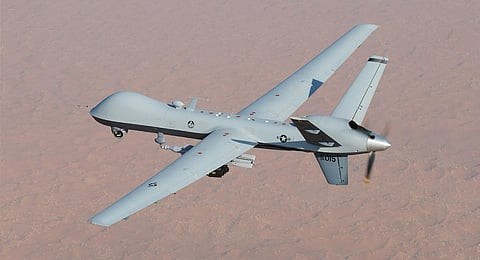
AI-powered MBC2 swarm drones are designed for infantry support by autonomously seeking and neutralising threats. Furthermore, the HAL CATS (Combat Air Teaming System) project exemplifies futuristic integration where manned fighter jets collaborate with unmanned swarming UAVs and stealth UCAVs for complex air dominance and deep-strike missions. In addition, India has supplemented its drone arsenal with proven imports like the Israeli Heron and Harop drones, and the American MQ-9B drones, enhancing surveillance and strike capabilities significantly.
On the AI front, India is embedding artificial intelligence deeply into both offensive and defensive systems. The Indian Army’s modernisation roadmap for 2025-27 highlights the deployment of AI-powered autonomous systems including drones, combat vehicles, and robotic platforms across combat and non-combat roles.
AI also powers advanced defensive grids like Indrajaal, which secures strategic naval installations using a combination of jammers, spoofers, and real-time intelligence over thousands of square kilometres. Counter-drone measures have matured with systems developed by Bharat Electronics and DRDO, incorporating multi-layered layers of electronic warfare, radar, and directed energy weapons that can neutralise drone swarms by jamming or hard-kill laser targeting.
A key element of the modernisation is the procurement and induction of over 1,500 combat vehicles, including state-of-the-art locally made Prachand light combat helicopters, mechanised infantry platforms, and armoured vehicles designed to improve battlefield mobility, survivability, and firepower. These vehicles are integrated with AI-enhanced command and control systems, augmented reality for soldiers, smart armour, exoskeletons, and real-time health monitoring systems, boosting combat effectiveness and soldier endurance.
TATA Elxsi and Hindustan Aeronautics Limited’s CATS Warrior drone, developed in just 14 weeks, serves as a “loyal wingman” designed to accompany manned fighter jets on strike and reconnaissance missions, representing a major leap in India’s aerospace defence technology.
This AI-driven drone is capable of electronic warfare, autonomous target engagement, and real-time data sharing with manned platforms, embedding India firmly in the global race for next-generation military aviation technology.
India’s defence modernisation strategy also prioritises precision-guided munitions, cyber and electronic warfare capabilities, hypersonics, and space-based early warning systems, signalling a shift from conventional warfare to network-centric, AI-driven combat operations.
This broad and ambitious approach is driven by the need to maintain strategic edge and deterrence capability in a region marked by evolving threats. The roadmap stresses synergy between government, military, and private industry to cultivate innovation hubs and accelerate defence technology development and procurement.
India is building a future-ready military force centred on AI-enabled combat drones, sophisticated counter-drone systems, and a large fleet of modern combat vehicles infused with advanced technology. This effort aligns with a global shift toward unmanned and AI-driven warfare, aiming to maintain operational superiority and strategic autonomy amidst an increasingly complex security environment.
Indian Army simulates future warfare using AI and drones near China border in Himalayas
The Indian Army tested AI tech in East Sikkim. Exercise DIVYA DRISHTI enhanced battlefield awareness. Systems improved threat detection and response. Operation Sindoor targeted terrorist locations in Pakistan and PoK. Loitering drones and missiles were deployed. India neutralised Pakistani drone attacks. These operations showcase India’s focus on modern warfare and self-reliance.
In a major step towards modern warfare, the Indian Army tested artificial intelligence (AI)-based sensors, drones, and high-speed data systems during Exercise DIVYA DRISHTI in East Sikkim in July 2025. As per the official release by Indian Army, the exercise aimed to enhance battlefield awareness, surveillance, and rapid response capabilities in high-altitude areas close to the China border.
Modern tech tested in the Himalayas
Troops from the Trishakti Corps conducted the exercise using a combination of unmanned aerial vehicles (UAVs), drones, and ground-based systems. These platforms helped simulate real battlefield scenarios where quick coordination and decision-making are crucial.
The systems tested during the exercise are designed to improve the Army’s ability to detect, assess, and respond to threats in real time. AI-enabled sensors connected with secure communication systems were used to ensure seamless data sharing between field units and command centres.
AI improves command decisions
As per the Indian Army, a key outcome of the exercise was the successful integration of these systems, which established a clear “sensor-to-shooter” link. This means that once a threat is detected by a sensor, the data is instantly passed on to the decision-makers, and the response can be launched quickly.
Lieutenant General Rakesh Kapoor who served as the Deputy Chief of Army Staff, reviewed the exercise on behalf of Army Headquarters.
Focus on future technologies
“Exercise DIVYA DRISHTI has been a great success. We tested cutting-edge technologies in realistic field conditions. The lessons will help develop future technologies, doctrines, and tactics across the Indian Army, making us ready for any adversary in any terrain,” said Lt Gen Zubin A Minwalla, General Officer Commanding, Trishakti Corps.
The Army sees this exercise as part of a broader effort to modernise its forces under the ‘Atmanirbhar Bharat’ (self-reliant India) vision. The technologies tested are also aligned with the Army’s ‘Decade of Transformation’ initiative, which focuses on making the force more agile and technology-driven for the challenges ahead.
Operation Sindoor begins with drone-enabled precision strikes
In May 2025, India’s Armed Forces launched Operation Sindoor, targeting nine terrorist-linked locations in Pakistan and PoK. The mission included the deployment of loitering drones, also known as suicide or kamikaze drones, for surveillance and strikes alongside missile weapons. SkyStriker drones, in collaboration with Indian and Israeli firms, were used to loiter over target areas and effect precision hits on terrorist infrastructure without excessive collateral damage.
Neutralizing incoming threats and drone warfare dynamics
Between May 7 and May 10, 2025, Pakistan launched over 600 drone attacks against Indian military installations. India’s integrated air defence systems, Akash missile batteries, Akashteer control systems, legacy anti-aircraft guns, radar nets and C-UAS tools, neutralised the majority, preventing damage to civilian or military infrastructure.
Chief of Defence Staff General Anil Chauhan stated that Pakistan used unarmed drones and loitering munitions on 10 May, 2025, but “none of them could actually inflict any damage” on India’s infrastructure.
Strategic impact and future readiness
Operation Sindoor marked a major shift in India’s approach to drone warfare. Indian forces combined reconnaissance drones, loitering munitions, high-speed decoy drones, and precision missiles like SCALP and HAMMER to achieve rapid and coordinated effects. Indigenous systems such as SkyStriker, Harop, and Nagastra-1 were instrumental in target acquisition and engagement. Air defence units integrated these with the IACCS (Integrated Air Command and Control System) for real-time operational command across services.
Artificial Intelligence (AI) in Indian Defence in 2025
Indian Defence Companies Harness AI To Transform Modern Warfare
- AI adoption by Indian defence companies is transforming the nation’s military capabilities. From PSUs like BEL and HAL to private innovators such as Zen Technologies and Paras Defence, these listed companies are driving self-reliance and ensuring India’s preparedness for future warfare
- AI is being integrated into command, control, communication, computer, intelligence, surveillance, and reconnaissance (C2ISR) operations. For example, AI-driven surveillance has been deployed for border security, with approximately 140 smart surveillance systems at India’s border
- The integration of AI not only boosts national security but also opens significant opportunities for investors
Artificial Intelligence (AI) is rapidly redefining global defence, and India is emerging as an important player in the military-tech race. Under the Atmanirbhar Bharat vision and the iDEX (Innovation for Defence Excellence) framework, Indian defence companies—both state-owned and private—are embedding AI across surveillance, combat systems, and aerospace platforms.
From enabling autonomous drone swarms to predictive maintenance of fighter jets, AI is not just enhancing efficiency but reshaping the way India prepares for future warfare.
Bharat Electronics Limited (BEL) is leading state-run AI innovation with its AI Incubation Centre in partnership with the Indian Army.
BEL has rolled out pioneering solutions such as AI-enabled Voice Analysis Software (AIVAS) for speech transcription and monitoring, Sandarbh.AI for intelligent document management in the Navy, and predictive maintenance solutions for fire control systems.
Hindustan Aeronautics Limited (HAL) has been embedding AI into aerospace platforms, highlighted by the Combat Air Teaming System (CATS) where AI enables UAV wingmen to follow commands from manned fighters, an AI-based Snag Disposition System for automated fault detection, and AI-driven maintenance practices for aircraft part tracking.
Private players are equally aggressive in leveraging AI. Data Patterns integrates AI into radar and avionics systems, enhancing object detection and surveillance for both defence and space applications. Zen Technologies has emerged as a specialist in AI-powered counter-drone systems, applying machine learning to detect, track, and neutralize UAV threats, while simultaneously embedding AI into battlefield simulation platforms for realistic training.
Paras Defence has expanded through its investment in Logic Fruit Technologies, while also launching PARAS.AI for analysing drone data feeds and advancing AI-powered radar and electronic warfare systems. MTAR Technologies, known for high-precision defence components, is applying AI across manufacturing and quality control for faster, defect-free aerospace production.
Emerging firms are adding momentum to this AI-driven wave. Solar Industries has fielded its Bhargavastra AI-enabled counter-UAV system, alongside experimentation with AI-powered smart mines and drone payloads. DCX Systems is focusing on AI in electronic warfare and surveillance, while Avantel Limited is developing AI-based enhancements for satellite communications and next-generation radios.
The Defence Research and Development Organisation (DRDO) remains at the heart of this AI transformation. Through its Centre for Artificial Intelligence and Robotics (CAIR), DRDO has developed more than 75 AI products, ranging from autonomous robots and cyber defence to AI-based surveillance systems.
Alongside, the Indian Army’s dedicated AI Incubation Centre with BEL is nurturing indigenous AI applications that directly meet operational demands.
The policy and funding environment is giving this shift a strong push. The Government of India has earmarked ₹100 crore annually for AI in military projects, backed by the ₹7.85 lakh crore defence budget for FY 2026-27.
With more than 1,000 defence-tech start-ups entering the field, AI-driven solutions are expanding from laboratories to deployment-ready platforms, positioning India as a global innovation hub.
By combining the capabilities of traditional PSUs like BEL and HAL with agile private innovators like Zen Technologies, Paras Defence, and Data Patterns, India is building an AI-powered defence ecosystem that enhances national security and opens new opportunities for global defence exports. AI adoption is not just delivering operational superiority, but also accelerating self-reliance, marking a decisive shift in how India prepares for 21st-century warfare.
Major Defence PSUs Leading AI Integration
Bharat Electronics Limited (BEL)
BEL is spearheading AI adoption with the establishment of an AI Incubation Centre in collaboration with the Indian Army. Its innovations include:
AI-enabled Voice Analysis Software (AIVAS) for advanced speech transcription and monitoring
Sandarbh.AI, a document management system for the Indian Navy
AI-based predictive maintenance for fire control systems
Hindustan Aeronautics Limited (HAL)
HAL has embedded AI in aerospace systems: Combat Air Teaming System (CATS), where AI enables drones to follow voice commands from fighter jets
AI-based Snag Disposition System for automated aircraft defect detection.
AI-enhanced maintenance and carbon recognition tools for aircraft parts.
Private Sector Leaders in Defence AI
Data Patterns (India) Limited
This Chennai-based firm integrates AI in radar and avionics, developing object detection tools for surveillance and partnering with DRDO and ISRO on advanced AI-enabled systems.
Zen Technologies Limited
Zen is a pioneer in AI-driven anti-drone systems, using machine learning for detection and neutralization. Its combat simulation platforms also employ AI for realistic battlefield training.
Paras Defence and Space Technologies
Paras has invested in Logic Fruit Technologies to enhance AI-driven embedded solutions. It has launched PARAS.AI for drone data analysis and is working on AI-powered radar and electronic warfare systems.
MTAR Technologies
Known for precision engineering, MTAR is integrating AI in manufacturing processes and AI-driven quality control through collaborations with global defence firms.
Emerging AI Defence Players
Solar Industries: Creator of Bhargavastra Counter-UAV system, AI-powered smart mines, and drones.
DCX Systems: Focused on AI-based electronic warfare and surveillance systems.
Avantel Limited: Developing AI-enhanced satellite communications and software-defined radios.
Government and DRDO Initiatives
The Defence Research and Development Organisation (DRDO), through its Centre for Artificial Intelligence and Robotics (CAIR), has developed over 75 AI-based defence products, covering autonomous platforms, cybersecurity, and surveillance. Additionally, the Indian Army’s AI Incubation Centre with BEL supports indigenous innovation in AI-driven systems.
Market Outlook
India has allocated Rs 100 crore annually for AI in military projects, backed by a ₹7.85 lakh crore defence budget for 2026-27. With over 1,000 defence-tech startups in AI, the sector is poised for exponential growth.
Drone swarming to smarter war rooms: Army’s AI roadmap for operations by 2026-27
Although the use of AI has been discussed by the Army in the past, it is now being fast-tracked, in the wake of lessons learnt from Operation Sindoor — the Army’s cross-border operation in May 2025 targeting terror infrastructure in Pakistan and Pakistan-occupied Kashmir.
From coordinated drone missions (or drone swarming) and real-time battlefield monitoring to combat simulations for troop training, information warfare, and data-backed decision-making — the Indian Army has learnt to have drawn up a detailed roadmap identifying key areas where it plans to deploy Artificial Intelligence (AI), Machine Learning (ML), and Big Data Analytics by 2026–27.
According to sources, one of the immediate priorities is to improve battlefield awareness using AI tools that can process large volumes of information quickly. These include text summarisers built on Large Language Models (LLMs) to scan and condense long reports, AI-powered chatbots, voice-to-text systems, facial recognition, and tools that can detect unusual patterns or threats. AI will also be used to analyse feeds from drones, satellites, aircraft and ground sensors, and fuse this data in real time to support faster, more informed decision-making.
As I conclude, I would like to mention that no drone, Indian or foreign, has 100% accuracy in combat. “Miss” rates depend on the drone, the AI, weather, GPS jamming, enemy countermeasures, and how the mission is defined.
Given below is what we know from recent Indian-designed AI drone trials + combat use:
- Test trials show high precision: DRDO just completed final trials of the ULPGM-V3, and Indian-designed UAV-launched precision guided missile. Tested in both anti-tank air-to-ground and anti-drone/helicopter air-to-air modes near Kurnool. DRDO reported the missile successfully hit intended targets and the system is “ready for immediate serial production.” The trials confirmed a “fully mature domestic supply chain.”
Other Indian systems also claim tight accuracy:
- Nagastra-1R loitering munition: GPS-enabled precision strikes with ~ 2-meter accuracy, 30 km range
- FWD-LM01 loitering munition: AI-enabled with autonomous targeting + navigation, 100 km range
- BSS Alliance AI gun drone: In trials it detected targets at 300 m and engaged accurately up to 600 m, effective range 1000 m
- Combat use – Operation Sindoor 2025: During Operation Sindoor, Indian forces used AI-enabled drones from startups + DRDO systems for ISR, target acquisition, and strikes. Reports say AI loitering munitions used image recognition trained on thousands of hours of footage to distinguish military vs civilian targets to minimize collateral damage.
India’s D-4 anti-drone grid also intercepted “over 80% of hostile drones” during the conflict. That 80% figure tells us ~ 20% got through – misses happen on both attack and defence sides.
DRDO chief Dr. Samir V. Kamat said Akashteer air defence system “sees, decides, and strikes faster than anything the world has fielded” after its performance in Sindoor. But even the best systems don’t claim zero misses.
- Why any drone can
- GPS-denied/jamming environments: Indian Army has tested AI drones that deliver munitions without satellite guidance. Vision-based AI helps drones “recognize terrain patterns…allowing them to navigate and return home autonomously, even if GPS is jammed + bad weather still reduce accuracy.
- Early–stage tech: Some Indian AI interceptors like vajR, FWD YAMA, Falcon are still “developmental or early-testing phrase and not yet in mass production.” New tech = higher miss rate.
- Human factor: AI assists, but final targeting still involves “human-in-the-loop” or “human-on-the-loop” control depending on the system. Operator error happens.
- The “miss” vs “no miss” framing
No country publishes exact combat miss rate – that’s classified. What’s present are is as follows:
- Trials: DRDO/industry demos show successful hits on tanks, drones, helicopters
- Combat: D-4 system knocked out “most” Pakistani drone incursions, but “most” ≠ “all”
- AI limits: Even advanced models hit 85-97% real-world accuracy in peer-reviewed drone detection tasks. That leaves 3-15% error margin.
Bottom line: Indian-designed AI drones like ULPGM-V3, Nagastra-1R, Kaal Bhairav are built for precision and have targets in tests + combat. But like US, Israeli, Turkish, or Chinese drones, they can and do miss due to jamming, decoys, weather, or AI misclassification. The trend is toward fewer misses as AI + sensor fusion improves.
The Kaal Bhairav (officially designated as the E2A2 is India’s first fully indigenous, AI-powered Medium Altitude Long Endurance (MALE) autonomous combat aircraft. Developed by Bengaluru-based Flying Wedge Defence and Aerospace (FWDA), it is designed for intelligence gathering, surveillance, and precision strikes.
Key Specifications & Performance
- Endurance: Can fly continuously for up to 30 hours.
- Range: Reaches up to 3000 km, allowing for deep strategic operations.
- Payload Capacity: Carries 91 kg. The payload bay supports electro-optical/infrared (EO/IR) sensors, laser-guided rockets, and light munitions.
- Guidance: Features anti-jamming inertial navigation and geo-location systems alongside AI-driven onboard target processing.
Cost-Efficiency
- Price: It is estimated to cost roughly one-tenth the price of American platforms like the MQ-9 Reaper.
- Survivability: Designed to be deployed as an autonomous fleet. FWDA has noted that the cost of losing a single Reaper-class drone (1,000 crore) could fund an entire fleet of Kaal Bhairavs, preventing single-unit mission failures.
Strategic Advantage & AI Capabilities
- Swarm Warfare: Features swarm capabilities that allow multiple drones to communicate and execute coordinated strikes, making it easier to overwhelm enemy air defences.
- Total Autonomy: Built with over 80% indigenous technology, the Kaal Bhairav mitigates the risk of foreign kill-switches and ensures that all sensitive, wartime operational data remains within Indian networks.
- Market Traction: The drone has already secured international interest, including a $30million deal and a $25 million confirmed export order from a South Asian country.
The FWD-LM01 is a man-portable, AI-enabled loitering munition (or kamikaze drone) developed by Bengaluru-based Flying Wedge Defence and Aerospace (FWDA). Designed for asymmetric warfare and precision strikes, it can autonomously navigate, identify, and destroy targets without requiring constant human intervention.
Key Specifications
- Manufacturer: Flying Wedge Defence and Aerospace (FWDA)
- Maximum Take-off Weight (MTOW): 6 kg
- Payload: 2 kg explosive warhead plus high-tech Electro-Optical Infrared (EOIR) sensors
- Range: Up to 100 km
- Endurance: Up to 1.5 hours in the air
- Operating Altitude: Can climb up to 17,000 feet
- Wingspan: 2 meters
- Deployment: Man-portable, with tool-free assembly completed in under 5 minutes
Core Capabilities
- Autonomous Targeting: Utilizing built-in AI, the FWD-LM01 can independently identify, track, and lock onto targets. It functions as a “hunter-killer,” loitering until it finds its designated target and diving into it at speed.
- Real-Time Intelligence: It carries an EOIR payload, allowing operators to monitor battlefields, stream visual intelligence, and confirm targets before committing to a strike.
- High Altitude Performance: With successfully flight-tested at high altitudes, it provides strategic advantages in mountainous or border environments.
Strategic Significance
Unveiled at the Paris Air Show, the FWD-LM01 represents India’s push for self-reliance (Atmanirbhar Bharat) in advanced defence manufacturing. It is positioned as an export-ready tactical drone designed to shift the dynamics of modern warfare by minimizing human risk, improving precision strike capabilities, and reducing the reliance on larger, more expensive military assets.
The Nagastra-1 is India’s first indigenous man-portable “suicide drone” or loitering munition, developed by Nagpur-based Solar Industries for the Indian Army. It is designed to hover over target areas and execute precision strikes.
Key features of the Nagastra-1 include:
- Kamikaze Mode: Uses a 1kg high-explosive fragmenting warhead to neutralize threats with an accuracy of up to 2 meters.
- Reusability: Features a built-in parachute recovery mechanism that allows the drone to be brought back safely if a mission is aborted.
- Silent Operation: Its electric propulsion system makes it virtually undetectable at altitudes above 200 meters.
- Range & Endurance: Weighs 9 kg, offers an endurance of up to 60 minutes, and has a man-in-the-loop range of 15 km or 30 km in autonomous mode.