SPACE DREAM
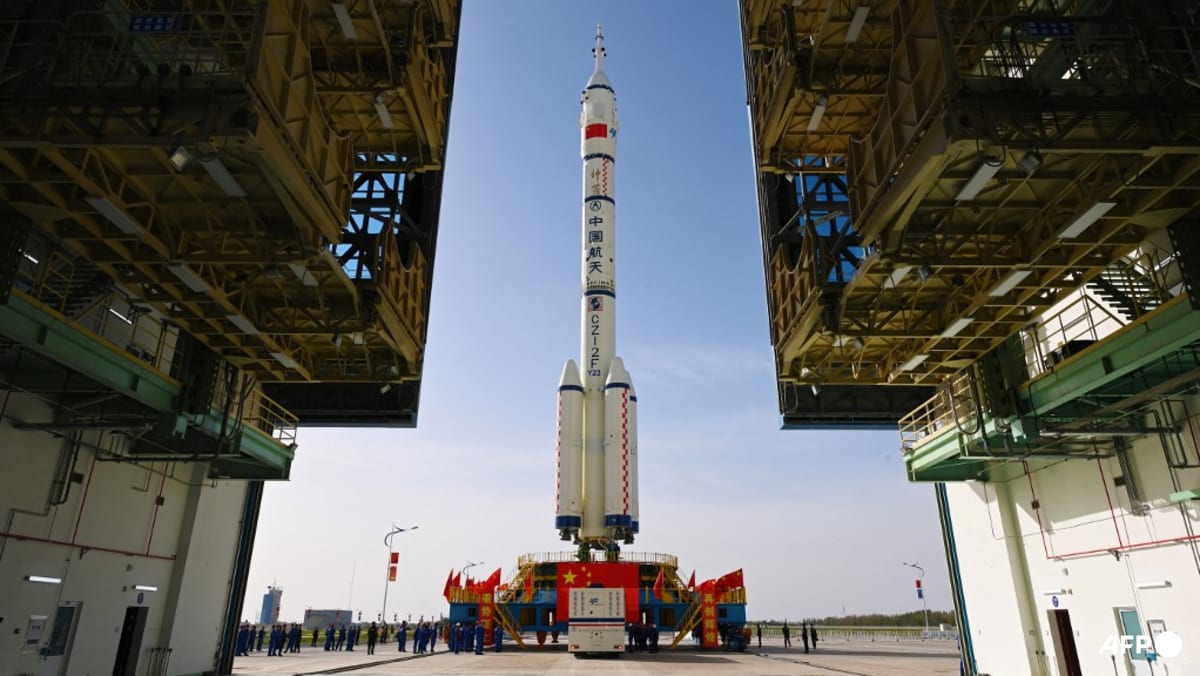
The mission’s primary objectives are to “continue carrying out space science and application work, conduct astronauts’ extravehicular activities and cargo transfer in and out of the cabin”, the CMSA’s Zhang told reporters.
One of the astronauts will remain on the station for a year, he added, without specifying who.
“Arranging for an astronaut to carry out a one-year in-orbit residency experiment is by no means a simple matter of adding together two six-month missions in terms of duration,” Zhang said.
The one-year space residency, Zhang said, will collect data on astronauts on longer-duration spaceflights and test health support capabilities.
China is “steadily” building operational experience for “sustained occupation” of its Tiangong space station, and year-long missions are an important step towards future lunar and potentially deep-space ambitions, said Macquarie University’s Richard de Grijs.
“A year in orbit pushes both hardware and humans into a different operational regime compared with the shorter Shenzhou missions of the programme’s earlier phases,” the professor of physics and astronomy told AFP.
Beijing’s space programme, the third to put humans in orbit, has also landed robotic rovers on Mars and the Moon.
China has ramped up plans to achieve its “space dream” under President Xi Jinping.
Beijing says it aims to send a crewed mission to the Moon by 2030, with the goal of constructing a base on the lunar surface.
The CMSA said on Saturday it would “make every possible effort and strive tirelessly” to achieve that goal.