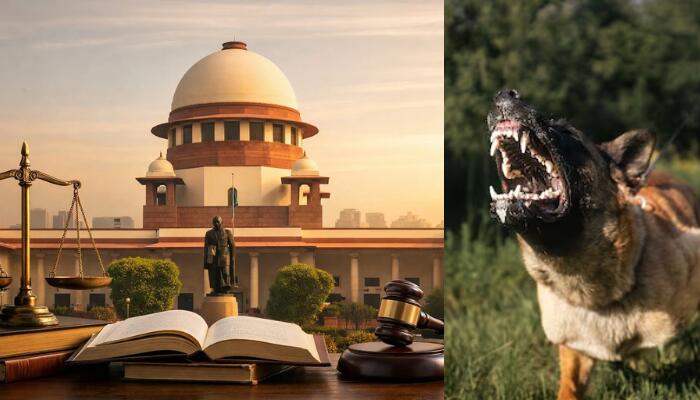
The Supreme Court on Tuesday refused to modify its November directions on stray dogs in public and institutional spaces. It reiterated that dogs picked up from hospitals, schools, railway stations and bus stands must not return to the same locations after vaccination or sterilisation. Authorities must shift such dogs to shelters under the existing legal framework.
A bench comprising Justice Vikram Nath, Justice Sandeep Mehta and Justice NV Anjaria dismissed multiple applications from animal welfare groups and dog feeders. They had sought modification of the November order and also challenged the Standard Operating Procedure of the Animal Welfare Board of India. The court said the existing framework must continue without dilution.
Court flags rising attacks and enforcement failure
The Supreme Court referred to what it called “deeply disturbing incidents” of dog attacks involving children, elderly citizens and international travellers. It said such cases were no longer isolated. It also noted their spread to airports, residential areas and other public spaces.
The bench said the situation had reached a “staggering dimension”. It observed that repeated incidents showed a failure by state and civic authorities to enforce earlier directions. The court stressed that the State cannot remain a passive spectator when public safety is at risk.
Strict accountability for officials
The court warned that officials who fail to comply with its directions will face contempt and disciplinary action. It also said officials carrying out these duties will receive protection. No FIR or criminal complaint should normally be registered against them for lawful implementation of court orders.
The bench allowed authorities to take legally permissible steps, including euthanasia in cases involving rabid or dangerous dogs. It said this measure applies where human life faces immediate threat.
Stronger national enforcement framework
The Supreme Court issued additional directions to improve implementation across states and Union Territories. It ordered at least one Animal Birth Control centre in every district. It also directed adequate availability of anti-rabies vaccines and immunoglobulins.
The court asked High Courts to register suo motu cases to monitor compliance. It also instructed the National Highways Authority of India to secure highways from stray cattle and other animal hazards.
Background of the case
The case began in July last year after the Supreme Court took suo motu cognisance of a report on a child’s death after a dog bite and suspected rabies infection. In August, an earlier bench ordered removal of stray dogs from public spaces in Delhi-NCR and their relocation to shelters.
The move triggered nationwide debate. Animal welfare groups opposed it. They argued that sterilisation and vaccination must continue, followed by release.
A larger bench later modified the approach. It allowed sterilisation and vaccination followed by release. It also restricted public feeding of stray dogs. In November, the court again tightened its stance and ordered removal of stray dogs from institutional premises.
The court reserved the matter on January 29 after detailed hearings. The latest ruling reinforces strict containment in high-risk public spaces and strengthens state accountability.