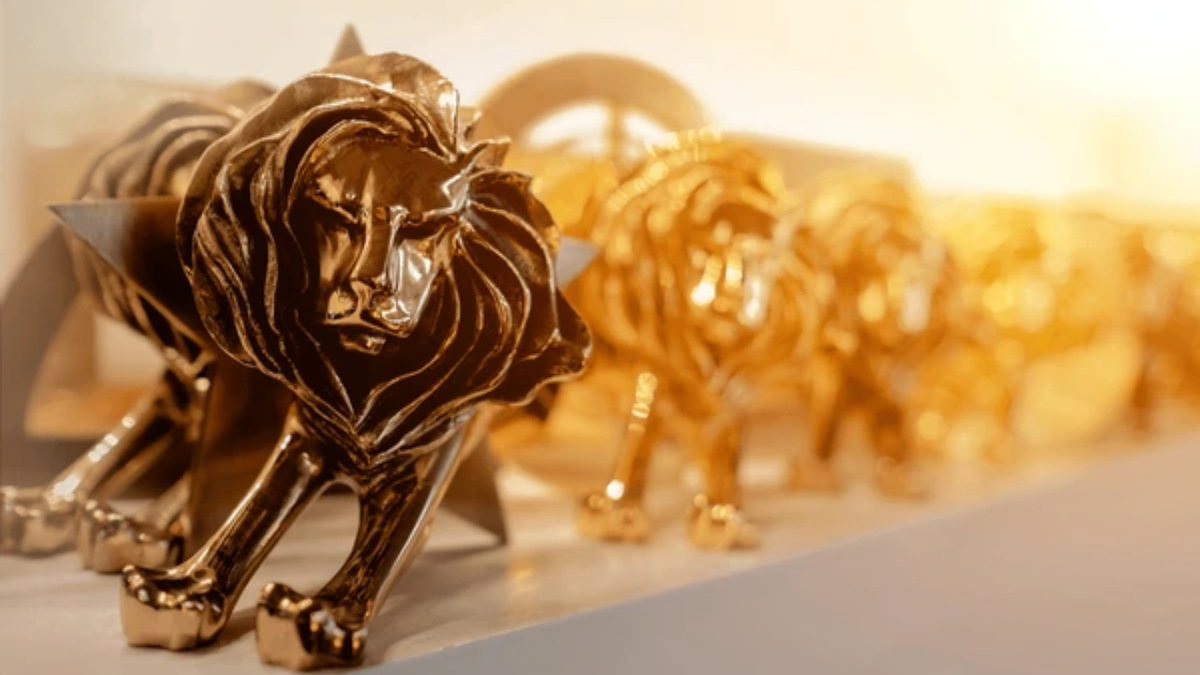
Cannes Lions 2026 has not started yet, but the festival has already made a few things clear, including that France will be the Creative Country of the Year. Two new categories are being introduced.
One of the most talked-about additions for 2026 is the Creative Brand Lion, which will sit in a new Brand Track. It will not judge campaigns, but will judge companies, specifically, how they have used creativity at an organisational level to build systems, shift culture, and deliver measurable business growth over time. Entries will need to submit hard data: workforce size, revenue range, growth rates, which is closer to a business case than a campaign reel.
The second addition is the AI Craft subcategory, which will appear inside Design, Digital Craft, Film Craft, Industry Craft, and Creative Data. The category is specifically for work where the concept or execution could not have existed without AI. Using AI as a production shortcut will not qualify; the work itself has to be something that AI made structurally possible.
Looking back at India’s Cannes Lions 2025
Cannes Lions 2025 received 26,900 total submissions from 96 markets. India sent 982 entries, up from 826 the previous year. The country received 65 shortlists across 20 categories and won 32 Lions, including a Grand Prix in Public Relations. On paper, Lions had a hit rate of roughly 3.26% per entry submitted. Globally, around 3% of entries typically end in a win.
But the distribution of those 32 Lions tells a different story. India’s metals came from a narrow set of categories. PR, Outdoor, and Brand Experience carried the weight. Several other categories recorded zero shortlists or wins for India.
The categories where India drew a blank in 2025 include Innovation, Glass: The Lion for Change, Audio & Radio, Digital Craft, and Creative Strategy. These are not obscure tracks; in fact, they are among the prominent categories at the festival.
When India won big
India’s last Lions in Innovation were a Silver in 2017 and a Bronze in 2018, both for work that embedded technology into a real-world problem in a way that required engineering, not just execution. Since then, the category has gone quiet for India.
In 2017, #RoadsThatHonk won the Innovation Lions, which was a road safety campaign created for HP Lubricants by Leo Burnett India. Installed on the Jammu-Srinagar highway, the system used radar-equipped poles on sharp bends to detect approaching vehicles from opposite directions and trigger alerts to prevent collisions. The solar-powered setup created audible warnings, giving the impression of ‘roads honking.’ The project was deployed on accident-prone stretches of National Highway 1.
Meanwhile, in 2018, the Bronze was bagged by Cheil Worldwide India for its Good Vibes Project App. It was a mobile app developed by Cheil India to enable communication for people who are deafblind.
The app provided a two-way communication system based on tactile input and output, allowing users to send and receive messages through vibrations instead of visual or audio cues. It operated without a visible user interface and used hand gestures and taps as controls. The project was designed to help users communicate with others remotely through touch-based signals. It was made available on the Google Play Store and could be downloaded for free.
The Innovation Grand Prix that year went to a project for the United Nations that involved proprietary royalty systems and biodiversity data.
Creative Strategy has been similarly sparse, with India’s last Silver in 2019, won by Lowe Lintas for ‘ Help A Child Reach 5.’
It was a public health initiative created for Hindustan Unilever Limited by Lowe Lintas. The campaign used government health data to identify areas with high child mortality risk and sent mobile-based alerts in regions with limited media access. It focused on promoting handwashing with soap to help reduce infections such as diarrhoea and pneumonia among children under five.
The campaign was first launched in India in 2012, including outreach in high-risk villages such as Thesgora.
In 2022, India had no shortlists, similar to 2025. The category rewards work where strategic planning is documented across every touchpoint, with results that can be directly traced back to stated objectives. It demands a multi-year strategic framework.
India won a Gold in Digital Craft in 2022, as part of the ‘Unfiltered History Tour’ sweep.
The campaign was an augmented reality project created for Vice Media to present alternative historical narratives about artefacts housed in the British Museum, created by Dentsu Webchutney.
It allowed visitors to use smartphones to scan selected museum objects, triggering location-based AR content that overlaid historical information onto the artefacts. The project used mobile AR technology to present perspectives from colonised regions, contrasting with the museum’s traditional descriptions.
The category rewards visual and technical execution; the jury evaluates design, art direction, and user experience as disciplines in themselves. One of the breaking points for the shortlisted entries could be a strong craft and a stronger message.
India’s 2022 performance in Audio & Radio was also almost entirely driven by the Unfiltered History Tour. Before and after that campaign, India has rarely made it to the shortlist stage. The category expanded in 2024 to include podcasts and sonic branding, making it more specialised. Markets like Brazil and the United States have invested in audio production as a distinct creative discipline. India, however, is yet to consistently demonstrate the kind of sonic craft and audio-first thinking the category increasingly rewards.
Glass: The Lion for Change saw a 53% increase in global submissions in 2025. India was absent from the shortlist entirely. The category is moving toward work that uses data and intersectional frameworks to show measurable impact.
Luxury & Lifestyle as a category was introduced in 2024. In its first year, India submitted two entries and received zero shortlists. In 2025, India again failed to make the shortlist. The category is built around aesthetic purity and brand world-building of the kind associated with high-end fashion and luxury houses.
India is yet to win the Titanium Grand Prix. The country won two Titanium Lions in 2022 – both for campaigns that seemed to be genuinely disruptive globally.
One of the winning entries was ‘The Unfiltered History Tour’, and the other was the ‘Shah Rukh Khan My Ad’, created by Ogilvy India for Cadbury. The campaign used AI to generate personalised video advertisements for small businesses, featuring actor Shah Rukh Khan, aimed at helping local retailers promote themselves during a pandemic-related economic slowdown.
The gap between a Titanium Lion and the Titanium Grand Prix is significant. It is the difference between work that is provocative and work that is considered the best thing in the room by the full jury.
What 2026 adds to this picture
The Creative Brand Lion, launching in 2026, will be one of the harder categories for India to compete in immediately. It requires long-term, data-backed, organisation-wide creative thinking. India’s track record in Creative Strategy, the closest existing category, is two shortlists in six years, where the Creative Brand Lion raises the bar further.
The AI Craft subcategory is a more realistic opportunity, given that Indian agencies are actively experimenting with AI in production. But the category will be judged on whether AI was structurally necessary to the work, not just present in it.
India’s entry numbers are recovering, 982 in 2025 against a high of 1,053 in 2019, but the concentration of those entries in a few familiar categories has not changed.