
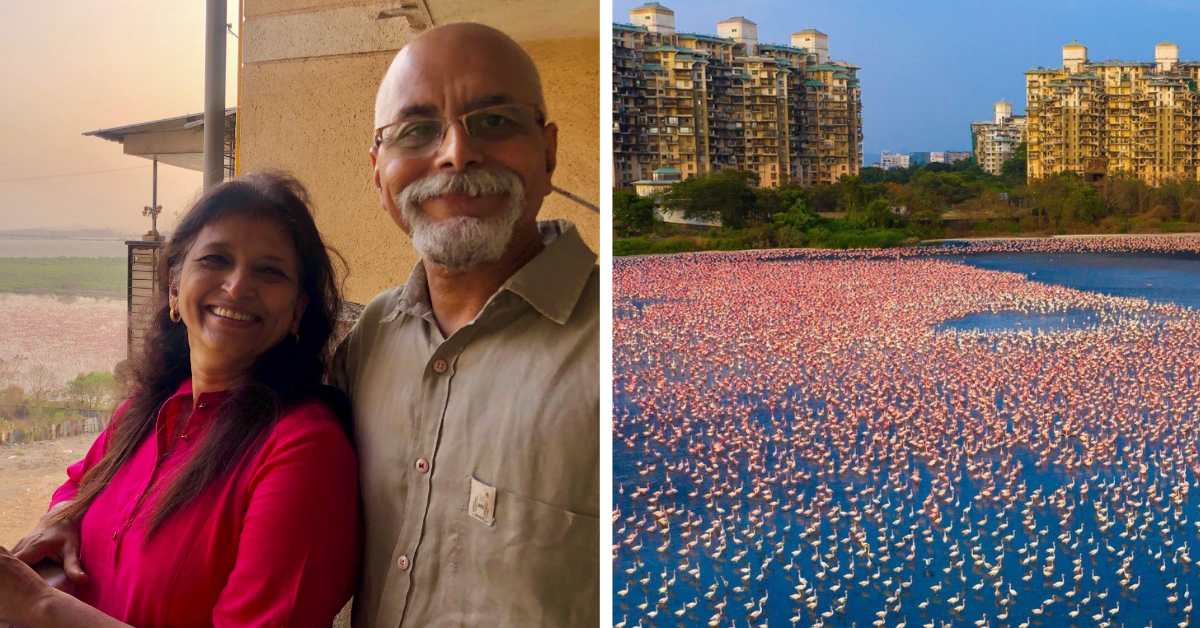
They called it wasteland, but every winter, it turned pink.
Along the edge of Navi Mumbai, where the city fades into Thane Creek, a vast wetland was being prepared for disappearance. Mangroves were cut overnight. An 80-hectare stretch was booked for luxury housing, infrastructure, and a golf course. On paper, it was called development, but on the ground, it meant the slow unravelling of a living system.
Because this land was never empty.
Each year, thousands of flamingos arrive here, joined by pelicans and kingfishers, while fish breed safely among the mangrove roots. With their arrival, the water would turn a soft, shifting pink, a life that returned without fail, season after season.
Shruti and Sunil Agarwal first noticed the changes on their morning walks. Trees that stood one day were gone the next, and the mangroves began to thin out in a way that felt sudden and deliberate.
“And we saw these people cutting the mangroves there; they were just chopping them. So, by chance, we did a small interview, we actually took a video of the whole place,” Shruti recalls.
That small recording changed the course of their lives. What followed were years of showing up at hearings, in courtrooms, and before authorities, even as they were repeatedly told that the system and the builders would not be stopped. Still, they returned each time.
The destruction did not pause easily, even as the case moved forward.
Then, in 2018, the Bombay High Court ordered that the destruction of the mangroves and wetlands must stop.
After that, the land began to breathe again. Mangroves slowly returned, and with them, the flamingos came back in great numbers, turning the creek pink each winter, as they always had.
Today, Navi Mumbai is celebrated as Flamingo City. But behind that name is the reminder that places are often saved not by power, but by those who refuse to stop noticing what is being lost.