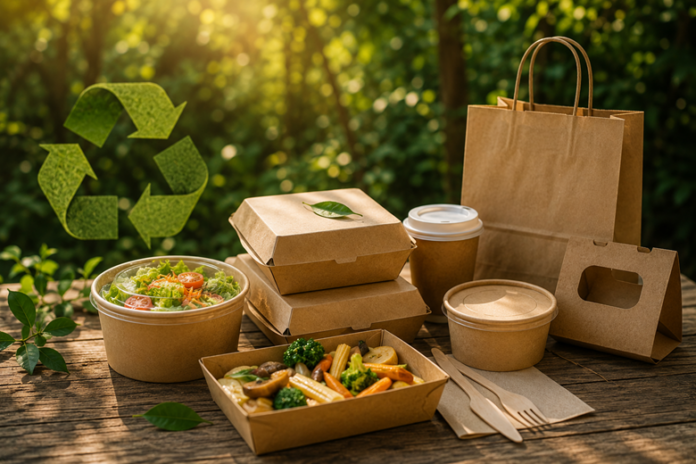

There is an increasing awareness of environmental issues being faced, and it is evident that there is a need for sustainable solutions for the world. One such alternative is in the form of biodegradable food packaging, which is gaining popularity and is opted for by many. This innovative method not only cuts down on the waste but also is an expression of the planet’s preservation.
What is Biodegradable Food Packaging
Biodegradable food packing materials are the one which dissipates easily after adding those into the soil and become natural materials like water, carbon dioxide and biomass. As compared to the eventual breakdown of traditional plastics (which could take hundreds of years), these materials will break down much more rapidly, under the right conditions.
The Science Behind Biodegradation
The action of the naturally occurring soil organisms (fungi, bacteria) is responsible for biodegradation. This is because various factors (light, temperature and oxygen, amongst others) help with decomposition. This will result in a reduction of pollution and the environment.
Materials Used in Biodegradable Packaging
There are actually a few materials that are typically employed in the fields of biodegradable packaging. They are produced using corn starch or sugarcane (polylactic acid – PLA) and/or microbial fermentation (polyhydroxy alkanoate – PHA) plastics. Both materials can be used as a ‘plastic of petrochemicals’.
Advantages of Biodegradable Food Packaging
Bioblog helps to bring some benefits to biodegradable packaging. They are also more environmentally friendly, and can be less energy intensive to produce, and they provide end-of-life recycling options such as composting, providing even better options for service providers and consumers.
Reducing Waste in Landfills
The most crucial advantage of the Bioplastics food packaging is that it reduces the amount of garbage at garbage dumps. Often, due to their short life, they have a short life in the land, and are not a major source of pollution in the medium to long term.
Lowering Carbon Footprint
The other characteristic of a biodegradable packaging is its impact on lowering products’ carbon footprints. In general, the carbon emissions for packaging can be reduced as a result of renewable packaging resources (as they are not derived from fossil fuels).
Challenges in Implementing Biodegradable Packaging
There have been several areas mentioned as some benefit attained with the increasing use of biodegradable food packaging, but there are some areas where more widespread use of the packaging is challenged. Some of the main challenges are the cost of production, space and equipment constraints for composting and different biodegradation rates in different environmental conditions.
Biodegradable packaging tends to be more expensive than traditional packaging, as it is costly due to the raw materials and technology used to produce biodegradable packaging. This may be a daunting factor for those companies seeking to get away from the traditional options.
Enough compost facilities are needed to effectively dispose of the biodegradable wastes. However, in not every part of the world, the biodegradable resource is a sustainable resource, as there are no infrastructures to support a larger composting system.
Future Prospects and Innovations
The future of the biodegradable food packaging systems apparently is bright, and additional R&D needs and innovations will result in better systems. With the emergence and evolution of new and advanced technologies, the efficiency and cost-effectiveness of such materials will only improve in better and better ways, leading to wider use in a range of industries.
Technological Advancements
New technologies will further improve the attributes of bioable materials, which may also enable new options that will be an even better fit for current recycling systems. With the adoption of improved processes, there is potential for even better benefits for biodegradable packages, as further reductions in environmental impacts and strengthening of structural properties can be gained.
However, also important are state legislations and policies to encourage the use of biodegradable packaging. If they are part of the policy mix in the industry, new, more stringent rules for the use of traditional plastics, as well as incentive binding plastics use to longer sustainable forms of use can make a huge difference.
Conclusion
In conclusion, biodegradable food packaging is an eco-friendly and sustainable packaging solution that can help curb the problem of food packaging waste and offer more opportunities for innovation. There will be obstacles to overcome, but the possibilities of change across the field of a sustainable future are easier to see in the benefits and innovations found in this field.