
In considering the transition, the council looked at the total solar energy generation over 25 years, annual savings relative to SP Group’s tariffs, the payback period and the effective cost of solar per kilowatt-hour compared to grid electricity.
“So we stress test different assumptions of all ‘what-ifs’, then all in all, we concluded that this transition makes sense,” said Dr Yeap, who is also the vice-president of the MCST Association of Singapore.
The benefits are two-fold: Electricity savings – an estimated S$7,500 per year in the first five years – can go into their management fund, resulting in savings for residents, he said.
In addition, having enhanced sustainability credentials could have a positive effect on the property value, said Dr Yeap, whose council will pitch the idea to residents at the upcoming annual general meeting.
GETTING RESIDENTS’ APPROVAL
A hurdle for condominiums considering solar panels is getting approval from residents at annual general meetings.
Currently, a special resolution must be passed with at least 75 per cent approval. In its review of the Building (Strata Management) Act earlier this year, BCA said it was exploring lowering the level of resolution for installation to 50 per cent to facilitate MCST’s installation of solar panels.
Less than two per cent of MCSTs have solar panels installed, BCA said.
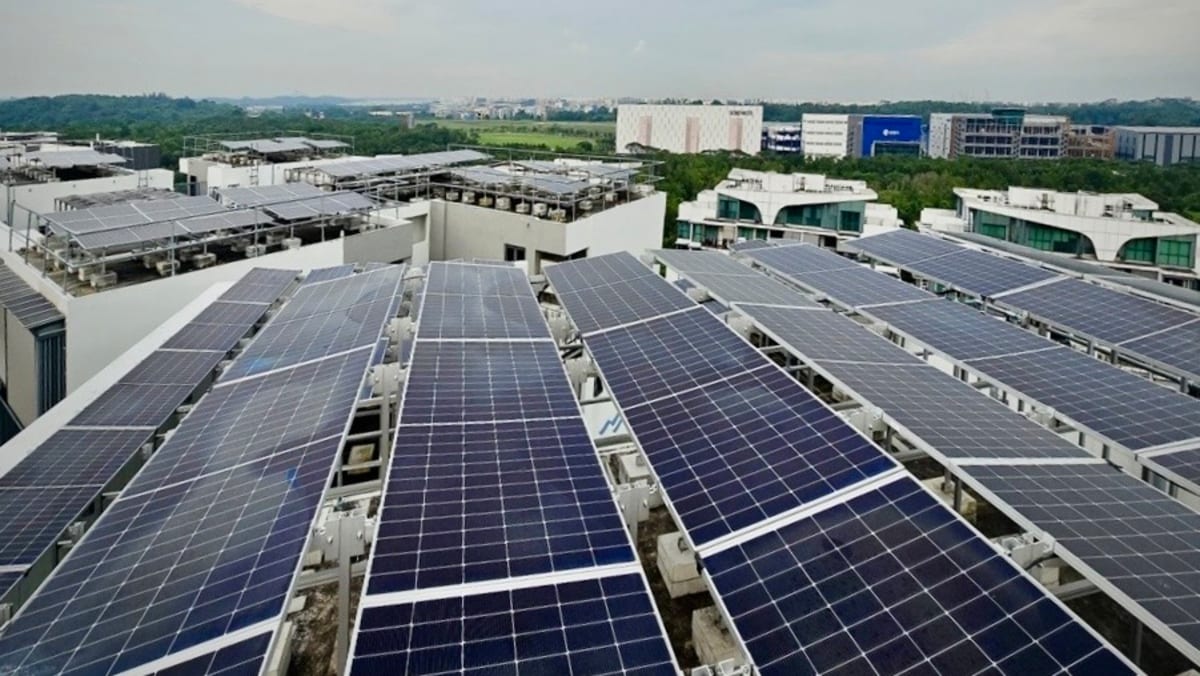
Boathouse Residences, a 493-unit development with seven blocks of up to 18 storeys, is among the few.
But getting there took a five-hour annual general meeting, and allaying the concerns of penthouse owners who worried that their natural sunlight would be blocked.
“We had to clarify, justify the benefits and address transparently before we got it approved,” said Mr Mohd Rizal, the managing agent for the development. The resolution was eventually passed with about 85 per cent approval.
“So the biggest challenge was balancing technical feasibility with residents’ expectations,” he said.
Boathouse Residences has since adopted a lease model and pays a fixed monthly fee of S$7,400, excluding GST, to the vendor, said Mr Rizal.
The system has yielded encouraging results. Since commissioning in March 2025, the condominium has consumed about 180,000 kWh less electricity from the national grid, leading to gross electricity cost savings of about S$113,000.
After accounting for lease costs, the condominium has net savings of approximately S$68,800, Mr Rizal said.
His managing agency is now exploring the feasibility of installing solar panels at six other estates under its care.