
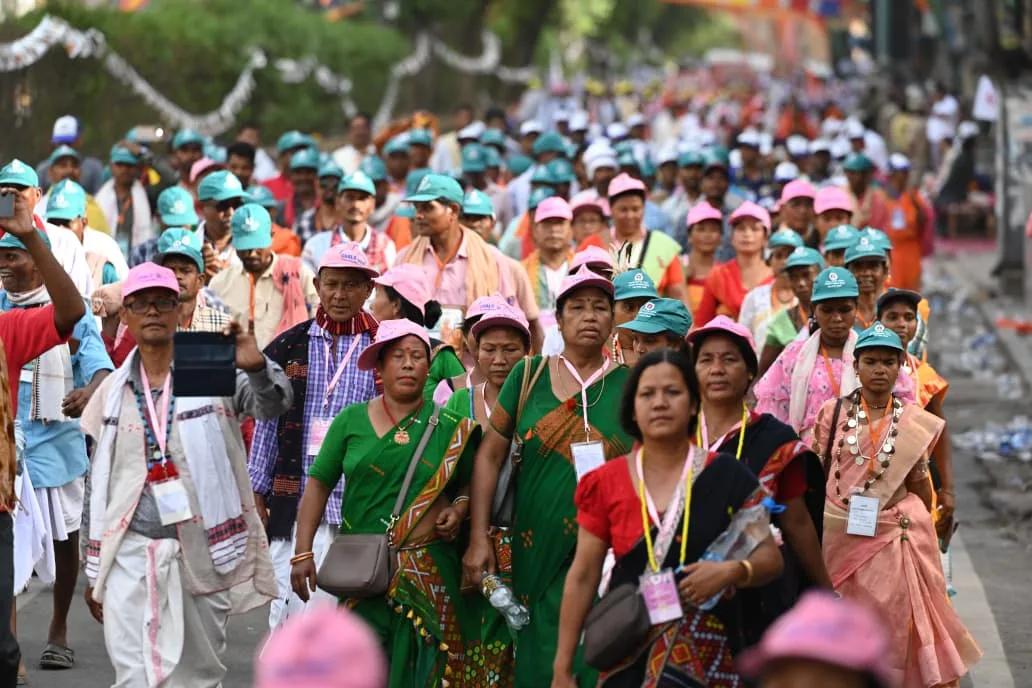
NEW DELHI: Bhagwan Birsa Munda had spread the message of protecting faith, forests, and identity among Janjati communities across the country said Union Home Minister Amit Shah on May 24, 2026 while addressing the ‘Janjati Sanskritik Samagam’ in Delhi.
This year marks the 150th birth anniversary of Bhagwan Birsa Munda. Amit Shah also highlight his role in uniting Janjati communities despite the lack of communication facilities during that era.
He also asserted that the Bhagwan Birsa Munda’s Ulgulan movement had shaken the foundations of British rule.
“The year in which we are meeting today is the 150th birth anniversary year of Bhagwan Birsa Munda. The Ulgulan movement shook the foundations of the British rule. At that time, despite the absence of any communication facilities, Bhagwan Birsa Munda spread the message from Jharkhand to Gujarat and across all of India to the tribal communities-that this is our country, our religion is the true religion, and no one can occupy our forests,” said Amit Shah.
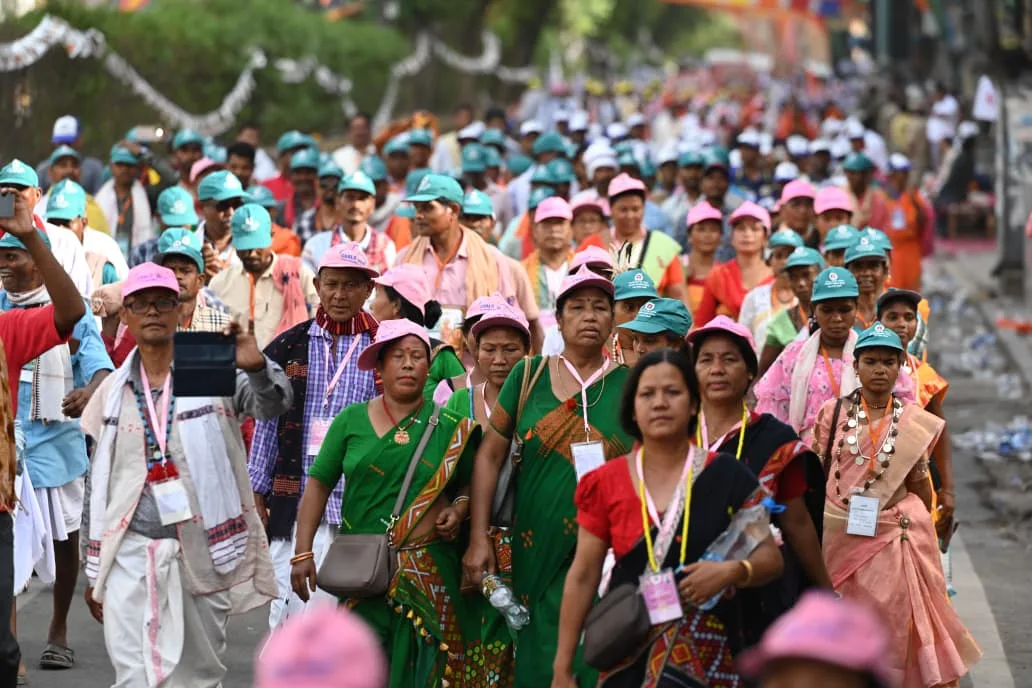
He further said that forests, hills, and water bodies are central to the faith, livelihood, and cultural identity of tribal communities. He described the Janjati way of life as the “greatest sustainable model” and said tribal communities had upheld the principle of “unity in diversity and diversity in unity” without written rules.
He further said, this gathering will be recognised for years to come as the Mahakumbh of the Janjatis. Today, as you have come here from remote parts of the country, dressed in traditional attire, carrying your musical instruments and singing songs of your culture, I can say with certainty that I have never seen Bhagwan Birsa Munda in my life. But today, Bhagwan Birsa Munda has appeared before me in person. I salute you all.”
“For our Janjati brothers, these water bodies, forests, and hills are centers of faith, a means of livelihood, and an impregnable fortress for the protection of their identity and culture. Today, if there is the greatest sustainable model, it is the one created by our Janjati communities, and we have come forward to protect it. Without any written rules, all tribes have worked to realise the mantra of ‘unity in diversity and diversity in unity’,” said Amit Shah.
The Home Minister also underlined the constitutional right of every individual to practise their faith with dignity and said that religion should not be changed through “greed, temptation, or force.”
“Thousands of years ago, in the Treta Yuga, Bhagwan Ram, by eating Shabari’s leftover berries, explained to us very clearly that we are all one. Those who seek to divide us fail to understand that when Nishad Raj extended a helping hand, Bhagwan Shri Ram honoured the forest dwellers by washing Nishad Raj’s feet with the water of the Ganga. Today’s gathering and the millions of Janjati people present here send a strong message to those trying to create divisions,” he said.
“Our Constitution makers have given every individual the right to live with self-respect in their original faith. No one can convert anyone’s religion through greed, temptation, or force. And I believe that if the tribal congregation (Vanvasi Kumbh) gathered here today resolves that no matter what our faith is, we will continue to live our lives through the various types of beliefs that tribal communities hold, it will be significant,” said Amit Shah. The event was organised on the occasion of the 150th birth anniversary year of Bhagwan Birsa Munda and emerged as one of the largest cultural congregations of Janjati communities in recent years. Around 1.5 lakh janjati representatives and participants belonging to nearly 550 Janjati communities from across the country attended the programme, including delegations from the Andaman & Nicobar Islands.
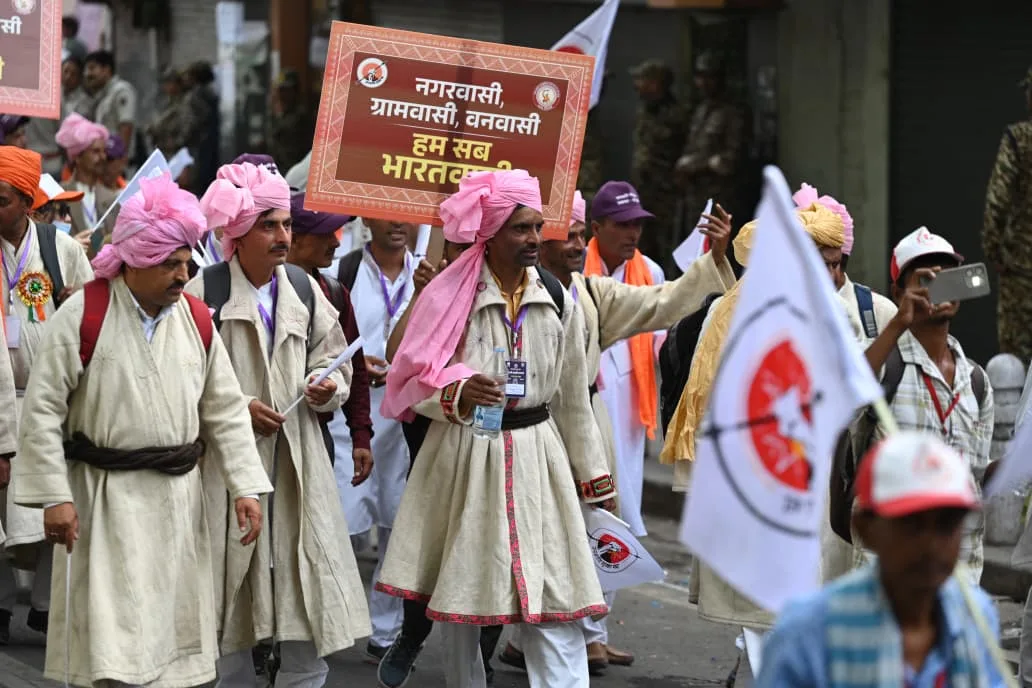
As part of the programme, five grand processions were organised across Delhi from Rajghat Chowk, Ramlila Maidan, Ajmeri Gate Chowk, Qudsia Bagh (Kashmiri Gate), and Shyamgiri Temple near Shastri Park Bus Depot. The processions witnessed participation from different Janjati communities carrying traditional cultural symbols, musical instruments, and folk performances before culminating at the Red Fort complex, where the main congregation and cultural programme were held.
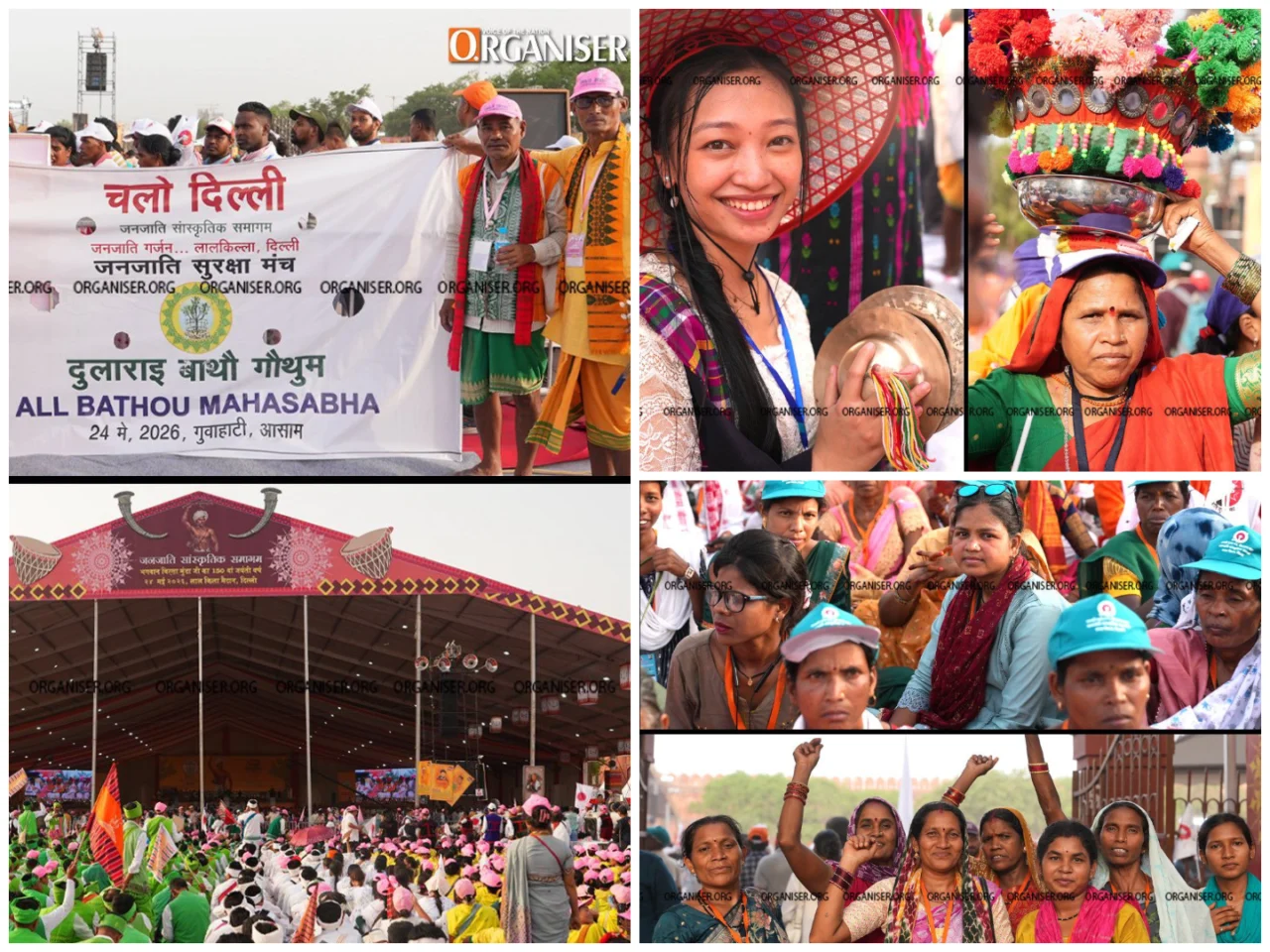
The Janjati Sanskritik Samagam focused on the protection of Janjati faith, traditions, culture, forests, and identity. Various cultural presentations showcasing tribal heritage from different regions of the country were also organised during the programme.
For the successful conduct of the event, extensive coordination had been carried out with the Delhi Police and local administration. Participants were accommodated at 78 locations across Delhi, while special arrangements for drinking water, tents, seating, and heat management were made at the venue considering the summer conditions.