Ottawa: A recent intelligence assessment by the Canadian Security Intelligence Service (CSIS) has identified Khalistani elements as an ongoing national security concern, warning that their activities continue to promote an extremist agenda within Canada. This assessment is being viewed as a diplomatic acknowledgement of concerns consistently raised by New Delhi regarding extremist networks operating from Canadian soil.
The report, based on intelligence findings from 2025, was tabled in the Canadian Parliament on Friday and underlines persistent concerns despite the absence of recent attacks on Canadian soil. The report marks the 40th anniversary of the Air India Flight 182 bombing, which claimed 329 lives and remains the deadliest terrorist attack in Canada’s history. While it noted that no Canada-based Khalistani extremist (CBKE)-linked attacks occurred in 2025, it cautioned that the threat environment remains active and evolving.
According to CSIS, “ongoing involvement in violent extremist activities by CBKEs continues to pose a national security threat to Canada and to Canadian interests.” It further highlighted that certain individuals linked to these networks are well connected within Canadian society and exploit institutions to promote extremist narratives. The report also emphasised concerns that funds are being collected from unsuspecting community members and redirected towards violent activities.
Persistent threat assessments and India’s concerns
This is the second such warning issued by CSIS within a year. In its June 2025 report, the agency had stated that Khalistani extremists were continuing to use Canadian territory as a base for propaganda, fundraising, and the planning of violence, primarily targeting India. These findings have reinforced longstanding concerns raised by New Delhi regarding the presence and operations of Khalistani elements in Canada.
India has repeatedly urged Ottawa to take decisive and urgent action against such networks. The issue significantly strained bilateral relations, particularly during the tenure of former Canadian Prime Minister Justin Trudeau. Diplomatic ties had reached a low point amid disagreements over security concerns and political responses to extremist activities.
Renewed engagement and security coordination
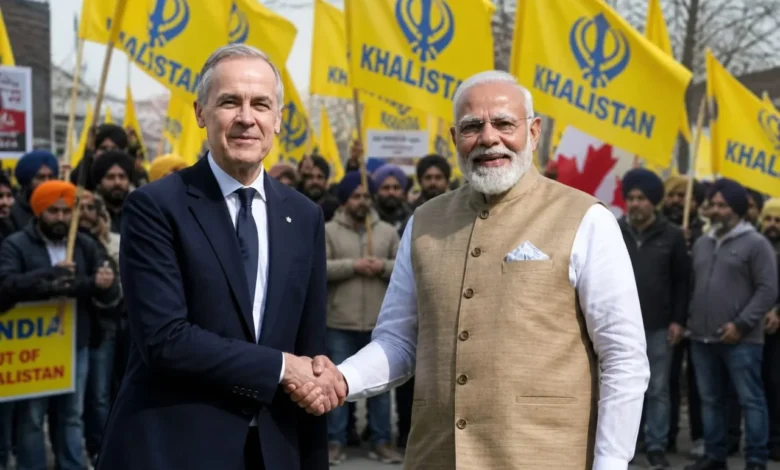
In the backdrop of shared efforts to stabilise bilateral ties since June 2025, Canadian Prime Minister Mark Carney paid an official visit to India from February 27 to March 2, 2026. During this visit, he met Indian Prime Minister Narendra Modi for the third time in ten months, signalling a sustained diplomatic push to reset relations.
Ahead of this visit, India’s National Security Adviser Ajit Doval travelled to Ottawa, indicating continued and calibrated engagement on sensitive security issues. His discussions with Canada’s National Security and Intelligence Adviser Nathalie Drouin resulted in a decision to introduce security and law-enforcement liaison officers. This step is intended to streamline cooperation and facilitate timely sharing of intelligence related to national security concerns.
During the March meeting in India, Modi emphasised the broader global implications of extremism. Addressing a joint press conference with Carney, he stated that terrorism, radicalisation, and extremism remain serious challenges not only for India and Canada but for the entire international community. He stressed that closer cooperation between the two countries is essential to effectively counter these threats and ensure global peace and stability.
The renewed diplomatic engagements, combined with intelligence-level coordination, reflect cautious but deliberate attempts by both nations to address security concerns while rebuilding strained ties.