
“Patient zero” isn’t exactly the title you want attached to your travel itinerary.
But that’s the grim distinction Dutch ornithologist Leo Schilperoord now holds after authorities identified him as the first case in a deadly hantavirus outbreak aboard a luxury cruise ship.
The 70-year-old birdwatcher and his wife, Mirjam Schilperoord, 69, had toured an Argentinian landfill before boarding the MV Hondius, hoping to catch a glimpse of the elusive white-throated caracara.
But amid the trash heaps and circling birds, authorities believe the couple unknowingly inhaled virus-laced particles from the droppings of long-tailed pygmy rice rats — carriers of the feared Andes strain of hantavirus, the only known form capable of spreading person to person.
Within days, Leo was dead. And aboard the luxury expedition ship, the outbreak was quietly beginning to spread, raising concerns about how quickly one traveler’s seemingly harmless detour can snowball into a wider public health threat.
It’s hardly the first outbreak on a cruise ship — and not even the only one this month. Currently, more than 100 people have been sickened with norovirus aboard the Caribbean Princess ship, though it’s unknown who brought the bug with them.
So how does someone become “patient zero”? The Post spoke with physician-scientist Dr. Steven Quay, who outlined 10 travel mistakes that can turn an ordinary vacation into the starting point of an outbreak.
“The dangerous travel exposure is usually not the obvious one,” he warned. “Patient zero often begins with the sentence: ‘I didn’t think that mattered.’”
Here are the travel habits Quay says can carry hidden — and sometimes deadly — risks.
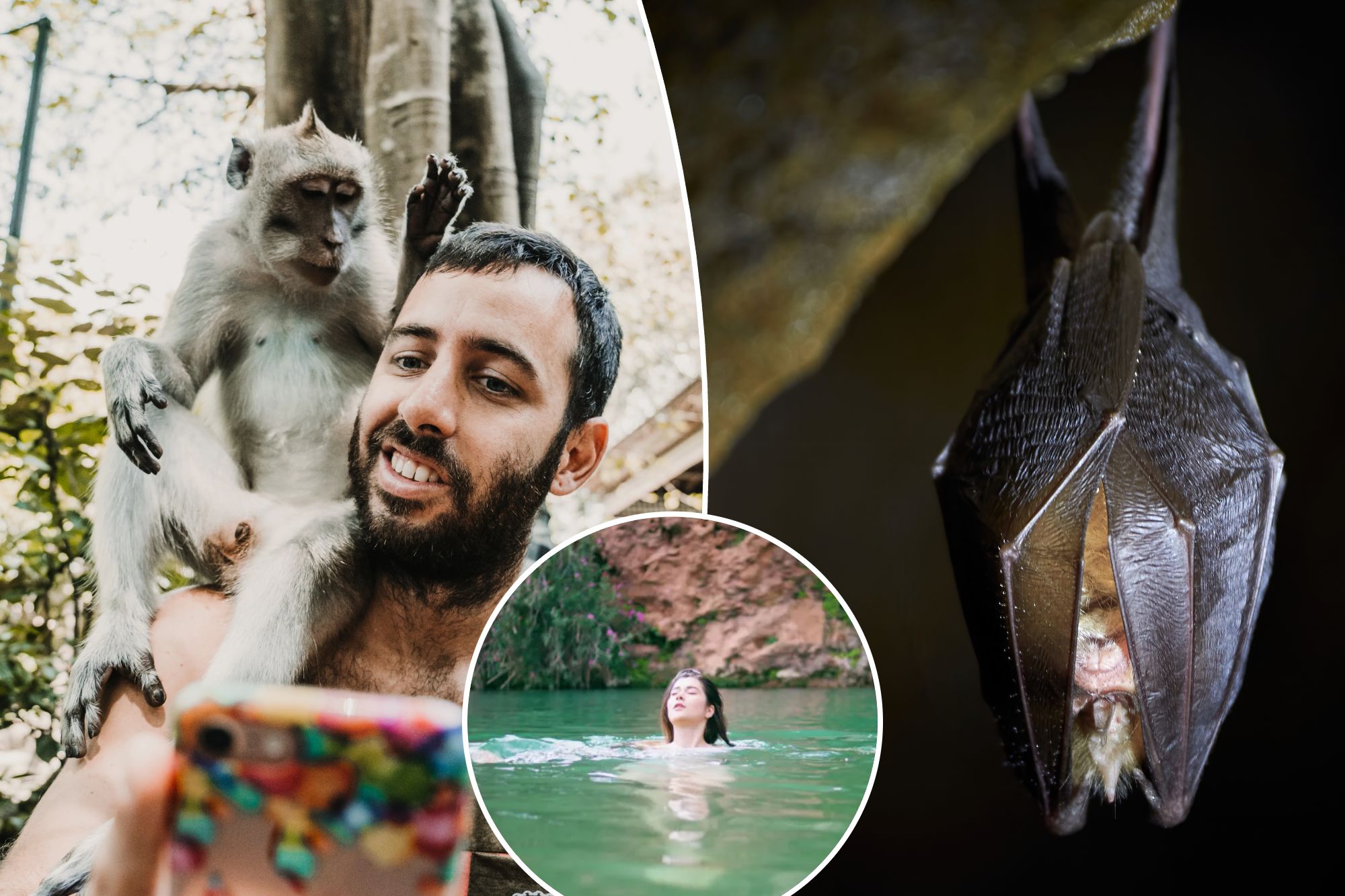
1. Visiting bat caves for a selfie
“Bats are extraordinary animals, but they are also reservoirs for serious viruses and fungi,” said Quay, author of the upcoming book “The Code as Witness,” which explores the origins of Covid-19, failures in global biosecurity and what must change to prevent the next pandemic.
The Centers for Disease Control and Prevention urges travelers to avoid caves, tunnels and mines inhabited by bats due to exposure risks tied to rabies, Ebola, Marburg virus disease and respiratory illnesses like histoplasmosis.
2. Eating the “local delicacy” — if it is bushmeat
“Monkey, ape, bat, rodent, or other wild-animal meat is not cultural courage; it is zoonotic roulette,” Quay said, referring to diseases transmitted to humans from animals.
The CDC warns that bushmeat can carry dangerous germs and is often eaten raw or only lightly processed through smoking, drying, or salting, so harmful bacteria and viruses may survive. That can expose people to dangerous viruses and bacteria that cause Ebola, HIV, anthrax and monkeypox.
And don’t try to sneak some back through customs. Bringing bushmeat into the US is illegal and can result in confiscation, destruction of contaminated belongings and hefty fines.
3. Birdwatching, camping or picnicking around landfills, dumps or rodent-infested sites
“That is where birds, rats, mice, feral animals, and contaminated dust overlap,” Quay explained — and it’s also what caused the current hantavirus outbreak.
“The risk is not birdwatching; it is breathing or touching aerosolized animal waste in a place where pathogens are concentrated.”
4. Sweeping a cabin, shed or rural lodge without protection
Sweeping or vacuuming rodent droppings can launch microscopic virus particles into the air, where they can easily be inhaled.
“That is the classic hantavirus mistake: taking an invisible exposure and turning it into breathable dust,” Quay said.
Instead, experts recommend using wet cleaning methods such as disinfectant wipes, sprays and damp mops to trap particles, along with protective gear like a mask or respirator.
5. Swimming in warm freshwater lagoons, jungle pools, floodwater or slow rivers just because they look pristine
This can be a tough one, but Quay warned that warm freshwater pools, floodwaters and slow-moving rivers can harbor Leptospira bacteria from animal urine, triggering leptospirosis — a flu-like illness that can escalate into life-threatening Weil’s syndrome.
“Leptospira can survive in water, soil, and mud and enter through cuts, eyes, nose, or mouth,” he said. “The CDC advises avoiding water that may be contaminated, especially after flooding or heavy rain.”
6. Refilling your water bottle from an airport bathroom sink in a country where you would not drink the tap water — or getting ice
“Travelers often obsess over restaurant water but then refill at the airport without thinking,” said Quay, who admitted to making it through a trip in Central America unscathed — until he drank contaminated ice at the airport on his way home.
According to the CDC, contaminated food and water remain among the biggest causes of illness abroad, spreading bacteria, parasites and viruses that trigger diarrhea and other infections.
The agency recommends sticking to factory-sealed bottled drinks and avoiding tap water, fountain beverages and ice in countries where water safety is questionable.
7. Cuddling monkeys, stray dogs market animals or “cute” wildlife for a photo
“Animal bites and scratches abroad are not souvenirs,” Quay said. “They are potential rabies, herpes B virus, bacterial infection and outbreak investigations waiting to happen.”
8. Eating raw shellfish or undercooked seafood in a place with uncertain water quality
“Shellfish filter the water they live in,” Quay said. If that water is contaminated, oysters, clams and other shellfish can accumulate dangerous levels of bacteria, viruses and parasites — all of which can end up in your body if eaten raw or undercooked.
“That is how a ‘local food experience’ can become norovirus, hepatitis A, or worse,” he warned.
9. Wandering through live-animal markets before hopping on crowded transit
Live animal markets, often referred to as “wet markets,” are places where live animals are kept, sold and butchered on-site.
“Live-animal markets bring stressed animals, bodily fluids, cages, wastewater and humans together in close quarters,” Quay said. “That is exactly the ecology in which zoonotic spillovers are more likely.”
10. Ignoring a fever after travel because “it’s probably nothing”
“The patient-zero problem is not just exposure; it is exposure plus delay,” Quay said. “A traveler with fever, diarrhea, cough, rash, or bleeding symptoms after an unusual exposure should tell clinicians exactly where they went and what they touched, ate, swam in or breathed.”