
A tiger claw wrapped in cloth. Pangolin scales hidden inside sacks of grain. Parakeets crammed into cages and pushed through railway stations before dawn.
Across India, wildlife trafficking networks move quietly through forests, highways, courier routes and crowded transport hubs. For enforcement agencies trying to intercept these operations, one of the most effective weapons is increasingly arriving on four legs.
Now, Maharashtra is preparing to strengthen that fight in a major way.
In partnership with WWF-India, the state will establish a dedicated wildlife sniffer dog training centre in Shahapur, located in Thane district. Expected to begin operations next year, the facility could become India’s first specialised centre focused entirely on training dogs to detect wildlife contraband and assist in wildlife crime investigations.
The move marks a significant shift in how wildlife trafficking is being tackled — from conventional patrol-based enforcement to intelligence-led detection supported by trained canine squads.
Dogs trained to detect what humans miss
Wildlife trafficking often leaves behind very little visible evidence. Illegal animal parts and forest products are concealed inside luggage, vehicles, warehouses and transport systems, making them difficult to detect through routine inspections alone.
That is where wildlife sniffer dogs come in.
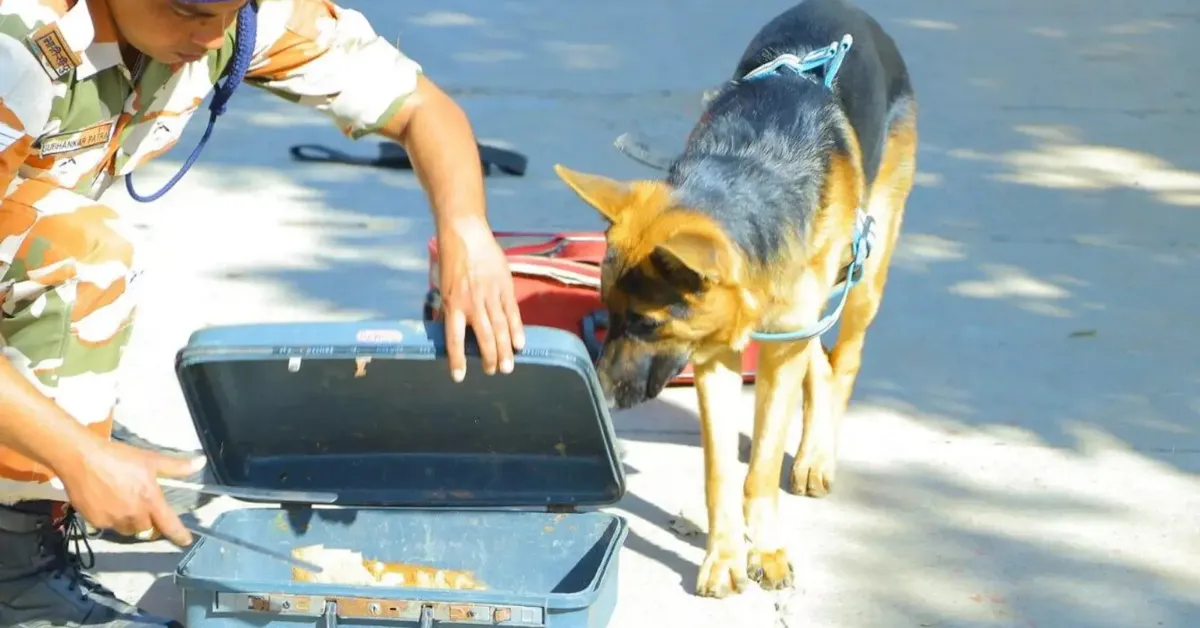
Specially trained dogs can identify scent trails, locate hidden wildlife derivatives and recover evidence from crime scenes with remarkable precision. Over the years, they have quietly become an important part of conservation policing in India.
/filters:format(webp)/english-betterindia/media/media_files/2026/05/12/sniffer-dogs-2-2026-05-12-13-58-04.png)
Since 2008, WWF-India has worked with forest departments and the Railway Protection Force to develop wildlife sniffer dog programmes across the country. The new Shahapur facility aims to expand that effort significantly by creating a dedicated centre for training and deployment.
According to Dr Dipankar Ghose, Senior Director — Biodiversity Conservation at WWF-India, wildlife sniffer dogs have emerged as a “game-changer” in improving wildlife crime detection and curbing trafficking networks.
Officials say the dogs trained at the centre will assist in detecting wildlife derivatives across multiple environments — from railway stations and vehicles to homes, warehouses and transport hubs. They will also support wildlife crime scene investigations and help recover forensic evidence crucial to prosecutions.
From tiger skins to red sanders
The illegal wildlife trade in India spans far beyond poaching inside forests.
Trafficked items include tiger and leopard skins and bones, elephant ivory, pangolin scales, deer antlers, turtle shells, mongoose hair products and exotic birds sold through illegal pet markets. Forest products such as red sanders and rare medicinal plants are also smuggled through organised networks operating across state and national borders.
Many of these networks function alongside larger organised crime systems, making detection increasingly difficult.
Conservationists warn that the trade has already pushed several vulnerable species closer to extinction. Pangolins, for instance, remain among the world’s most trafficked mammals, while tiger body parts continue to feed illegal international markets.
/filters:format(webp)/english-betterindia/media/media_files/2026/05/12/sniffer-dogs-1-2026-05-12-13-50-34.png)
In such cases, canine squads are proving critical because they can detect concealed wildlife products that human inspections often fail to uncover.
A national training hub in the making
While the Shahapur centre will support Maharashtra’s tiger reserves and forest divisions, officials say its role is expected to extend far beyond the state.
The facility is likely to function as a larger training and capacity-building hub for wildlife enforcement agencies across India. Deployment of trained dog squads will depend on requests from tiger reserves and wildlife authorities in different states.
The centre is also expected to support coordination with agencies such as the Wildlife Crime Control Bureau, which investigates organised wildlife trafficking operations.
Beyond training the dogs themselves, the initiative aims to standardise detection methods, improve knowledge-sharing and strengthen wildlife crime investigations nationwide.
A final decision on the breeds to be trained is yet to be made. However, earlier WWF-India programmes have largely worked with German Shepherds and Belgian Malinois because of their scent detection abilities, agility and adaptability in field conditions.
The frontline of conservation is changing
Wildlife protection is often imagined through anti-poaching patrols, camera traps and forest guards deep inside reserves. But much of today’s wildlife trafficking happens far from national parks — inside buses, railway compartments, urban markets and cargo routes.
To counter increasingly sophisticated smuggling networks, enforcement agencies are now relying more heavily on forensic tools, surveillance systems and trained canine units.
Maharashtra’s upcoming sniffer dog training centre reflects that larger shift.
Because protecting wildlife today is no longer only about guarding forests — it is also about intercepting the invisible networks profiting from their disappearance.
Sources:
‘Maharashtra to set up sniffer dog squads to crack down on wildlife trade’: By Ranjeet Jadhav, Published on 3 May 2026
‘Six wildlife sniffer dogs begin intensive refresher training to combat wildlife crime’: By WWF-India, Published on 7 March 2026