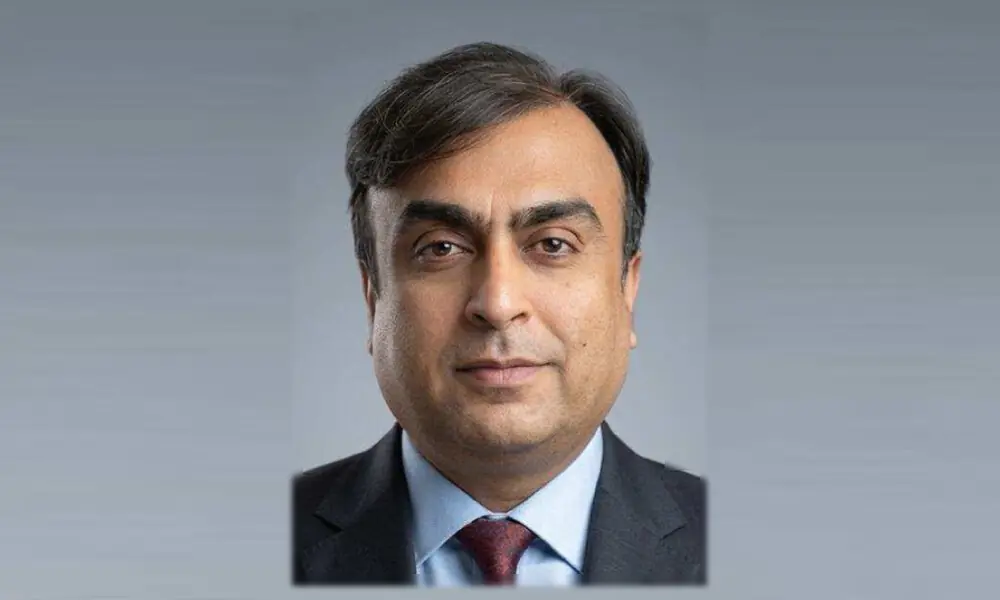
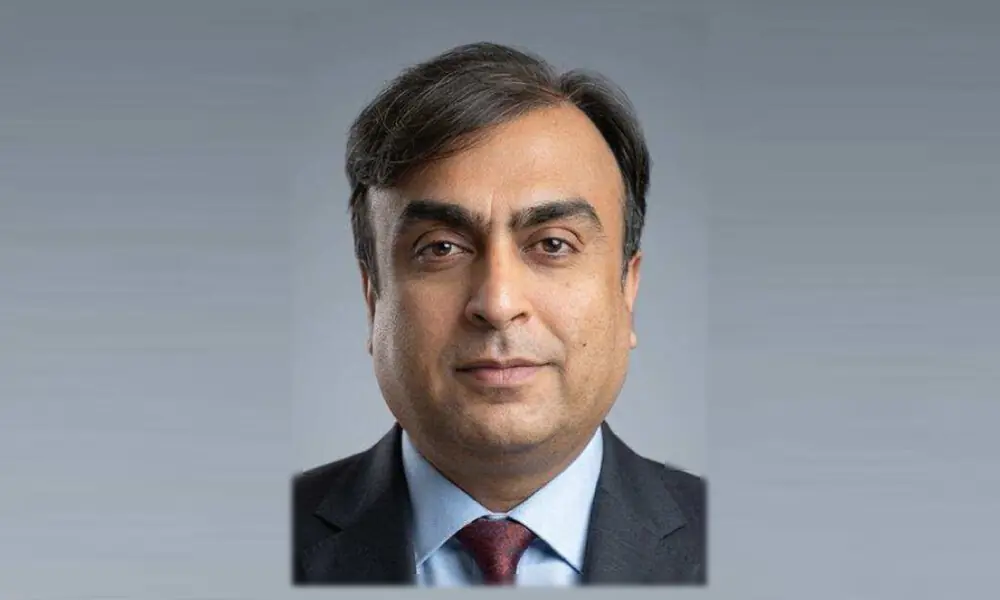
Muhammad Aftab Alam is Chief Business Officer at Khushhali Microfinance Bank Limited. He is a seasoned retail banking and microfinance professional with over 20 years of experience across microfinance, MSME lending, housing finance, consumer lending, and deposit mobilisation.
In his current role, he leads the bank’s sales and distribution network, with a focus on expanding financial access for low-income households, micro-entrepreneurs and MSMEs. His expertise spans business planning, product development, distribution strategy, and profitable portfolio growth.
Mr Alam is also active in sector development through State Bank of Pakistan sub-committees on financial inclusion, microfinance, SME finance, agriculture, and housing. He has attended the Boulder Microfinance Program in Italy and the Frankfurt School of Business and Finance in Germany and holds an MBA in Finance.
Following are the edited excerpts of a recent conversation BR Research had with him:
BR Research: How is microfinance reshaping access for Pakistan’s financially excluded communities?
Muhammad Aftab Alam: Microfinance is now the primary engine for Pakistan’s economic formalization. National financial inclusion reached 67 percent in 2025 (up from 47% in 2018), while female inclusion climbed to 52 percent, narrowing the gender gap to 30 percent. The sector currently supports 145 million active savers and 13.5 million borrowers, driven by digital innovation and the SBP’s policy reforms. At Khushhali Microfinance Bank, we have moved beyond simple credit to full-service banking, while offering digital convenience through mobile app and internet banking. Our focus on quick and easy on-boarding, simplified digital tools and flexible repayment ensures that low-income individuals aren’t just surviving, but are active participants in the formal economy.
BRR: Give us an update on how Khushhali Microfinance Bank (KMB) strengthening its presence in rural markets to deepen financial inclusion?
MAA: KMB’s strategy centres on both “High Tech& High Touch” model. We leverage our extensive network of 200 branches and 2,000 retail sales staff to maintain direct proximity to rural communities, smallfarmers, and micro-businesses. This physical presence is critical; it builds the trust necessary to transition rural clients into the formal sector.To deepen impact, we are integrating this on-ground strength with digital solutions. A key “recent development” is our focus on Digital Loan Origination System , Value Chain Financing and Agri-partnerships, which allow us to offer tailored products. This combination of a massive physical footprint and digital agility ensures we reach the previously “unbanked” where they live and work.
BRR: What behavioral and trust-related challenges persist in low-income segments, and how areyou addressing them?
MAA: I actually view the landscape differently. The narrative of “hesitation” is outdated; we’ve seen account ownership surge from 16 percent in 2015 to 67 percent by 2025. This is a massive shift in consumer behaviour driven by digital adoption and Microfinance contribution.
However, “functional trust” remains a focus. First-time customers often worry about complex documentation and transparency. At Khushhali we address this through relationship-based engagement: our 2,000-strong field team simplifies the formal process into a human conversation. we turn initial curiosity into long-term loyalty. For us, sustainability isn’t just about the transaction; it’s about the consistency of the customer experience.
BRR: How are strategic partnerships with fintechs, telecoms, and regulators helping Khushhali Bank scale its innovation and outreach?
MAA: Partnerships are the core architecture of future growth. We view Khushhali as a financial bridge between traditional banking and a digital future. By integrating with branchless banking providers and fintechs, we make our products accessible through millions of digital touchpoints across Pakistan.
Our collaboration with national payment networks has transformed our 200 branches into gateways for a nationwide digital ecosystem. We also work closely with the State Bank of Pakistan (SBP) on transformative initiatives like Asaan Digital Accounts and the Raast platform for P2P and P2M payments. These alliances are about interoperability—plugging into fintech-led distribution to deliver sophisticated financial solutions directly to the doorsteps of small farmers and micro-entrepreneurs. For us, innovation is not a solo journey; it is an ecosystem effort.
BRR: What specific financial solutions is Khushhali Microfinance Bank offering to support livelihoods in small business and agriculture?
MAA: We recognize that a farmer’s repayment capacity differs from a shopkeeper. For the Agri-sector, we provide tailored solutions like the Khushhali Zamindar Loan for crop loans and specialized livestock financing, which are vital for rural women’s economic empowerment. For urban and semi-urban growth, our microenterprise loans fuel small businesses, while our Home Improvement and Emergency loans provide the social safety net necessary for household stability. Directly supporting the financial resilience of our clients.
BRR: Khushhali Microfinance Bank has demonstrated an unprecedented financial turnaround. What were the strategic shifts that enabled this, and how will you sustain it?
MAA: After a challenging four-fiveyears period impacted by the pandemic and historic flooding, we pivoted strategically. By closing 2025 with a record Rs4 billion Pre-Tax Profit, we have emerged as the most profitable conventional microfinance bank in Pakistan.The shift was rooted in operational discipline and portfolio realignment. We energized our teams to focus on high-yield, high-quality segments while institutionalizing a rigorous risk-management framework. We didn’t just cut costs; we optimized for efficiency. In 2026, we are sustaining this momentum through digital scale and customer-centricity. we are lowering our cost-to-serve while maintaining the portfolio quality that fuelled our collection and recovery. Our strategy is simple: disciplined growth backed by technological innovation.
BRR: How does Khushhali Microfinance Bank assess creditworthiness for “new-to-bank” customers without traditional financial histories?
MAA: For our “thin-file” borrowers, we utilize a sophisticated hybrid approach that fuses “boots on the ground” intelligence with data science. Our 2,000 retail staff conduct deep-dive assessments of a borrower’s character, reputation, and household cash flows.To ensure portfolio integrity, these insights are independently verified by our branch-level risk teams and a centralized call centre. Finally, every application must pass our automated credit-scoring algorithms. This rigorous three-tier validation—combining human judgment with digital scoring—allows us to responsibly extend credit to the unbanked while maintaining the superior portfolio quality that drove our historic turnaround in 2025.
BRR: Looking ahead, how do you see the role of microfinance evolving in Pakistan’s broader economic recovery, and what opportunities exist for institutions like KMBL to further support entrepreneurship and income generation at the grassroots level?
MAA: As the sector evolves, there is significant potential to leverage digital innovation and partnerships to further expand access. Institutions like Khushhali Microfinance Bank are well-positioned to contribute meaningfully to inclusive and sustainable growth
BRR: Pakistan’s low-income borrowers remain highly vulnerable to inflation, climate shocks, and income volatility. How is Khushhali Microfinance Bank adapting its lending model, portfolio strategy, and risk controls to remain sustainable while still serving financially stressed customers?
MAA: Khushhali Microfinance Bank recognizes the increasing vulnerability of low-income borrowers to inflation, climate shocks, and income volatility. In response, we are adopting a more cautious and adaptive approach to lending by strengthening our risk assessment frameworks, diversifying our portfolio, and aligning repayment structures with customers’ cash flows. We are also enhancing monitoring mechanisms and focusing on responsible lending to ensure sustainability while continuing to support financially stressed customers.
BRR: How is the competitive landscape evolving with the rise of fintech, and how will Khushhali Bank stay relevant in a less branch-dependent ecosystem?
MAA: The landscape is shifting toward a “Platform-Led” model. While digital wallets and fintechs offer speed, microfinance banks provide the depth of relationship and regulatory trust that pure-play digital actors often lack. Our strategy is to be “Phygital”: leveraging our 200-branch footprint to provide the human touch necessary for financial literacy, while scaling through a robust digital engine.
We are aggressively expanding digital access via internet &mobile banking, widespread debit card adoption, and strategic partnerships with branchless banking providers. By enabling transactions across national ATM and POS networks, we are reducing branch dependency for routine tasks. However, our field teams remain our greatest competitive advantage, they function as “digital ambassadors,” guiding first-time users through their digital transition. For us, staying relevant means being a high-tech institution that refuses to lose its high-touch soul.
BRR:Given the vulnerability of the rural sector, how is Khushhali Microfinance Bank securing the livelihoods of Pakistan’s farmers against climate and market shocks?
MAA: Agriculture is the strategic backbone of our operations. As of March 2026, 65 percent of our Rs85 billion loan bookis dedicated to agriculture and livestock. We are integrating insurance-linked solutions for major crops and livestock to hedge against weather disruptions and natural calamities.Our approach centres on seasonal alignment; we offer specialized crop, agri-machinery, and livestock loans meticulously structured around harvest and cash-flow cycles. However, I must also admit that as an industry, we have more work to do to fully institutionalize climate-resilience safeguards and empower rural borrowers to withstand intensifying external shocks. For Khushhali, this is not just about lending—it is about securing the long-term stability of Pakistan’s rural economy through disciplined, responsible, and sustainable financing.
BRR: How can Pakistan’s microfinance sector balance rapid growth with customer protection and responsible lending standards?
MAA: The industry must move away from the “growth at all costs” mindset toward a “Double Bottom Line” approach that prioritizes both financial sustainability and social responsibility. As we scale, the primary guardrail against over-indebtedness is Credit Bureau discipline. We must ensure that every loan is based on a transparent assessment of the borrower’s total debt-service capacity across the industry.At Khushhali, responsible lending is anchored in transparent disclosure and ethical recovery. We believe the standards defining our future must be built on “Client-Centricity.” This means simplifying complex terms, ensuring fair pricing, and maintaining a robust grievance redressal mechanism. Going forward, the benchmark for success shouldn’t just be our RsR4 billion or Rs8 billion profits, but the measurable improvement in our customers’ livelihoods. True leadership in this sector is defined by growth that empowers the borrower, not just the bank.