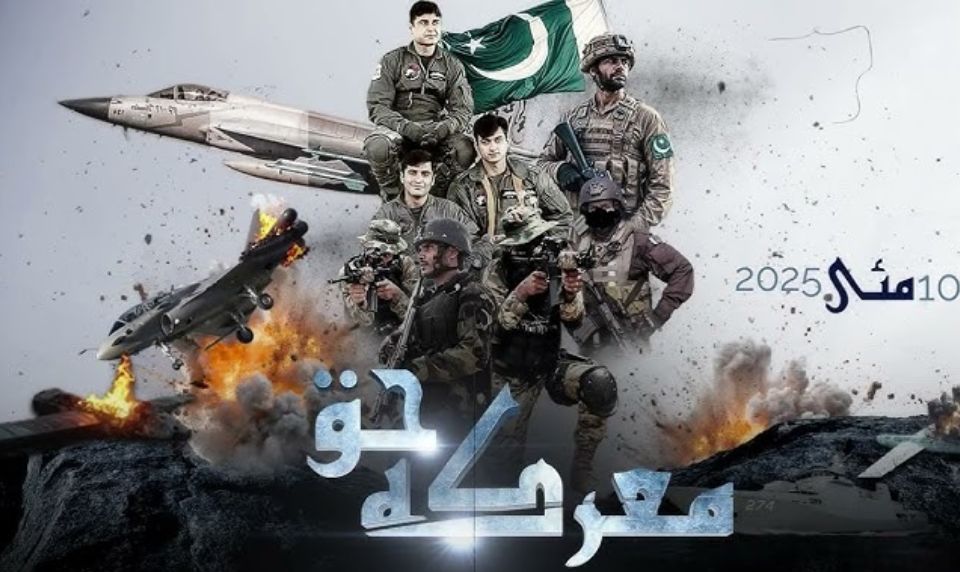
Pakistan is rightly celebrating the first anniversary of an outstanding success in “Operation Marka-e-Haq” and “Operation Bunyanum Marsoos” against its arch-rival India. Under dynamic and courageous leadership of Chief of Army Staff & Chief of Defense Forces Field Marshal Syed Asim Munir, Pakistan’s armed forces showed their resilience and resolute defiance as saviors of motherland, showcasing the unmatched devotion for offering huge sacrifices. Pakistan restored the conventional balance of power against India while demonstrating professional prowess in modern warfare and ideal synergy between armed forces and the public through increased national unity while successfully defeating the evil designs of the enemy.
By virtue of examplry success in war last year, Pakistan has witnessed a resurgence in its geopolitical relevance, emerging as a key “middle power” and primary mediator in an increasingly destabilized regional landscape. By leveraging its strong diplomatic ties, Pakistan has earned a dominant role in facilitating dialogue between two atch rivals, the US and Iran, while consistently deepening its economic and strategic ties with China, Russia and the gulf states.
Key Drivers of Pakistan’s Growing Strategic Stature
- Emergence as Middle Power. Pakistan has emerged as a significant strategic stakeholder in the region, driven by its stature as a successful and responsible nuclear state, its strategic neutrality in regional conflicts, and its skillfully orchestrated foreign policy and military diplomacy. Pakistan’s rising strategic influence is a testament to its proactive and absorbing diplomatic approach, positioning it as a significant middle power in the evolving multipolar world order.
- Strategic Regional Mediator. Pakistan has emerged as a dependable mediator who is proficient enough to establish some sort of trust between conflicting parties, the US and Iran. Its diplomatic maneuvering earned it great appreciation for its role in global conflict resolution in the Middle East.
- Geostrategic Prominence. Pakistan’s outstanding success granted its military a stature of security provider while the strategic mutual defense pact with Saudi Arabia as well as the expected future defense agreements with Qatar and other gulf countries award Pakistan obvious geostrategic prominence in the regional and global arenas.
- Balanced Diplomatic Ties. Through innovative diplomatic accumen, Pakistan has been successful in establishing balanced strategic partnerships with the USA, China, Saudi Arabia, and Iran, sailing prudently between competing interests while ensuring a strong bond of trust.
- Enhanced Regional & Global Recognition. By virtue of its structured and constructive engagements of gulf states and regional powers, Pakistan has gained trust as a key strategic partner in promoting regional peace and stability. Pakistan’s significant proactive role in reducing tensions in the Middle East has fetched high recognition by the international community, including the UN and EU.
- Peaceful Neighbor. Unlike India, whose acrimonious ties with Bangladesh (post-Hasina), Nepal, Sri Lanka, and the Maldives, brew unwanted tensions and destabilizing factor to regional peace and security, Pakistan has always maintained friendly ties and cooperative posturing. The post “Operation Marka-e-Haq” scenario validates Pakistan’s resolve for peaceful co-existence and desire for better alternatives to acrimonious overtures. Pakistan has successfully improved its relationship with Bangladesh also.
- Checkmate to Indian Hegemonic Attitude. Indian Hindutva hardline extremist mindset and hegemonic diplomacy failed miserably to defame Pakistan through false flag operations, rather Indian lies got badly exposed, eroding its image and rapport. Indian double standards drew huge criticism from the international community upon its irresponsible hostile act of sponsorship of cross-border terrorism against Pakistan using Afghan soil.
- Increased Autonomy. Pakistan’s skillfully balanced diplomatic maneuvers helped in carving out a pragmatic foreign policy based on its strategic autonomy and neutrality through constructive engagements with multiple power centers. In a complex and challenging geopolitical environment, Pakistan very craftily managed to steer a non-aligned path with obvious huge backing from major global powers and international community.
- Regional Connectivity. While being an active member of the Shanghai Cooperation Organization (SCO) and Economic Cooperation Organization (ECO), Pakistan has significantly strengthened its economic ties with Central Asia. Geographically located at the crossroads of South Asia, Central Asia, and the Middle East, Pakistan has projected itself as an important economic corridor through regional connectivity. In the face of blockade of strategic waterway, the Strait of Hormuz, deep sea Gwadar Port adds tremendously to the trade potentials for the region and beyond.
Major Military Gains of “Operation Marka-e-Haq” & “Operation Bunyanum Marsoos”
- Restored Credible Deterrence. Pakistan’s armed forces displayed superior military capabilities ranging from precision strikes using standoff systems to network-centric platforms and swiftly deafeted India’s military campaign restoring credible deterrence.
- Efficay in Multi-Domain Operations. Pakistan’s military showed a high-level of integration and synchronized application of tri-service application coupled with full-spectrum superiority in air, land, sea, and cyber domains, thereby effectively neutralised Indian threats.
- Failed Indian Goals. “Operation Marka-e-Haq” and “Operation Bunyanum Marsoos” successfully thwarted Indian aim to utilize military pressure to create Pakistan’s embarrassment. On the other hand, these operations resulted in worldwide humiliation for India. The huge destruction of Indian military assets like Brahmos missile storage dump, S-400 air defense system, and downing of latest aircrafts including Rafales with a tally of “9-0” badly damaged the reputation of Indian military’s numerical superiority and signaled their goals beyond their capabilities.
- Favorable Military Balance of Power. The outstanding success in military operations shifted the balance of power in favor of Pakistan. Pakistan’s armed forces very professionally dominated each and every rung of escalation while creating sustained escalation traps for India.
- Indian Crossing Pakistan’s Redlines. Pakistan has firmly established that any future Indian aggression will amount to crossing Pakistan’s redlines, pushing Pakistan towards a much stricter response and a point of no return where a nuclear holocaust will settle the outcome of Indian craziness.
- Technological Supremacy. Pakistan’s military employed technologically advanced war machines and assets with full-spectrum network-centric warfare capabilities, including aircrafts, precision-strike missiles, and drones as well as guided rocket artillery in combination with cyber operations to successfully annihilate Indian military misadventure in a modern multi-domain non-contact warfare environment thus establishing its technological supremacy.
- Internal Cohesion & Synergy. Pakistan’s public rendered an intimate and unprecedented moral support to its armed forces as the conflict served as a defining moment for the national unity, now commonly attributed as the “Bunyanum Marsoos effect”. The strong bond among Pakistan’s armed forces, the government and the public, acts as a force multiplier.
- Information Warfare Superiority. Pakistan’s media, especially Inter Services Public Relations (ISPR), successfully defeated Indian “false flag narratives” and disinformation campaigns thus earning international goodwill and projecting Pakistan as a responsible regional stabilizer while exposing India for cross-border terrorism utilizing proxies like Fitna al-Hindustan (BLA) and Fitnaal-Khawarij (TTP).
“Operation Marka-e-Haq” and “Operation Bunyanum Marsoos” stand testament to Pakistan’s strong resolve to safeguard its integrity and geographical boundaries as well as its quest for peaceful co-existence. While Pakistan’s armed forces displayed examplry professionalism in defeating arch-rival India in all aspects of warfare and statecraft in a defensive mode, it doesn’t hold any aggressive desires to fulfill. Cognizant of its responsible stature and affiliated strategic patience, Pakistan has always maintained friendly posture in the region for ushering a new era of economic growth under the banner of China Pakistan Economic Corridor (CPEC) while promoting regional connectivity.
Over a period of time, Pakistan’s armed forces have evolved into a battle-hardened war machine capable of seizing victory in future conflicts. Indian nefarious diplomatic efforts of isolation of Pakistan got ditiched badly. The increasing footprints in the Middle East are clear manifestations of changed strategic outlook of Pakistan.
Article by Brig. Hamid Rashid (R)
This story has been reported by PakTribune. All rights reserved.